North Korea inaugurated a memorial museum in Pyongyang for soldiers killed while fighting alongside Russian forces in the war in Ukraine, with Kim Jong Un and senior Russian officials attending. South Korean intelligence estimates suggest about 15,000 North Korean troops were sent to the Kursk front and roughly 2,000 were killed. Russia signaled plans to deepen military cooperation, including talk of a 2027–2031 cooperation plan, while analysts warn closer ties could risk transfers of technology that would bolster North Korea's weapons programs.
North Korea Opens Pyongyang Museum for Soldiers Killed Fighting With Russia; Leaders Pledge Deeper Military Ties
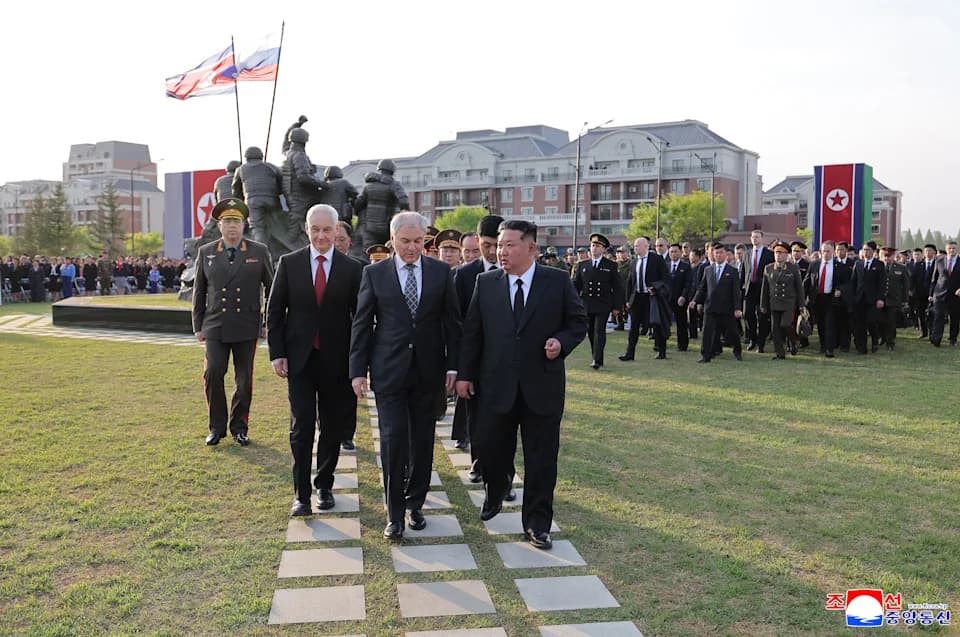
In this photo provided by the North Korean government, from front right to left, its leader Kim Jong Un, Russian parliament speaker Vyacheslav Volodin and Russian Defense Minister Andrei Beloussov attend an inaugural ceremony of a memorial museum in Pyongyang, North Korea Sunday, April 26, 2026. Independent journalists were not given access to cover the event depicted in this image distributed by the North Korean government. The content of this image is as provided and cannot be independently verified. Korean language watermark on image as provided by source reads: "KCNA" which is the abbreviation for Korean Central News Agency. (Korean Central News Agency/Korea News Service via AP)(ASSOCIATED PRESS)
North Korea has opened a memorial museum in Pyongyang honoring its soldiers who died while fighting alongside Russian forces in the war in Ukraine, and leaders from both countries used the event to signal deeper bilateral cooperation.
According to the North's state media, the Korean Central News Agency (KCNA), the inauguration was held to mark the one-year anniversary of an operation described by Pyongyang and Moscow as the liberation of Russia's border region of Kursk. KCNA said leader Kim Jong Un attended the ceremony with senior Russian visitors, including State Duma Speaker Vyacheslav Volodin and Defense Minister Andrei Beloussov.
KCNA described solemn rites at the museum: Kim poured dirt over the remains of one fallen soldier, placed flowers before other bodies displayed in a mortuary and, together with the visiting officials, left messages in a guest book. In a speech at the event, Kim framed the dead as "a symbol of the Korean people's heroism" and accused the West of pursuing a U.S.-led "hegemonic plot and military adventurism" on the Russia-Ukraine front.
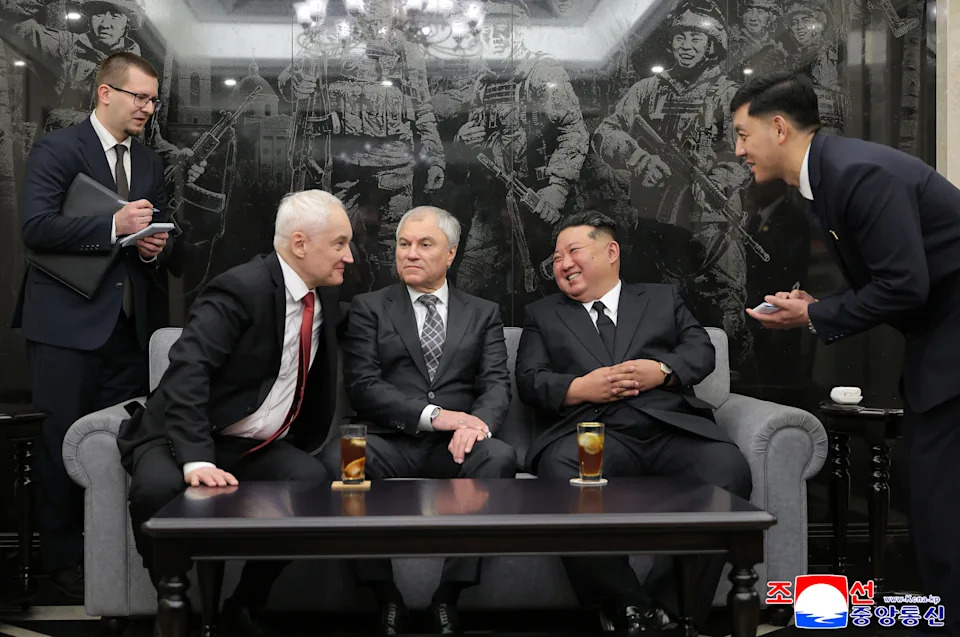
In this photo provided by the North Korean government, from second right to left, its leader Kim Jong Un, Russian parliament speaker Vyacheslav Volodin and Russian Defense Minister Andrei Beloussov share a light moment as they attend an inaugural ceremony of a memorial museum in Pyongyang, North Korea Sunday, April 26, 2026. Independent journalists were not given access to cover the event depicted in this image distributed by the North Korean government. The content of this image is as provided and cannot be independently verified. Korean language watermark on image as provided by source reads: "KCNA" which is the abbreviation for Korean Central News Agency. (Korean Central News Agency/Korea News Service via AP)(ASSOCIATED PRESS)
KCNA also said Kim told Beloussov that North Korea would fully support Russia's efforts to defend its sovereignty and security. Russian state news agency Tass cited Beloussov as saying Moscow was prepared to sign a military cooperation plan with Pyongyang covering 2027–2031. A letter from Russian President Vladimir Putin, read by Volodin at the ceremony, called the museum a clear symbol of friendship and solidarity between the two countries.
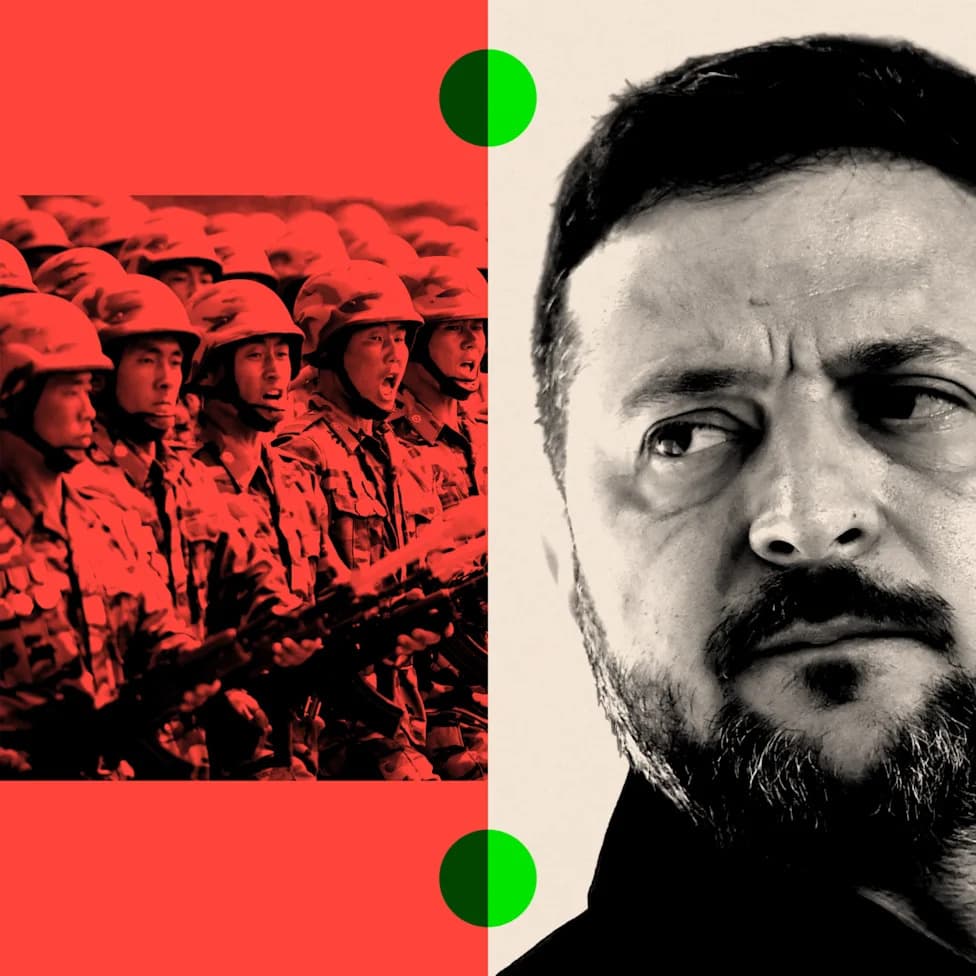
Independent and foreign intelligence estimates remain the main source for casualty and deployment figures. South Korea's intelligence service estimated last year that Pyongyang sent about 15,000 troops to the Kursk front and that roughly 2,000 of them were killed; neither Russia nor North Korea has published independent troop counts or casualty figures.
Implications and International Concerns
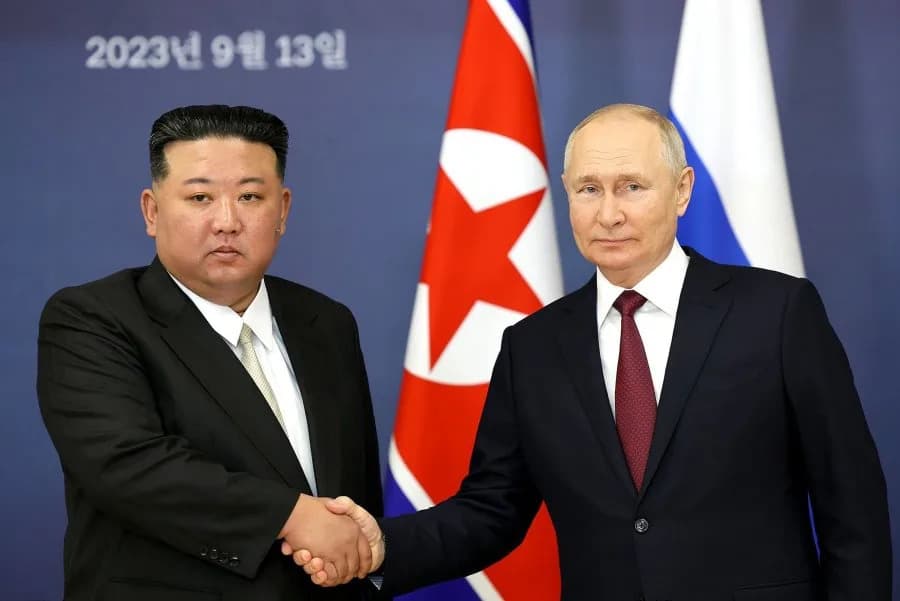
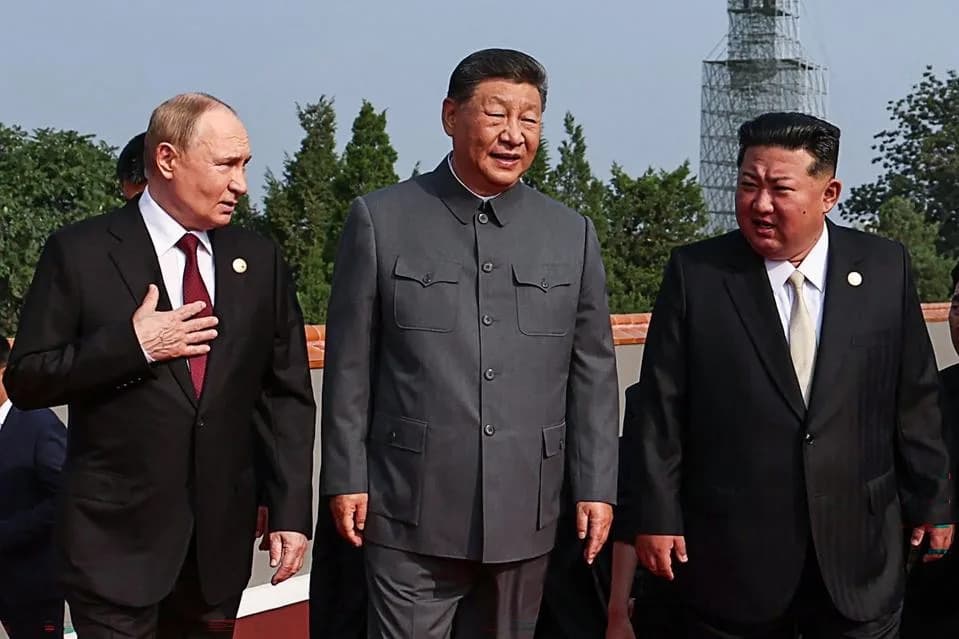
Since Russia's full-scale invasion of Ukraine, Kim Jong Un has prioritized ties with Moscow—supplying troops and conventional weapons in exchange for economic and other assistance, according to analysts. Seoul, Washington and allied partners have warned that closer military cooperation raises the risk of Russia transferring high-tech capabilities or dual-use items that could accelerate North Korea's nuclear and missile programs.
Analysts and Ukrainian officials said North Korean units deployed earlier in the fighting were vulnerable to drone and artillery strikes because of limited combat experience and unfamiliarity with local terrain. At the same time, Ukrainian military assessments indicate those deployments provided North Korean forces with battlefield experience and played a role in Russia's strategy of massing personnel in the Kursk fighting.
Bottom line: The museum opening is a highly symbolic step in a growing military and political alignment between Pyongyang and Moscow, one that is likely to intensify regional security concerns and scrutiny from Western governments.
Help us improve.