Researchers documented a female Arota festae on Barro Colorado Island shifting from hot pink to green over an 11-day period, tracked with daily photographs by STRI scientists. The rapid, reversible change appears physiological — likely involving pigments deposited at the final molt — and the individual remained healthy and mated, suggesting the pink phase is adaptive. The katydid’s color sequence matches the island’s many anthocyanin-rich young leaves, representing a form of masquerade camouflage and dynamic matching. Further study is needed to determine how common this strategy is.
Neon Katydid Isn’t a Genetic Mistake — It’s Dynamic Camouflage
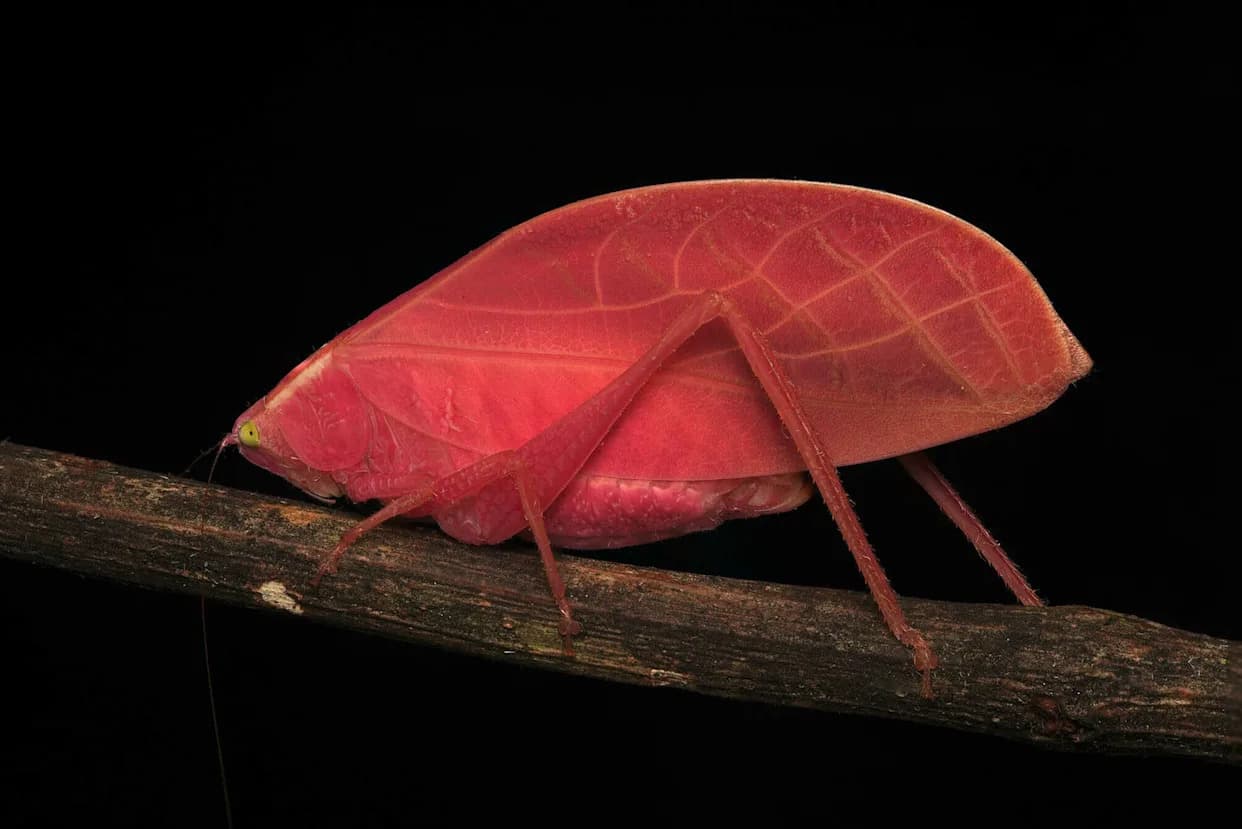
Intense hot pink morph of an adult female Arota festae. Photographed at 23:32 on 27 March 2025 on Barro Colorado Island, Panama, using a Sony A7CR camera with a LAOWA 90 mm f/2.8 lens and a Godox Speedlite TT350 flash. The final image was produced by focus stacking 4 photographs in Adobe Photoshop, with brightness increased for clarity while leaving saturation and hue unaltered.© J. Benito Wainwright et al. (2026) / CC By 4.0 / Wiley Online Library
Most people expect katydids to be leafy green, but some individuals can appear startlingly hot pink. For more than a century, researchers treated these rose-colored katydids in Panama as rare genetic anomalies — conspicuous outcasts whose bright color would make them easy prey.
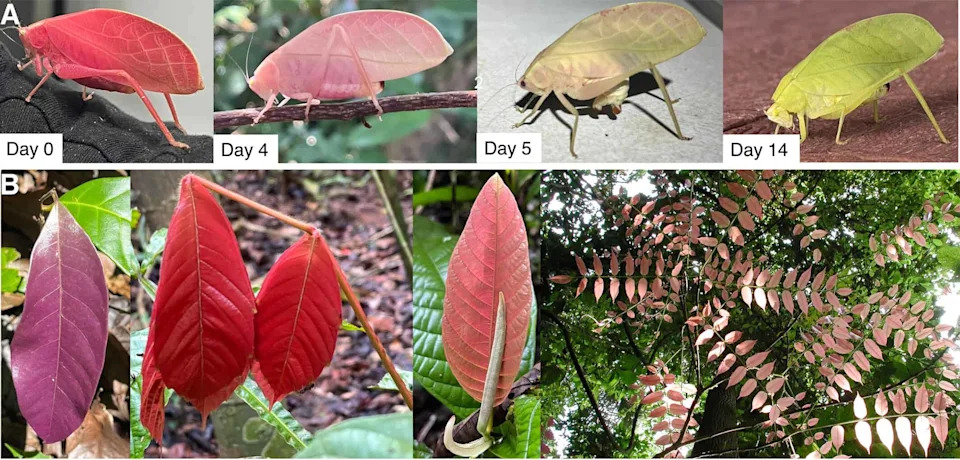
The katydid’s transformation mirrored the foliage of its environment.©J. Benito Wainwright et al. (2026) / CC By 4.0 / Wiley Online Library –Original/License
That view changed after a field observation on Barro Colorado Island. In March 2025, biologist Benito Wainwright and his team encountered an adult female Arota festae that was a vivid hot pink. The team photographed and monitored the insect daily and recorded a striking, reversible color transformation.
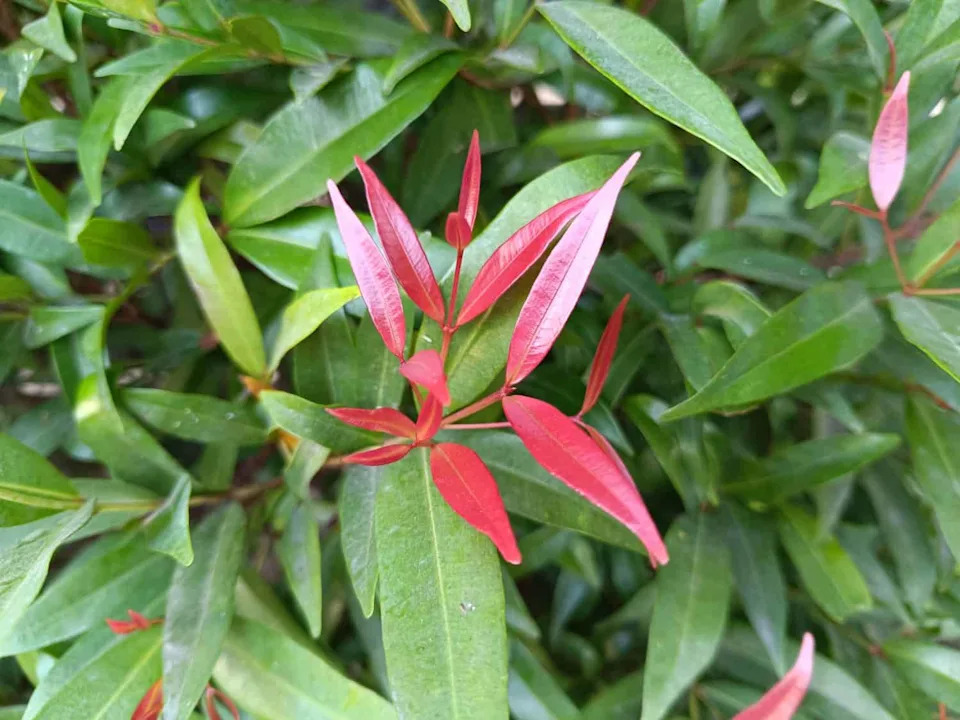
Anthocyanins in young leaves help to protect them from UV light and other environmental stressors.©am.mustakim/Shutterstock.com
Observation and Timeline
Over 11 days the katydid’s intense hot pink faded to pastel and eventually to the typical leaf green. Smithsonian Tropical Research Institute (STRI) researchers documented this sequence with daily photographs. The timeline the team recorded was:
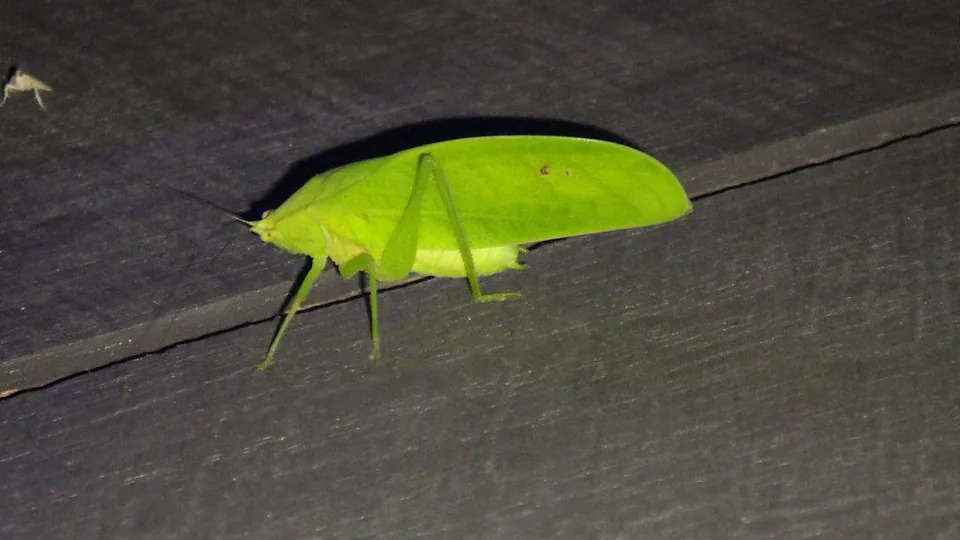
The observed katydid eventually transformed back to its traditional green coloring.©Andreas Manz / Public Domain / iNaturalist –Original/License
- Day 1: Vivid hot pink, highly conspicuous against green foliage.
- Day 4: Color softens to a delicate pastel pink.
- Day 11: Fully green and indistinguishable from conspecifics.
What the Change Means
Rather than being a permanent genetic mutation, the rapid transition appears to be physiological: pigments concentrated during the insect’s final molt are likely broken down or masked as the individual ages. Crucially, the observed katydid remained healthy, mated successfully in captivity, lived for another 30 days, and then died of natural causes — evidence that the pink phase is a functional life-stage strategy, not a lethal aberration.
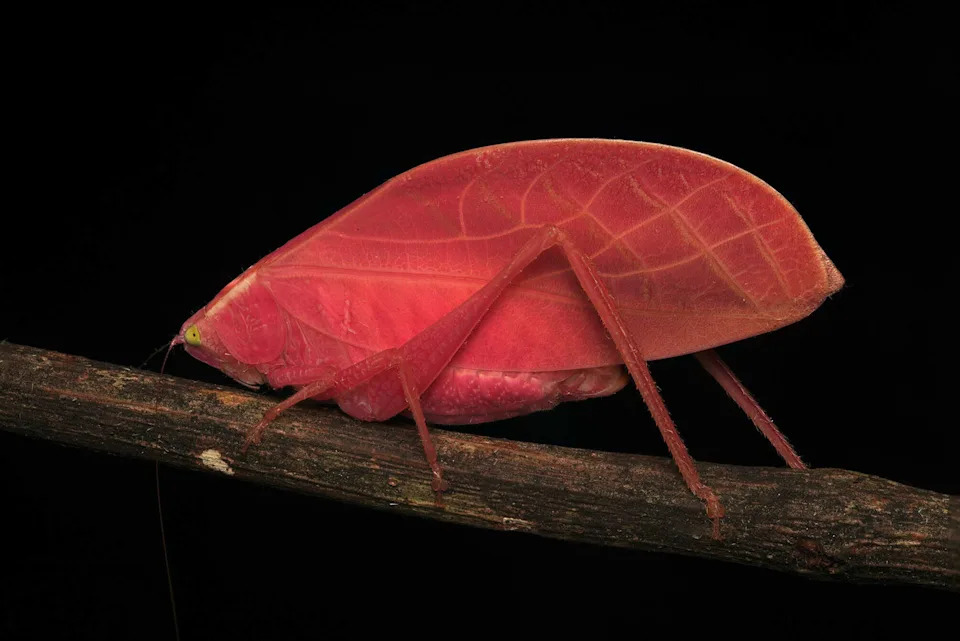
Rather than trying to hide from predators, these katydids simply change their appearance so they look like inedible leaves.©J. Benito Wainwright et al. (2026) / CC By 4.0 / Wiley Online Library –Original/License
Masquerade and Dynamic Matching
At first glance, bright pink seems an odd choice for concealment. However, many tropical plants produce new leaves that are pink or red before turning green, a phenomenon called delayed greening. These young leaves contain anthocyanins — pigments that can protect tissues from UV damage and may deter herbivores. On Barro Colorado Island, roughly 36% of plant species show delayed greening, creating a continuous background of pink foliage.
The katydid’s color shift closely tracks the same sequence seen in young leaves. By resembling an unpalatable or chemically defended young leaf rather than a nutritious insect, the katydid uses masquerade camouflage: predators overlook it because it appears to be an uninteresting plant part. Because the color change occurs within a single life stage, researchers call this strategy dynamic matching — actively tracking the phenology of surrounding foliage to remain concealed through a vulnerable period.
Implications and Next Steps
The observation, published in Ecology (2026), challenges the long-standing assumption that unusual coloration is invariably a disadvantage. Instead, some “rare” color forms may be specialized adaptations finely tuned to local ecological patterns. That said, this conclusion is based on a single fully documented individual. Important questions remain: How common is this strategy across Arota festae populations? What cues (temperature, light, plant chemicals) trigger the shift? Is the pattern seasonal or widespread across habitats?
Researchers urge further study to confirm how widespread and variable this dynamic color-matching is across the species and the canopy community. For now, the neon katydid provides a compelling example of how apparent flamboyance can mask a subtle, sophisticated disguise.
Help us improve.