Curiosity’s first wet‑chemistry experiment on Mars dissolved a 2020 Mary Anning rock sample inside the SAM instrument and detected 21 carbon-bearing molecules, seven never seen on Mars before. The team found a nitrogen heterocycle and benzothiophene, and estimates the organics have been preserved for about 3.5 billion years in clay-rich sediments. Laboratory tests on the Murchison meteorite produced similar compounds, suggesting meteorite delivery could be a source. While not proof of past life, the findings strengthen the case that ancient Mars was habitable and underscore the importance of returning samples to Earth for definitive study.
Curiosity’s Wet‑Chemistry Breakthrough: 21 Organic Molecules Found on Mars, Seven New to the Planet
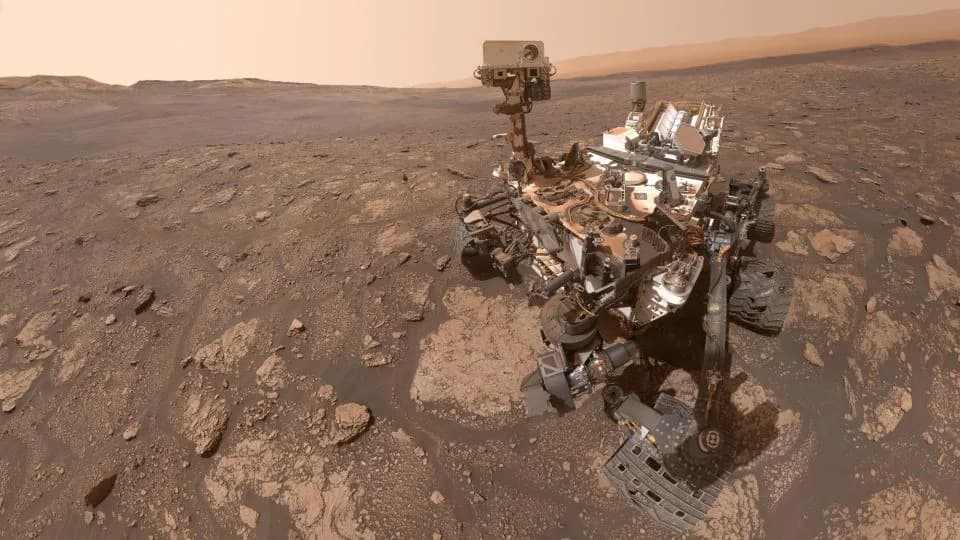
The Curiosity Mars rover takes this selfie in 2020 after drilling a rock sample from a site named after British paleontologist Mary Anning. - JPL-Caltech/MSSS/NASA
The Curiosity rover has revealed the most diverse collection of organic molecules yet detected on Mars, identifying 21 carbon-bearing compounds in a 2020 rock sample — seven of them never seen before on the planet. The discovery comes from a first-of-its-kind wet‑chemistry experiment performed inside the rover’s SAM (Sample Analysis at Mars) instrument.
The powdered sandstone sample, taken from a site the team named Mary Anning in the Glen Torridon region of Mount Sharp within Gale Crater, was dissolved in a small cup of tetramethylammonium hydroxide (TMAH). That reagent breaks large, complex molecules into smaller fragments that are easier to detect and identify.
What the Team Found
Researchers identified 21 carbon-containing molecules, including a newly detected nitrogen heterocycle — a ringed molecule that contains nitrogen and can serve as a chemical precursor to more complex nitrogen-bearing compounds related to RNA and DNA chemistry. The analysis also detected benzothiophene, a sulfur- and carbon-bearing compound commonly found in meteorites.
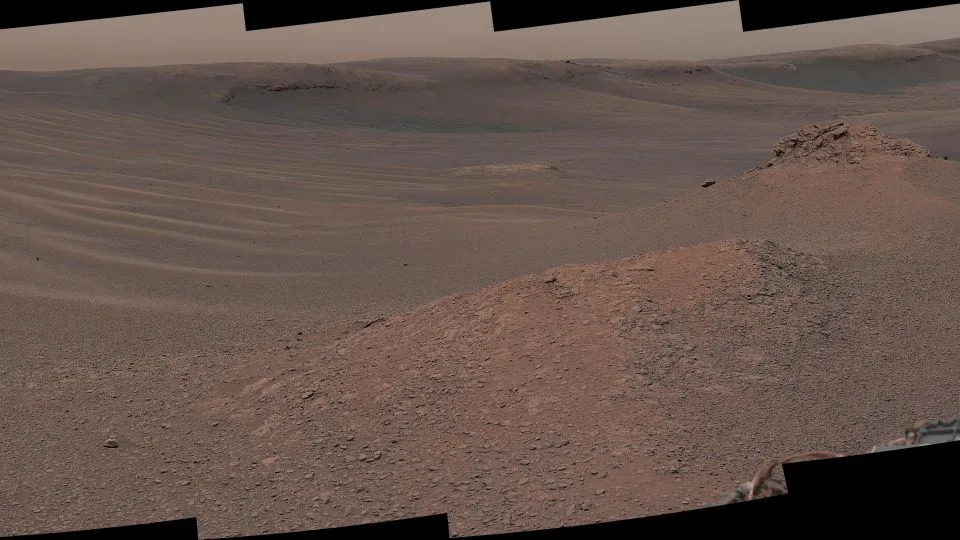
Curiosity’s Mastcam captures this mosaic in 2019 of a region on Mount Sharp with many clay-bearing rocks. - JPL-Caltech/MSSS/NASA
“These findings are important because they confirm that larger complex organic matter is preserved on Mars over geologic time periods, despite the harsh radiation environment,” said Dr. Amy Williams, lead study author and associate professor of geological sciences at the University of Florida.
The team estimates the organics in the Mary Anning sample have been preserved for about 3.5 billion years in clay-bearing, sedimentary rocks that once formed in ancient lake environments. Clay minerals are known to trap and protect organic molecules from degradation.
Lab Confirmation and Implications
To validate the rover results, researchers treated a fragment of the Murchison meteorite (a >4-billion-year-old meteorite rich in organics) with TMAH on Earth; many of the same breakdown products, including benzothiophene, appeared. That similarity supports the idea that meteorite delivery could be one source of Martian organics, though geologic synthesis on Mars is also possible.
“The same stuff that rained down on Mars from meteorites is what rained down on Earth, and it probably provided the building blocks for life as we know it,” Williams said.
The wet chemistry experiment was designed to reveal organics, not to prove biological origin. The team emphasizes that while these findings strengthen the case that ancient Mars was habitable, they do not demonstrate past life. Definitive tests for biosignatures will require returning carefully selected rock samples to Earth for more advanced laboratory analyses.
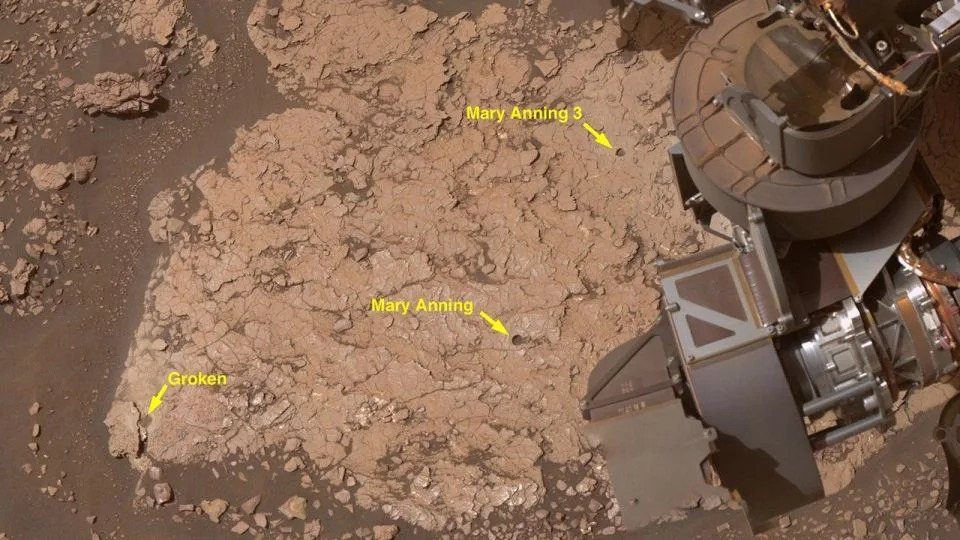
An annotated close-up shows three holes Curiosity drilled into Martian rock at the Mary Anning site in 2020. - JPL-Caltech/MSSS/NASA
Context and Next Steps
Curiosity’s result builds on earlier detections of Martian organics and complements observations by NASA’s Perseverance rover. The method demonstrated on Curiosity will inform future missions: the ESA’s ExoMars Rosalind Franklin rover and NASA’s Dragonfly mission to Titan will also carry wet‑chemistry capabilities.
“It was a feat just figuring out how to conduct this kind of chemistry for the first time on Mars,” said Charles Malespin, principal investigator for SAM at NASA’s Goddard Space Flight Center. “Now that we’ve had some practice, we’re prepared to run similar experiments on future missions.”
Some policy and programmatic challenges remain: plans to return Perseverance’s cached samples to Earth have been delayed and reshaped by international and funding decisions. Scientists continue to stress that a robust sample-return campaign is the most direct path to resolving whether organics on Mars include traces of past life.
Bottom line: Curiosity’s wet‑chemistry experiment has opened a new window into ancient Martian chemistry by revealing a rich suite of organics preserved for billions of years. The discovery sharpens the scientific case for a Mars sample return and for continued in situ and sample-based investigations.
Help us improve.