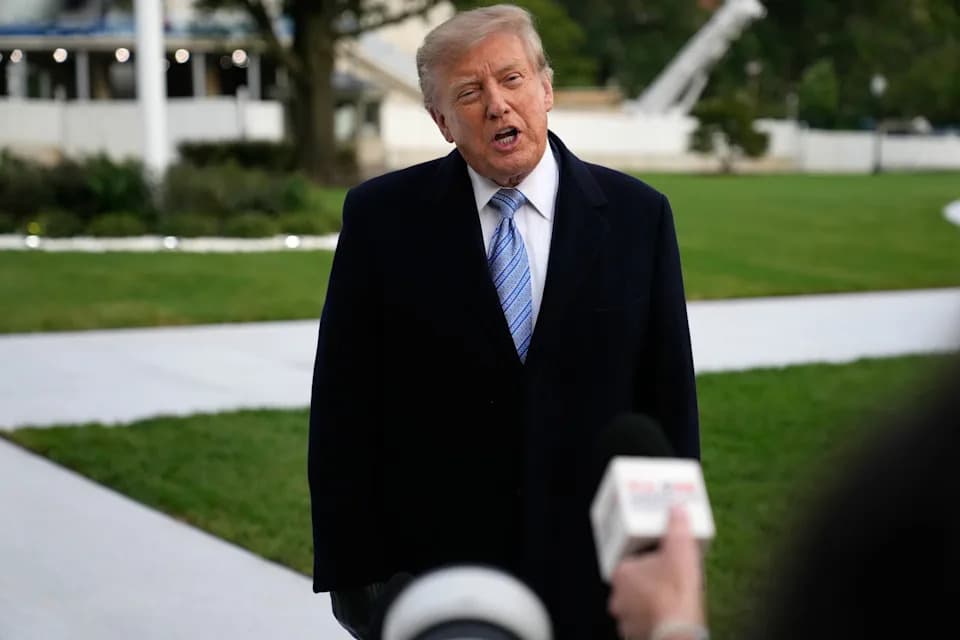
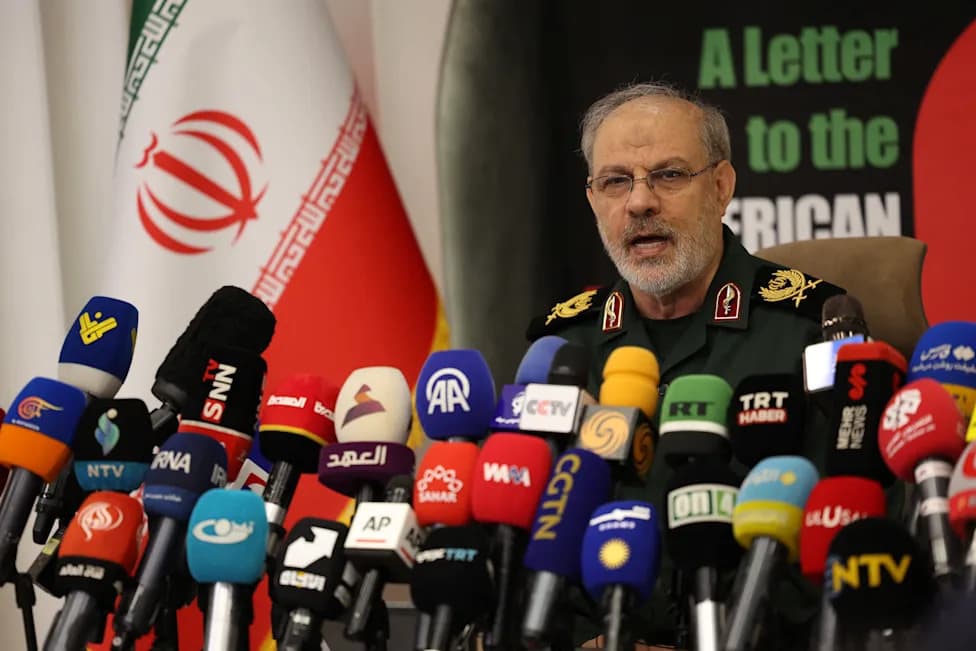
The authors argue that President Trump extended an "indefinite" ceasefire despite an IRGC attack on three ships and Iran’s refusal to negotiate — a move they view as a political retreat. Analysts now judge that the IRGC likely controls Iran’s military and negotiating posture, and Tehran is leveraging oil market pain and prepositioned reserves to withstand pressure. The piece calls for a shift from strategic signaling to coordinated operational-tactical measures — stronger economic pressure, blockade enforcement, disrupted communications, and prepared military options — to compel meaningful Iranian concessions or regime collapse.
Opinion: Trump Appears to Blink First — The IRGC, The Strait Of Hormuz, And What Comes Next
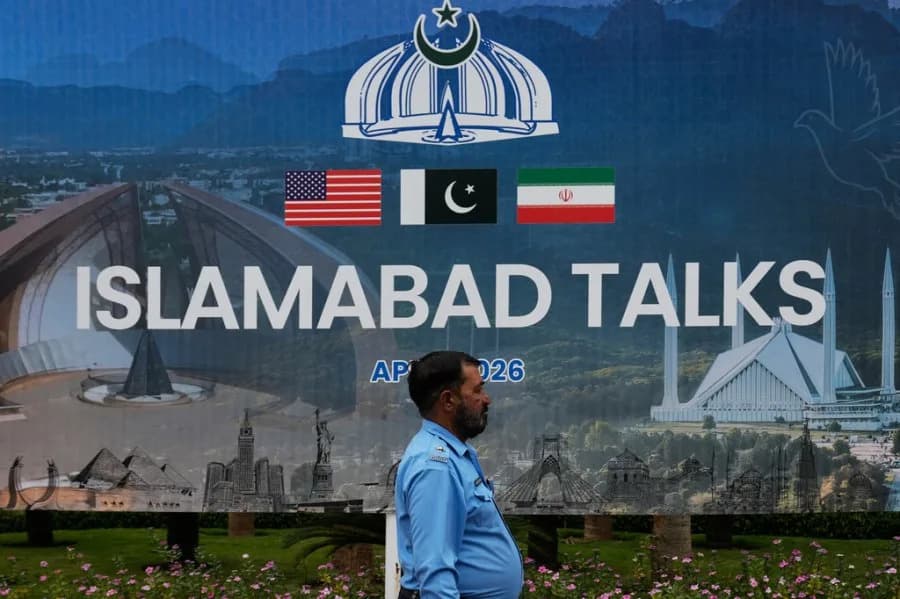
Less than 24 hours after President Trump accepted Pakistan’s proposed off-ramp — an “indefinite ceasefire” meant to give Iran time to produce a unified negotiation proposal — the Islamic Revolutionary Guard Corps (IRGC) attacked three ships in the Strait of Hormuz.
Iran declined to send negotiators to Islamabad and offered no concessions to Washington. Yet, with a two-week ceasefire nearing expiry and repeated presidential threats to resume strikes, the administration extended the pause, apparently betting that internal fissures in Tehran and a naval blockade would force a favorable political outcome.
“Hope is not a method,”
— Gen. Gordon R. Sullivan, former U.S. Army Chief of Staff.
The IRGC’s Wednesday message was blunt: come and take it. Contrary to some expectations that Iran’s government is deeply fractured, the IRGC — the regime’s most uncompromising military faction — now appears to exert substantial control over both military response and the negotiating posture.
What Analysts Are Saying
The Institute for the Study of War reported that senior IRGC figures have likely secured at least temporary control of Iran’s military response and negotiating stance, sidelining more pragmatic officials. That shift suggests the U.S. interlocutors may no longer be able to negotiate binding concessions on Iran’s behalf.
IRGC commander Ahmad Vahidi appears to have called the administration’s bluff, calculating that President Trump would be reluctant to order a ground invasion — the only measure Vahidi believes could decisively remove his faction.
Tehran's Calculus
Tehran seems to be playing for time. The regime judges that global oil revenue losses of roughly $2 billion per day will exert greater pressure on world markets and governments than the estimated $300 million per day cost to Iran — a dynamic that could increase diplomatic pressure on Washington. Compounding Iran’s margin for maneuver is a prepositioned "floating reserve" of roughly 200 million barrels of crude near China, roughly five months of typical export supply, according to retired Navy Captain Lance Gordon.
Additionally, the IRGC has shown a willingness to accept martyrdom for its operatives, while U.S. responses have relied on stand-off weapons and may be reaching diminishing returns.
Where The Campaign Must Go
To secure a decisive result, the campaign should shift from purely strategic signaling to coordinated operational and tactical action. That transition need not imply large-scale invasion or occupation; instead it requires synchronized application of all instruments of national power — diplomatic, informational, economic and military — with particular emphasis on economic and military measures.
Recommended steps include:
- Maintain and enforce a maritime blockade while ensuring freedom of navigation in the Strait of Hormuz;
- Disrupt IRGC command-and-control and communications to limit operational reach without necessarily escalating to widescale ground combat;
- Coordinate allied economic pressure to target regime financing and make proxy operations more costly;
- Prepare calibrated military options so that further escalation is credible and timed at the president’s discretion.
The authors cite retired Generals and former officials who argue that Iran has historically responded to displays of strength and that perceived U.S. hesitancy can be exploited by Tehran and its proxies.
Conclusion
The authors contend that the last non-kinetic opportunity for Iran to surrender enriched uranium, abandon nuclear weapons and missile programs, defund proxies, and cede practical control of the Strait of Hormuz has likely passed. They urge the administration to combine economic pressure, diplomatic isolation, information operations and calibrated military measures to move toward a decisive outcome while avoiding unnecessary occupation.
Authors: Col. (Ret.) Jonathan Sweet served 30 years as a military intelligence officer and led U.S. European Command’s Intelligence Engagement Division from 2012 to 2014. Mark Toth writes on national security and foreign policy. They are co-founders of INTREP360 and produce the INTREP360 Intelligence Report on Substack.
Copyright 2026 Nexstar Media, Inc. All rights reserved.
Help us improve.