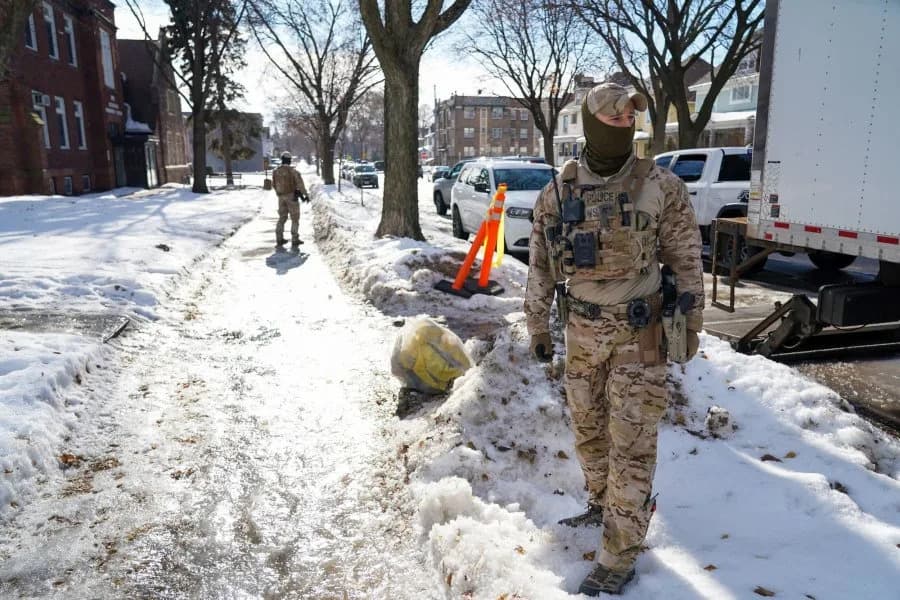
An appeals court has paused a 2025 California law that would have required federal immigration agents to display visible identification while on duty. The Justice Department sued, arguing the statute violates the Supremacy Clause and would endanger officers. The Ninth Circuit unanimously ruled the law "attempts to directly regulate" federal functions and issued an injunction pending appeal. California says the rule was intended to improve public safety and reduce misidentification.
Ninth Circuit Pauses California Law Requiring Federal Immigration Agents to Display ID
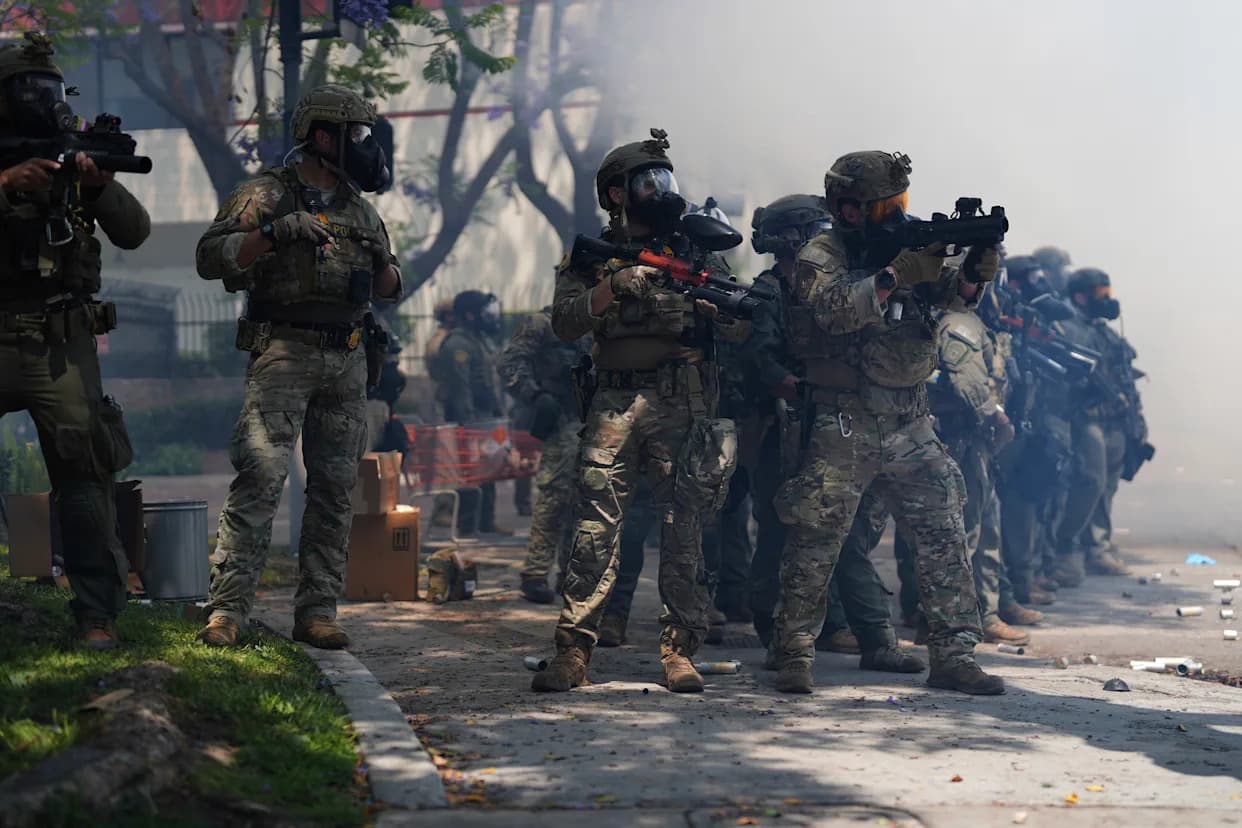
FILE - Law enforcement respond to protesters after federal immigration authorities conducted operations, June 7, 2025, in Paramount, Calif. (AP Photo/Eric Thayer, File)(ASSOCIATED PRESS)
LOS ANGELES (AP) — A federal appeals court has blocked a California law enacted in 2025 that would have required federal immigration officers to display a badge or other visible identification while carrying out their duties.
A three-judge panel of the U.S. Court of Appeals for the Ninth Circuit issued an injunction pending appeal, pausing enforcement of the statute while the legal challenge proceeds. The court had earlier entered a temporary administrative injunction to halt implementation.
Federal Challenge and Court Ruling
The Trump administration sued California in November, arguing the state measure would endanger officers by making them more vulnerable to harassment, doxxing and violence and that the law improperly intrudes on federal operations in violation of the Constitution.
At a March 3 hearing, Justice Department lawyers told the panel the law attempted to regulate federal activity and therefore ran afoul of the Supremacy Clause. In a unanimous opinion authored by Judge Mark J. Bennett, the Ninth Circuit agreed, finding the law "attempts to directly regulate the United States in its performance of governmental functions." The three-judge panel included Bennett, Daniel P. Collins and Jacqueline H. Nguyen.
"All citizens have a stake in upholding the Constitution," the court wrote, indicating it did not reach the state’s public-safety arguments because the federal government had shown a likely constitutional violation.
California's Argument
California officials countered that the requirement applied equally to all law-enforcement officers and did not single out the federal government. They argued the rule was necessary to reduce dangerous misidentification in the field — for example, situations where officers are mistaken for civilians or suspects — and therefore protected public safety.
In a brief opposing the injunction, state attorneys wrote that visible identification helps prevent attacks in which assailants claim they believed the officer was not law enforcement.
Related Challenges
The original lawsuit also challenged a separate California measure, signed last year, that would have prohibited most officers from wearing masks, neck gaiters and other face coverings. A federal judge blocked that law in February. The masked-officers statute excluded state law enforcement and carved out exceptions for undercover agents, protective equipment such as N95 respirators, tactical gear and other situations where removing a covering would jeopardize an operation.
First Assistant U.S. Attorney Bill Essayli called the appeals court decision a "huge legal victory" in a post on X. The California Attorney General’s office did not immediately respond to requests for comment.
Help us improve.