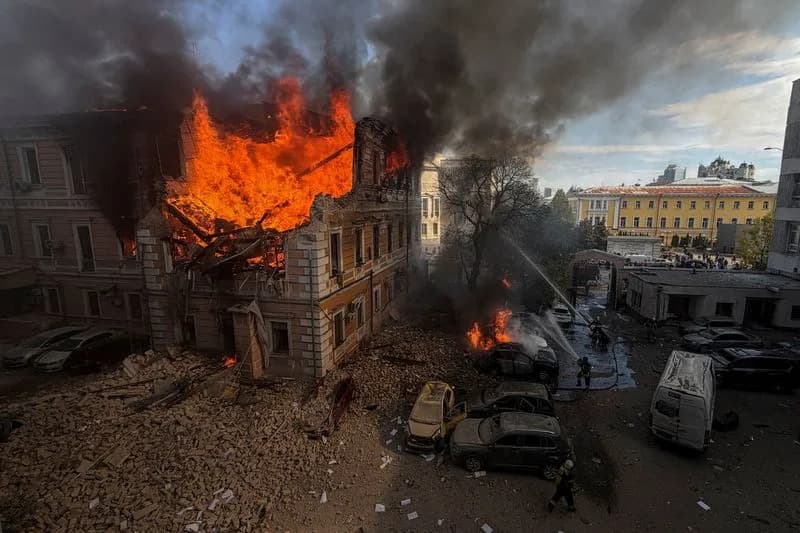
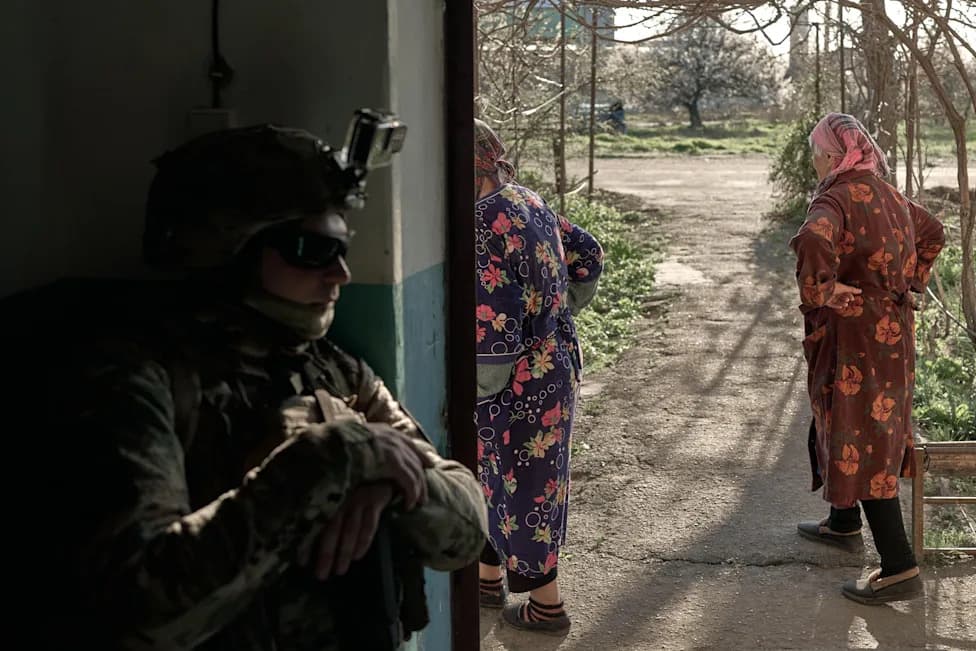
Ukraine's Prosecutor General says Russian hypersonic Kinzhal missiles and attack drones have repeatedly flown near the decommissioned Chornobyl site and the Khmelnytskyi nuclear plant, increasing the risk of a major accident. Radars logged 35 Kinzhals within about 20 km of those sites and at least 92 drones within 5 km of Chornobyl since July 2024. Investigators report some Kinzhals fell within 10 km of Khmelnytskyi, and a drone previously pierced Chornobyl's containment shelter — damage that the EBRD says could cost at least €500 million to repair.
Ukraine Warns Russian Kinzhals and Drones Have Repeatedly Flown Near Chornobyl, Raising Nuclear Safety Fears
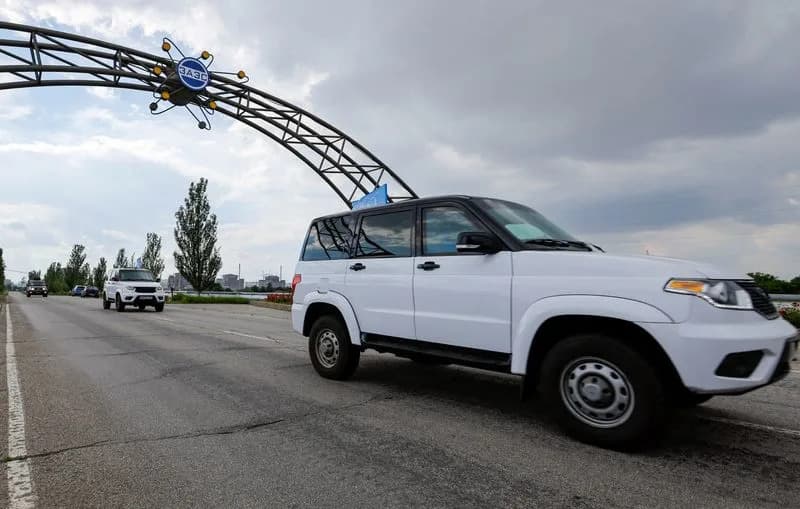
FILE PHOTO: A motorcade transporting members of the International Atomic Energy Agency (IAEA) expert mission, escorted by the Russian military, drives along a road while leaving the Zaporizhzhia Nuclear Power Plant in the course of Russia-Ukraine conflict outside Enerhodar in the Zaporizhzhia region, Russian-controlled Ukraine, June 15, 2023. REUTERS/Alexander Ermochenko/File Photo
Ukraine's Prosecutor General, Ruslan Kravchenko, told Reuters that Russian forces have repeatedly routed hypersonic missiles and attack drones along flight paths that brought them dangerously close to the decommissioned Chornobyl nuclear site and the Khmelnytskyi power station. His disclosure, released in written remarks as Ukraine approaches the 40th anniversary of the 1986 Chornobyl disaster, highlights growing concerns about the safety of nuclear facilities amid the conflict.
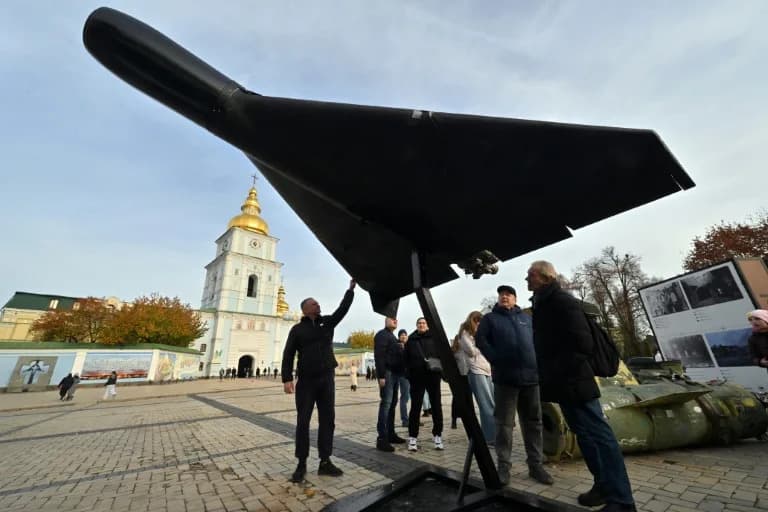
Kravchenko said radars detected 35 Kinzhal hypersonic missiles at various distances within roughly 20 km of either Chornobyl or the two-reactor Khmelnytskyi plant; in 18 of those instances missiles passed within about 20 km of both sites on the same sortie. He added that on three separate occasions Kinzhal missiles fell to the ground and landed within approximately 10 km of the Khmelnytskyi station, with wreckage showing no clear signs of interception.
IAEA Concern and Local Risks
The International Atomic Energy Agency (IAEA) said it routinely reports on military activity near nuclear power plants and on attacks against electrical substations that underpin nuclear safety. "IAEA Director General Rafael Grossi has repeatedly expressed deep concern about the risks and dangers of these military activities for nuclear safety and security," the agency said, urging maximum restraint around nuclear facilities to avoid the risk of a nuclear accident.
Drone Incidents and Damage to Containment Shelter
Since July 2024, Kravchenko said Ukrainian radars logged at least 92 Russian drones flying within a five-kilometre radius of Chornobyl's radiation containment shelter — the protective structure placed over Reactor No. 4 after the 1986 accident. He suggested the actual number is likely higher because radar tracks can represent multiple drones and some drones may evade detection.
Ukrainian investigators say a long-range attack drone struck Chornobyl in February last year, piercing the containment shelter. The Kremlin denied targeting nuclear infrastructure and suggested the incident may have been a provocation. The European Bank for Reconstruction and Development (EBRD) estimates that repairs to the shelter will cost at least €500 million and warns that without such work "irreversible corrosion" could begin within four years.
Why These Flights Matter
Kravchenko called the flights "solely for the purpose of intimidation and terror," noting that deliberate flyovers of nuclear sites or routes that place explosive weapons near key facilities show a disregard for civilian safety across Europe. He also said Russian forces may be using the Chornobyl corridor to route drones to evade dense pockets of Ukraine's air-defence coverage, which are concentrated around populated areas and critical infrastructure.
The Chornobyl complex lies less than 10 km from the border with Belarus and about 100 km north of Kyiv, surrounded by the contaminated exclusion zone. Ukraine operates four nuclear power plants, including the Zaporizhzhia plant in the south — Europe’s largest — which has been occupied by Russian forces since early in the full-scale invasion in 2022.
Russia's defence ministry did not respond to Reuters' request for comment for this article. Additional reporting for this piece came from Olena Harmash in Kyiv and Francois Murphy in Vienna.
Help us improve.