
Sina, 28, lost the independence he built in Tehran when a conflict and an accompanying internet blackout collapsed the video studio that employed him. Laid off without pay as debts mounted and online business stalled, he returned to his grandmother's apartment in Neyshabur facing scarce local opportunities and rising costs. The ceasefire offered a brief flicker of hope, but the economy and job market have not recovered, leaving him uncertain how long he can survive.
Before the Ceasefire, His Tehran Dream Died: A Young Editor's Story
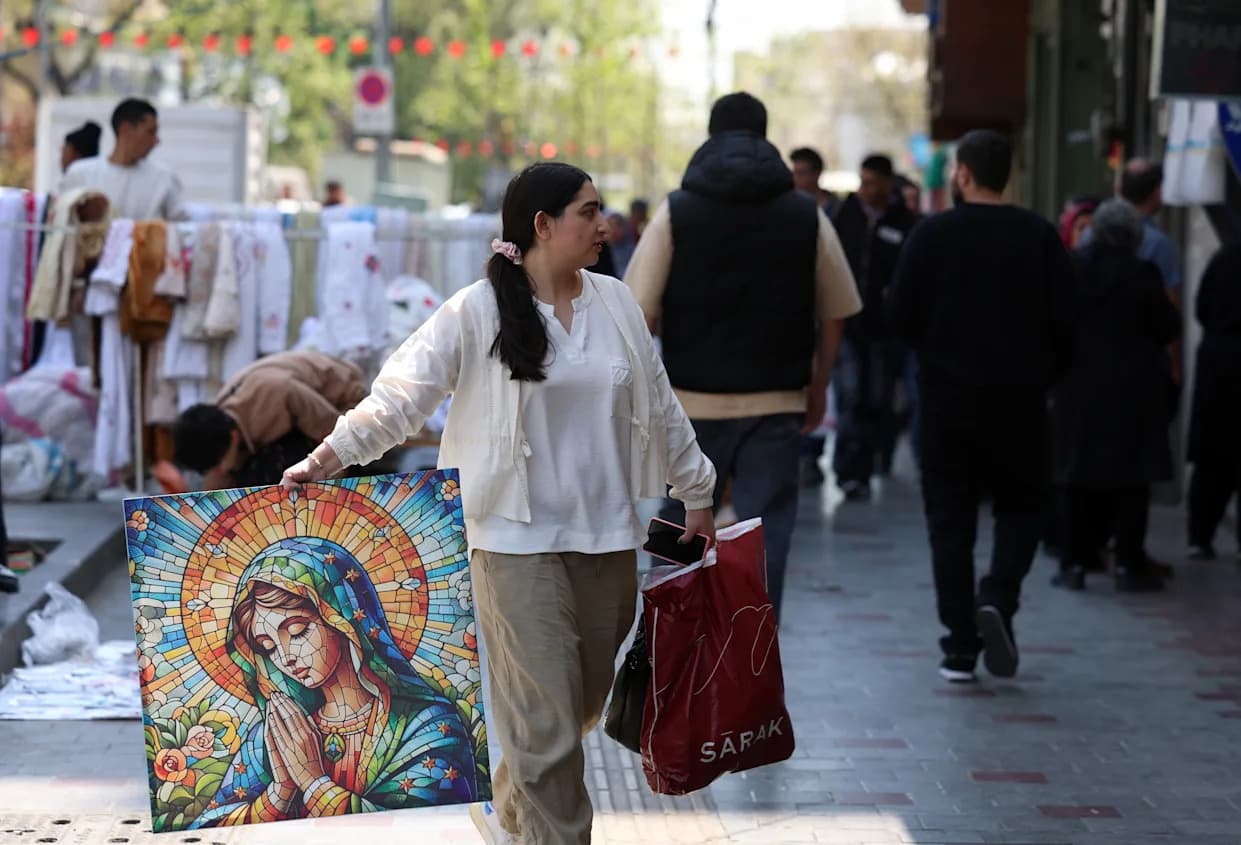
An Iranian woman carries a painting in a street market in northern Tehran, Iran, on April 16, 2026 [Abedin Taherkenareh/EPA]
Sina* was 28 when the life he had fought to build in Tehran unraveled. After completing mandatory military service, he refused to return to his hometown of Neyshabur in eastern Iran because he believed there were few opportunities for a young man with experience in film editing and independent student theatre. Through a college friend he landed a job at a video content studio in the capital, rising from camera assistant to assistant video editor within six months. That progress evaporated when the recent conflict and widespread internet blackout crippled the business.
It has been days since the guns fell silent, but the small spark of hope the ceasefire brought has already dimmed. Of all the CVs he sent in desperation, only one company called — offering a salary that would not cover basic living costs. His family in Neyshabur repeatedly urges him to come home: 'Come back, there’s work for you here.' Their words, meant as comfort, feel like salt in the wound.
From Independence To Uncertainty
He had stopped taking money from his father, his pay had risen, and he was buying gifts for his two sisters. For the first time, he felt truly independent. Now he sits in his grandmother's empty apartment in Tehran, staring at a nearly dead phone with almost no internet, waiting for job offers that never arrive. 'This is what the war has done to me,' he says. 'Not a scratch on my body, but everything else — gone.'
The Day the City Changed
The morning the fighting began they were in a briefing meeting, drinking tea; a colleague had brought fresh croissants. Then they heard a fighter jet, a whistle and, seconds later, an explosion. Their first reaction was not panic but naive curiosity. Defying every survival lesson from the previous conflict, they rode the elevator to the roof with mugs in hand. Pillars of smoke rose across the city. A second blast, much closer, sent them sprinting for the stairs.
The manager sent everyone home. The city seized up. His driver could not reach him because of gridlock, so Sina walked 40 minutes under the harsh sun past stranded people and stalled cars. He reached his grandmother's house; she was hard of hearing and had not registered the blasts, and she welcomed him happily. He drank tea, watched television, ate and slept, only to wake to a city with no internet. An avid user of online games and social media, he found the sudden blackout suffocating. He could not smoke openly in his grandmother's home, and the forced abstinence amplified his agitation.
Supply Shortages and Rising Costs
In the following days the city emptied: neighborhoods felt hollow, and shops raised prices. In his building, only five of 12 units remained occupied. When his cigarettes ran out, his preferred brand was gone and supermarkets were charging double; with no certainty his March wage would arrive, he bought a cheap substitute that he describes as 'like inhaling truck exhaust.'
He tried to buy VPNs twice to bypass the blackout; the first worked for one day, and the second vendor blocked him after receiving payment. Anxiety, boredom and secret cigarettes blurred the days.
March 5: The Worst Night
The worst night came on March 5. A small explosion woke him around 4 a.m. He went to the kitchen for water, then a blast tore through the air — a sound he says is now seared into his brain. He pulled his terrified grandmother into the kitchen. Then a barrage began: more than ten explosions, each less than ten seconds apart. She sat on the floor, arms wrapped around his leg, head buried; it was the closest he has ever felt to death. Afterwards, the windows remained intact but the absence of sirens and shelters — unlike memories from the Iran-Iraq war — left them feeling utterly exposed.
Collapse of the Studio
Through it all they clung to the hope that the crisis would pass quickly. On March 17 the studio held its final online meeting: debts had mounted, invoices remained unpaid, and the manager saw no feasible path forward while the blackout persisted. For the new Iranian year beginning March 21, only 200 staff would be retained; the rest were laid off without pay. The studio had not merely paused — it had collapsed. The math was merciless: his grandmother's pension was meagre, his father already supported four people, and the only immediate prospect in Neyshabur was working at an uncle's supermarket.
He boarded a gruelling 10-hour bus through eerily quiet roads. The city he left felt hollow and swallowed by an unusual darkness. From Neyshabur he called his manager, who confirmed the bleak reality: even if the internet returned, the revenue losses were so deep that extended work would likely not revive the business.
A Brief Flicker of Hope
He updated his CV, bought a return ticket and went back to his grandmother's apartment because he needed to feel he was doing something. When the ceasefire was announced he felt a sliver of hope; it lasted about a day. His life had been a blur of studio shifts, independent theatre and late nights. Now it has contracted to four walls. Although some people are returning to the streets, the internet remains largely throttled, the economy is damaged, and the pre-conflict job market has not returned with the ceasefire. 'I don’t know how much longer I can hold out,' he says.
*Name changed for security reasons
Help us improve.





















