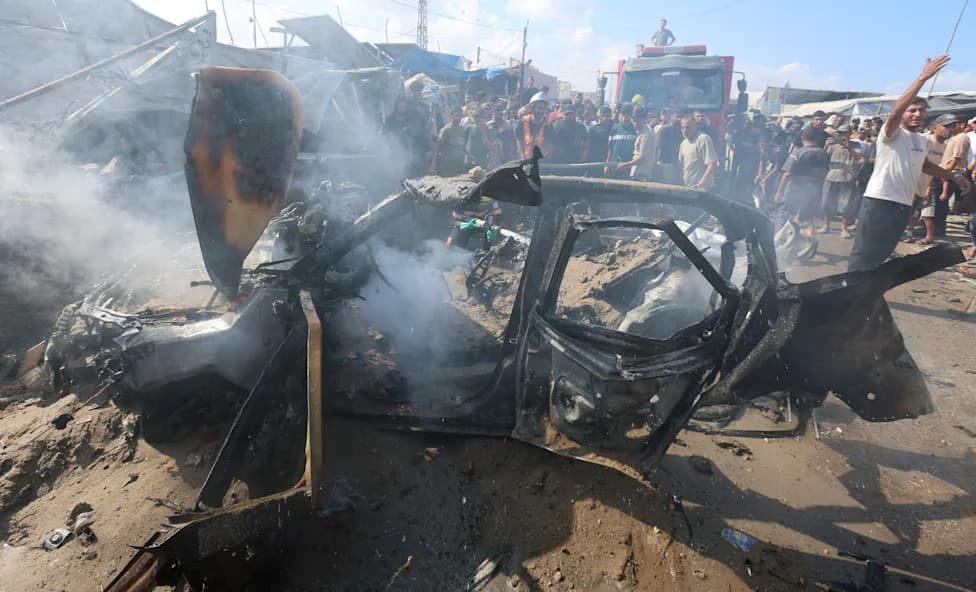
The Financial Times reports that DP World held talks with representatives linked to Donald Trump’s "Board of Peace" about managing supply chains and infrastructure for Gaza’s reconstruction. Proposals reportedly included warehousing, cargo tracking, security arrangements, a new port and a free-trade zone. Critics warn such plans risk sidelining Palestinians and bypassing international institutions, while the EU/UN/World Bank assessment estimates Gaza will need $71.4bn over 10 years.
DP World Held Talks With Trump-Linked 'Board of Peace' Over Gaza Reconstruction Logistics
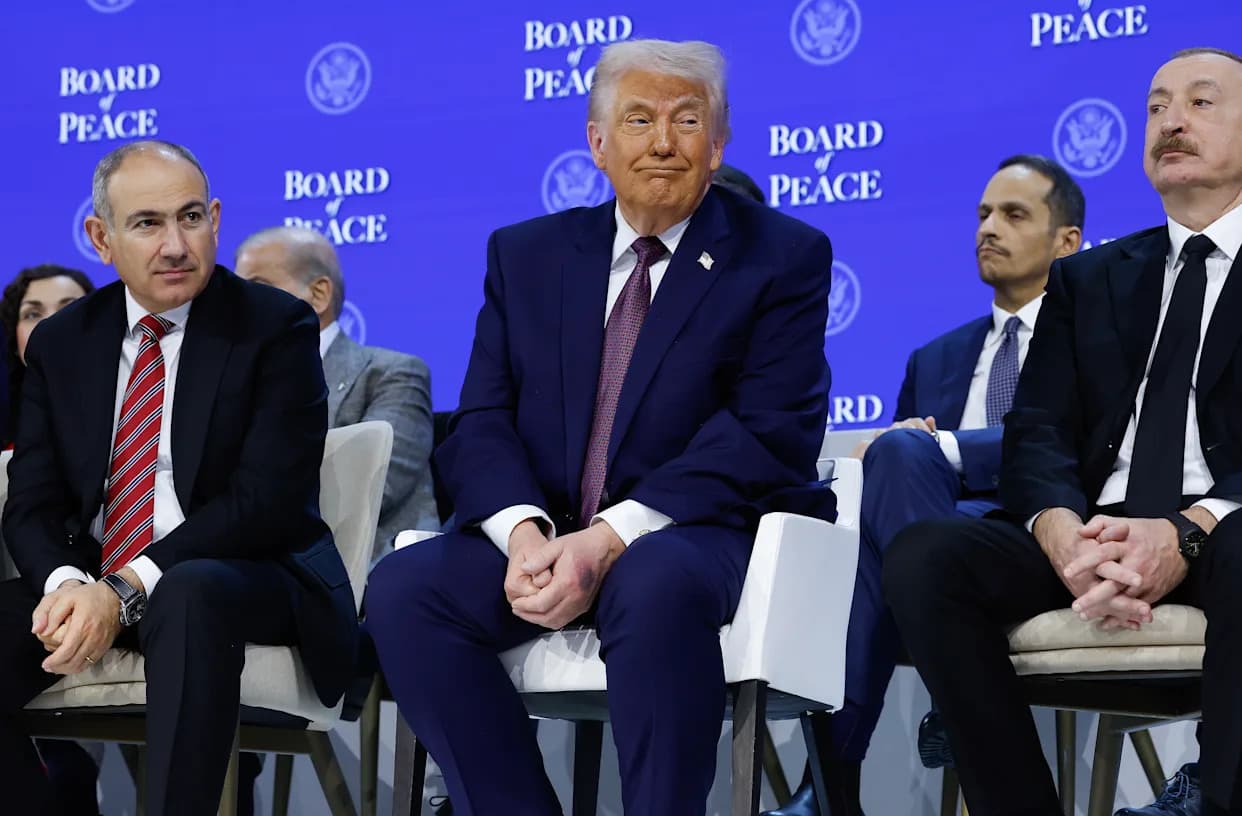
US President Donald Trump sits between Prime Minister of Armenia Nikol Pashinyan and Azerbaijan President Ilham Aliyev during a signing ceremony for the Board of Peace at the World Economic Forum on January 22, 2026 in Davos, Switzerland [Chip Somodevilla/Getty Images]
Dubai-based port operator DP World reportedly held talks with representatives linked to Donald Trump’s so-called "Board of Peace" about managing supply chains and infrastructure for Gaza’s reconstruction, the Financial Times (FT) reported.
What Was Discussed
The conversations reportedly explored whether the state-owned company could partner with the group to oversee logistics for humanitarian aid and commercial goods entering Gaza. Proposed areas included warehousing, cargo-tracking systems and security arrangements. The FT also says ideas were floated for building a new port in Gaza or on Egypt’s nearby Mediterranean coast and creating a free-trade zone inside the territory.
Vision And Uncertainties
A draft proposal described to the FT outlined a "secure and traceable supply chain system" and a "port-led economic ecosystem," combined with light industry and job-creation platforms intended to stimulate employment. It was not clear who authored the draft or how far the discussions progressed.
Responses And Context
DP World told the FT it was not aware of any such discussions. The United Arab Emirates' Ministry of Foreign Affairs did not respond to the newspaper's request for comment.
DP World, which is owned by the Dubai government, is one of the world’s largest port operators and says it handles about 10% of global trade daily across more than 80 countries. The company's senior leadership was reshaped after longtime chair Sultan Ahmed bin Sulayem stepped down in February following scrutiny over his links to convicted sex offender Jeffrey Epstein.
Criticism And Humanitarian Concerns
Critics argue that privatizing services and infrastructure risks sidelining Palestinians and bypassing international institutions such as the United Nations. Some observers warn these proposals could, in effect, legitimize or entrench displacement if they ignore Palestinian rights and local governance.
Security and Access: The report comes amid stalled progress toward a political settlement. Israel continues to occupy large areas of Gaza and aid access remains heavily constrained despite a US-brokered ceasefire announced last October. The Palestinian Ministry of Health reports that more than 700 people have been killed and about 2,000 injured since that announcement.
Wider Planning And Funding Needs
The FT also reported that back-channel discussions on reconstruction have continued with companies in the security, finance and technology sectors. A joint assessment by the European Union, the United Nations and the World Bank estimates Gaza will need $71.4 billion for reconstruction over the next 10 years, including roughly $23 billion required in the next 18 months.
Bottom Line: The reported talks highlight the growing international debate over who should manage Gaza’s reconstruction, how to balance private-sector involvement with Palestinian agency, and how to ensure aid and rebuilding avoid creating new injustices.
Help us improve.