Blood types are ancient molecular traits that affect more than transfusion compatibility. Evidence from Neanderthal DNA dates some O-associated variants to roughly 500,000–700,000 years ago, while A and B alleles appear to be a trans-species polymorphism stretching back ~20 million years. Researchers argue that pathogen-driven balancing selection, along with occasional neutral drift, best explains why multiple blood types persist as a population-level defense against infectious threats.
Why Humans Still Have Multiple Blood Types — An Ancient Evolutionary Puzzle
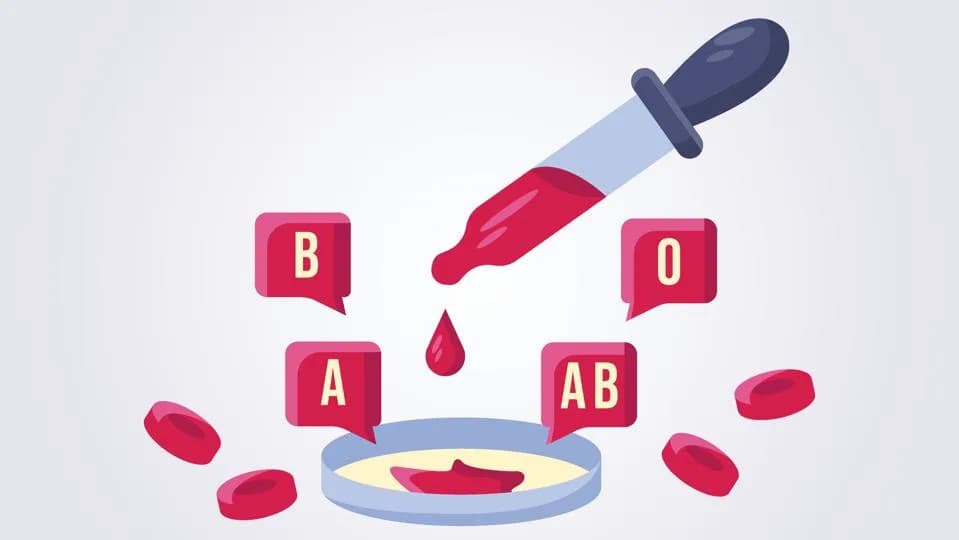
There’s more history in your blood types than you think, and it didn’t begin with humans. Here’s what we know about them, according to research.getty
Most people treat blood type as a clinical detail that matters only during transfusions or on donor cards. In reality, blood groups are ancient molecular variations that influence immunity, pathogen interactions and human evolutionary history.
What Blood Types Are
Blood types are defined by carbohydrate antigens on the surface of cells. The ABO system classifies four main types:
- Type A — A antigens
- Type B — B antigens
- Type AB — Both A and B antigens
- Type O — Neither A nor B antigens
These antigens appear not only on red blood cells but also on epithelial tissues and in bodily fluids. The Rh factor (positive/negative) adds another clinically important distinction, but from an evolutionary perspective the ABO polymorphism has the broader implications.
How Old Are These Variants?
Genetic and paleogenetic evidence shows that different pieces of the ABO story stretch across very different timescales. DNA from Neanderthal remains at El Sidrón contains deletions diagnostic of the O allele, pushing the origin of at least some O-associated variants to roughly 500,000–700,000 years ago. In contrast, comparative analyses across primates indicate that the A and B variants represent a trans-species polymorphism that likely dates back on the order of ~20 million years, long before humans or great apes evolved.
Why Multiple Blood Types Persist
Researchers propose two main explanations for the long-term maintenance of ABO diversity.
- Pathogen-Driven Balancing Selection: Different antigens can alter how microbes attach to or invade cells. When pathogens adapt to exploit the most common blood type, rarer types gain an advantage, producing frequency-dependent selection that maintains multiple types over time.
- Neutral Processes and Drift: Some variation may persist because it has only weak or episodic effects on survival and reproduction. Genetic drift can preserve alleles in populations, especially when selection is not uniformly strong.
Most researchers view these explanations as complementary: neutral processes may act at times, but the global distribution and trans-species persistence of ABO variants point strongly to episodes of balancing selection driven by infectious disease pressures.
Medical and Evolutionary Significance
ABO antigens are associated with differences in susceptibility or outcomes for certain conditions, including some infections, cardiovascular disease and cancers. That does not mean a blood type determines destiny, but it helps explain why these molecular markers have been conserved: they form part of the body’s interface with the microbial environment.
Selected studies: 2015 review in Clinical Chimica Acta (broader biological roles of ABO antigens); 2008 BMC Evolutionary Biology (Neanderthal O-associated deletions); 2012 PNAS (trans-species polymorphism among primates); 2004 Proceedings B (models of pathogen-driven balancing selection).
Bottom line: Blood types are more than administrative labels. They are deep evolutionary signatures—some pieces ancient across primates, others emerging within the human lineage—that help populations remain resilient against unpredictable pathogens.
Help us improve.