
May brings a calendar-month "blue moon": full moons on May 1 (5:23 pm GMT) and May 31 (8:45 am GMT). The May 31 full moon occurs near apogee at about 405,839 km, making it the smallest full moon of the year. Evening skywatchers can follow Venus and Jupiter drawing together (Venus passes Jupiter on June 9), while the Eta Aquariids meteor shower peaks around May 6. Look for the Spring Triangle and Coma Berenices, and avoid bright moonlight and local light pollution for best viewing.
See a Rare 'Blue Moon' This May — The Phenomenon Behind the Phrase
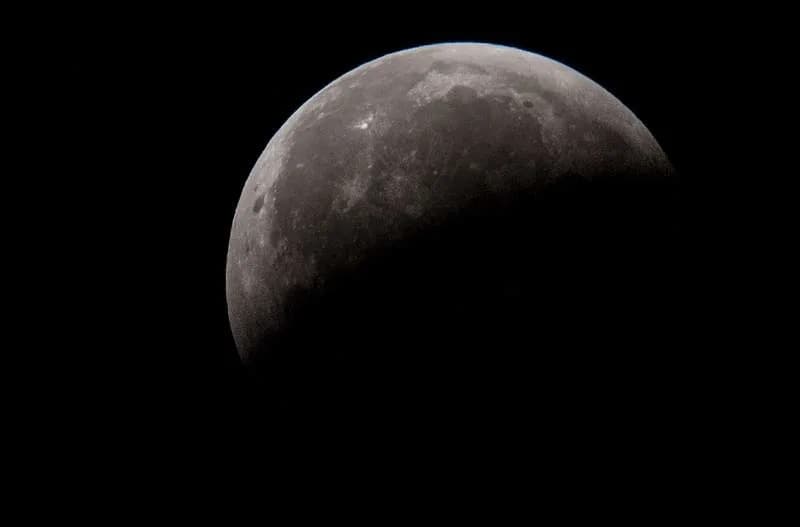
A rare “blue moon” returns in May — and also it’ll be the smallest full moon of the year. If it won’t glow blue, what will you really see in the sky, and when? Boris Roessler/dpa
This May, skywatchers have a rare opportunity to witness the very event that inspired the saying "once in a blue moon": a second full moon within a single calendar month.
What Is a Blue Moon? A "blue moon" commonly refers to a full moon that occurs twice in one calendar month. Because a lunar cycle (full moon to full moon) is about 29.5 days, this only happens occasionally — roughly every few years.
The first of May’s two full moons occurs on May 1 at 5:23 pm GMT. The second reaches exact fullness on May 31 at 8:45 am GMT. The May 31 full moon also occurs near lunar apogee (its farthest point from Earth) at about 405,839 kilometres, so it will appear the smallest full moon of the year — often called a "micro-moon."
The term "blue moon" is historic and somewhat misleading: neither full moon will actually look blue. From a calendrical point of view, the next similar calendar-month blue moon will occur on December 31, 2028.
Evening Show: Venus and Jupiter
After sunset in May across Europe, look low toward the north-western horizon for Venus, the brightest object in the evening sky after the Sun and the Moon. Shortly after, you can spot Jupiter higher in the western sky, slightly east of Venus. Jupiter is dimmer than Venus but still brighter than most stars.
Over the month the two planets draw closer. Venus will overtake Jupiter on June 9 in the constellation Gemini. On May 18 around 9:00 pm GMT, a thin waxing crescent Moon will pass Venus; two nights later the crescent will sweep past Jupiter.
Jupiter’s evening visibility shortens through May — it will set shortly after midnight by late month. Under good conditions, Saturn becomes visible in the pre-dawn eastern sky toward the end of the month.
Meteor Shower: Eta Aquariids
The Eta Aquariids are active throughout May. These meteors are very fast — entering Earth’s atmosphere at roughly 234,000 km/h — and most burn up on entry. Their parent body is Halley’s Comet, and peak activity is expected around May 6. The shower is best seen in the hours before dawn.
In Europe the shower’s radiant is relatively low, so observers may see only a few meteors per hour. Observers in the Southern Hemisphere and nearer the equator can expect higher rates — up to ~20 meteors per hour under dark skies.
Constellations and Seasonal Highlights
The Spring Triangle — formed by Regulus (Leo), Arcturus (Boötes) and Spica (Virgo) — grows easier to identify. Libra is currently faint and requires deliberate searching; just to its east Scorpio is rising, and its red star Antares is crossing the horizon. The figure of Ophiuchus, the serpent-bearer, is also rising in the south-east.
The Plough (Big Dipper) stands high near the zenith while Virgo crosses the meridian. Between Virgo and the Plough you can find Canes Venatici and the faint but star-rich Coma Berenices, which looks especially attractive through binoculars.
Viewing Tips
For the best experience: observe from a dark site away from streetlights, allow your eyes to adapt to the dark, and avoid bright moonlight when trying to spot faint meteors or deep-sky objects. Use binoculars to enhance views of star clusters and faint constellations.
Help us improve.





















