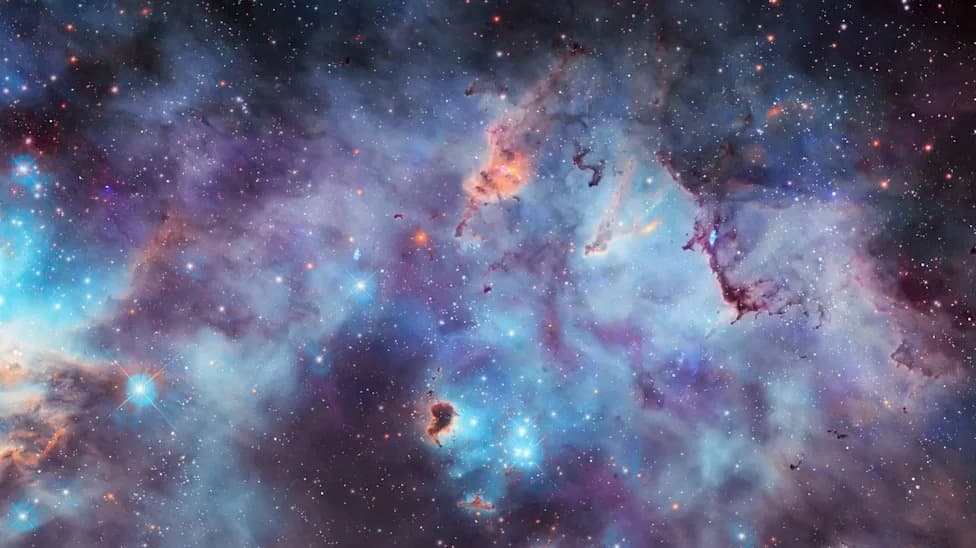
DESI has produced the largest high-resolution 3D map of the observable universe, cataloging over 47 million galaxies and more than 20 million Milky Way stars. The map reveals the cosmic web of filaments, clusters and voids and lets researchers trace structure across roughly the last 11 billion years, including the era known as cosmic noon. Early analyses hint that dark energy may evolve over time. The international survey — led by Lawrence Berkeley National Laboratory and funded by the U.S. Department of Energy — continues through 2028, with full-data results expected in 2027.
DESI Releases Largest High-Resolution 3D Map of the Universe — 47 Million Galaxies Traced Back to Cosmic Noon
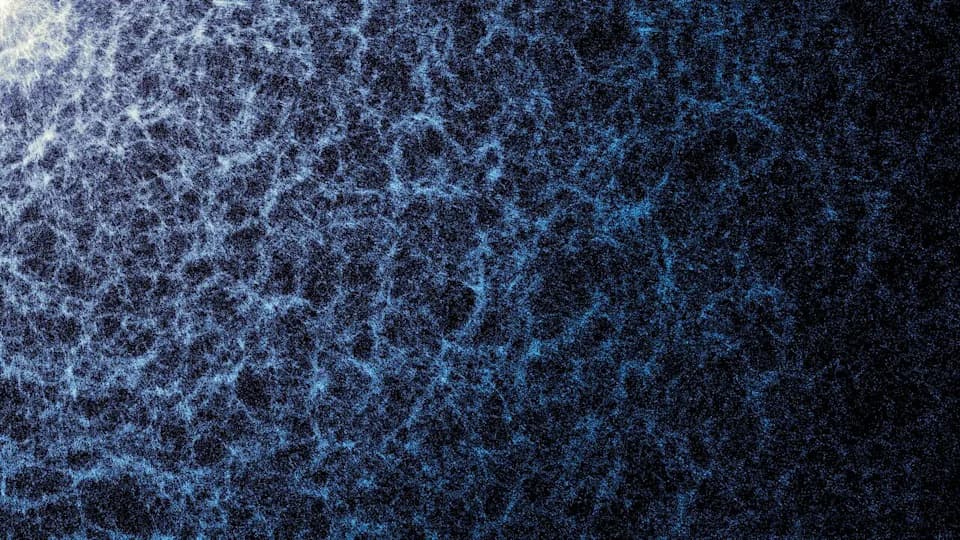
A small portion of DESI's year-five map of the large-scale structure of the universe. | Credit: DESI Collaboration and DESI Member Institutions/DOE/KPNO/NOIRLab/NSF/AURA/R. ProctorImage Processing: M. Zamani (NSF NOIRLab)
Scientists have unveiled the most detailed three-dimensional map of the observable universe to date: a high-resolution survey produced by the Dark Energy Spectroscopic Instrument (DESI) that charts more than 47 million galaxies and reveals the vast cosmic web of filaments, clusters and voids stretching back toward the universe’s formative eras.

The full DESI map of the cosmic web, showing roughly 47 million galaxies. | Credit: DESI Collaboration and DESI Member Institutions/ DOE/ KPNO/ NOIRLab/ NSF/ AURA/ R. Proctor
What the Map Shows
Each point in DESI’s visualization is a galaxy measured and placed in three-dimensional space. Galaxies are not randomly scattered; they trace dense filaments and knots that form a web-like scaffolding. Between these luminous strands lie enormous voids — regions with very few galaxies. Because some of the light DESI captured has traveled for billions of years, the map also functions like a time machine, letting researchers follow how structure built up across roughly the last 11 billion years and down to the epoch often called "cosmic noon," when star formation in the universe peaked.
A view of Earth from the moon, with half the Earth illuminated and the gray surface of the moon in the foreground.
How DESI Works
DESI is mounted on the Nicholas U. Mayall 4-meter Telescope at Kitt Peak National Observatory in Arizona. The instrument uses 5,000 robotic fiber-optic positioners to collect light from distant galaxies and quasars, converting those spectra into precise distances and three-dimensional positions. The five-year survey was designed to measure about 34 million galaxies and quasars but exceeded expectations, cataloging more than 47 million galaxies plus over 20 million stars in the Milky Way.
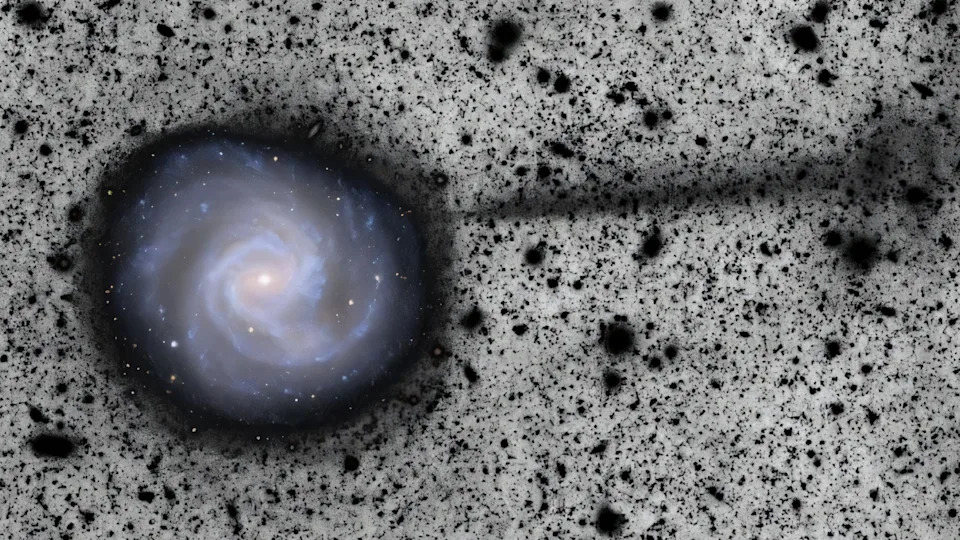
An image of a spiral galaxy on a splotchy black and white background with a stream of black material emerging from the galaxy
Scientific Significance
Beyond its striking visual detail, the DESI map is a powerful tool for cosmology. It enables precise measurements of how galaxies cluster across space and time, which in turn constrains the properties of dark energy — the mysterious component thought to drive the accelerating expansion of the universe and to constitute roughly 70% of its energy content. Early DESI results have already hinted that dark energy’s influence may evolve over cosmic history, a potential discovery that would have profound implications for models of cosmic expansion and the universe’s ultimate fate.
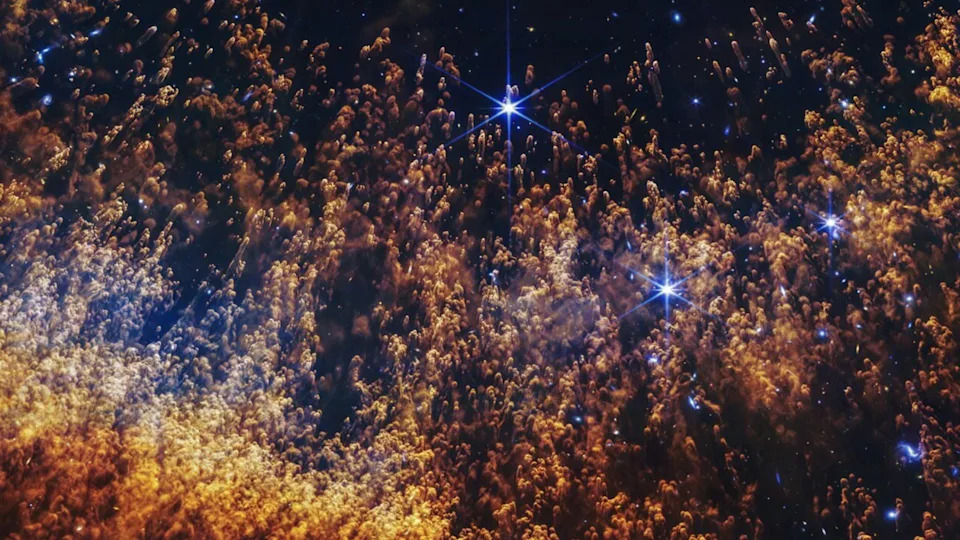
Hundreds of gold and orange clouds with feathered trails going down behind them. The small clouds are covering a few scattered, bright stars.
Collaboration, Timeline and What’s Next
The survey is the result of a large international collaboration involving more than 900 researchers from over 70 institutions, led by Lawrence Berkeley National Laboratory and funded by the U.S. Department of Energy Office of Science. DESI will continue observing through 2028, expanding its mapped volume by roughly 20% and pushing toward fainter, more distant galaxies. Future observations will also target regions that are harder to observe — including areas near the plane of the Milky Way, where foreground stars interfere, and portions of the southern sky that present additional atmospheric challenges. The first major results from the full DESI dataset are expected in 2027.
Why it matters: This dataset both dramatically improves the fidelity of our cosmic map and provides a timely probe into dark energy and the history of large-scale structure in the universe.
Accompanying visualizations show how DESI’s coverage grew over the survey period, offering an immediate sense of scale and progress. As the catalog continues to expand, researchers will refine measurements that test whether dark energy is truly constant or changes over time — one of the most important open questions in modern cosmology.
Help us improve.