This article explains why time appears one-way even though many fundamental physical laws are time-symmetric. The Second Law of Thermodynamics—entropy—increases because there are far more disordered microstates than ordered ones, so systems naturally drift toward disorder. Aging, memory, and the universe's eventual heat death all follow from this statistical tendency: life temporarily maintains low-entropy structures by expending energy, but overall entropy grows.
Einstein Said The Laws Are Time-Symmetric — So Why Do We Still Age?

Somewhere between clean mathematics and lived experience, time seems to pick a side. (CREDIT: AI-generated image / The Brighter Side of News)
A glass slips from your hand, strikes the floor and shatters. The sharp sound fades and a faint warmth spreads into the room. To our senses the scene cannot be reversed.

You do not wake up younger than you were the night before. (CREDIT: Adobe Stock Images)
Yet at the level of basic physics, that reversal is not forbidden. The equations that describe motion, gravity and many quantum processes work just as well if time runs backward. That tension between mathematical symmetry and everyday experience lies at the heart of one of science’s oldest puzzles: why does time appear to have a direction?
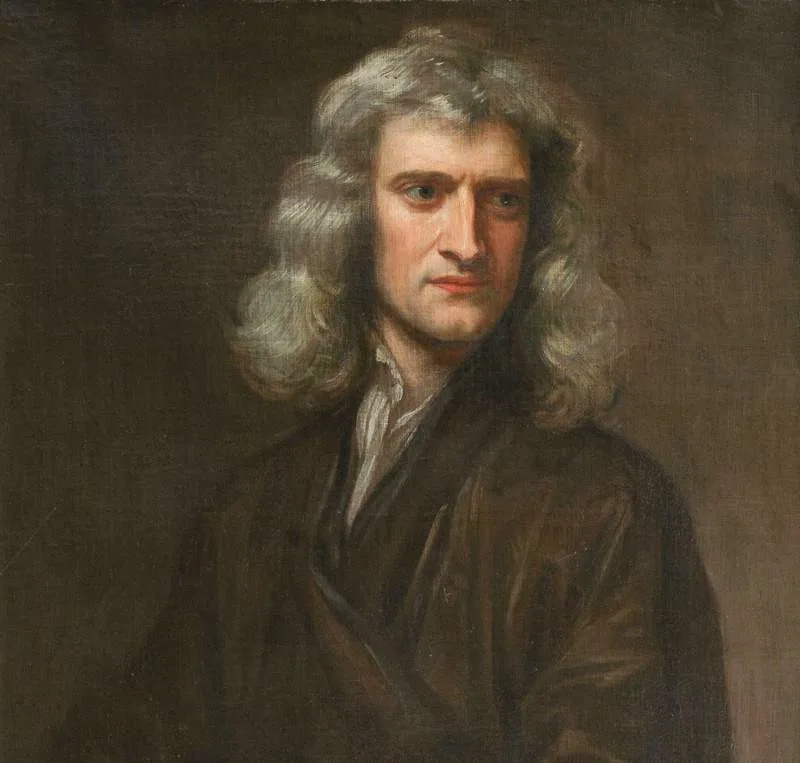
The laws associated with Isaac Newton all allow time to run in either direction without breaking the rules. (CREDIT: Wikimedia / CC BY-SA 4.0)
Time-Symmetric Laws vs. Irreversible Reality
On paper the universe shows no preference for past or future. Collisions between billiard balls look plausible whether shown forward or backward. But in life, a shattered glass stays broken and a young person does not spontaneously become younger. What explains this mismatch?

To understand why the glass stays broken, it helps to shift away from atoms and think about something familiar. (CREDIT: Unsplash)
Answer: Probability, not a new force. The processes that produce disorder are overwhelmingly more likely than the exact microscopic sequences that would reverse them.
Entropy and the Arrow of Time
The key concept is entropy, the statistical measure of how many microscopic arrangements correspond to a macroscopic state. A neatly ordered system—an intact glass, a freshly shuffled deck in factory order, or a youthful body—is a low-entropy state with relatively few microstates. Broken glass, a thoroughly shuffled deck or an aged body correspond to enormously many more microstates: they are high-entropy.

There is only one perfectly ordered arrangement of a 52-card deck, but about 8 followed by 67 zeros possible arrangements in total. (CREDIT: Shutterstock)
Because there are so many more high-entropy arrangements, systems naturally drift toward them. This tendency is summarized by the Second Law of Thermodynamics: in an isolated system, entropy tends to increase. That gives us the arrow of time—a one-way direction emerging from probability, not from an asymmetric fundamental law.
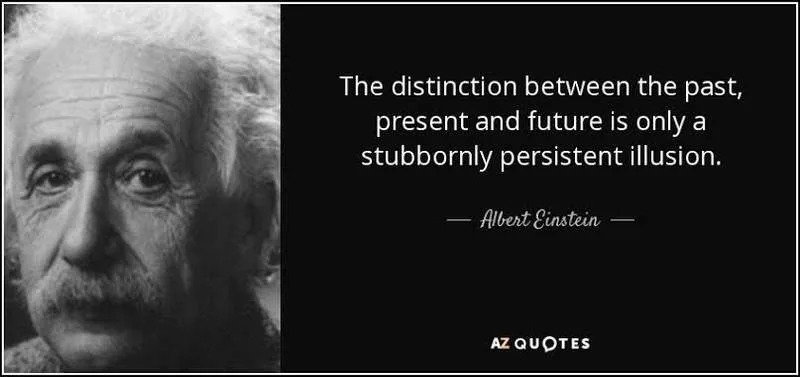
The laws associated with Albert Einstein, and even quantum theory all allow time to run in either direction without breaking the rules. (CREDIT: AZ Quotes)
Why Aging Feels Irreversible
A living body is a highly ordered ensemble of molecules, cells, repair mechanisms and energy flows. Maintaining that order requires continuous input of free energy. Over time, imperfections accumulate, repairs become less perfect, and energy dissipates as heat. Reversing that accumulation would require an astronomically unlikely microscopic coincidence—so unlikely it is effectively impossible.
Consider a deck of cards: there is exactly one factory ordering but roughly 8×1067 possible permutations. Returning to the original order is possible in principle but practically impossible. Aging follows the same arithmetic.
Memory, Records and the Past
Entropy also explains why we remember the past and not the future. Irreversible processes leave physical traces—broken shards, warmth in the floor, chemical marks in cells and brains. Those traces are records of earlier low-entropy states. The future, by definition, has not yet left those marks.
Cosmic Consequences: Heat Death
On the largest scales, the same statistical trend predicts that over unimaginable time spans gradients will fade: stars burn out, temperatures even out, and free energy becomes scarce. The so-called heat death is a quiet state in which no useful work can be extracted and the arrow of time loses operational meaning because moments become indistinguishable.
Why This Matters
There is no mysterious force pushing events forward. The apparent flow of time emerges from probability and the sheer number of microscopic configurations that make disorder more likely than order. That makes our present epoch—rich in gradients, structure and life—special and temporary. Life survives only by consuming free energy and maintaining order locally at the expense of increased entropy elsewhere.
Bottom line: The laws of physics allow time symmetry, but the overwhelming odds favor an increase of entropy. That statistical asymmetry gives time its direction, explains aging, and shapes the fate of the universe.
Help us improve.