
The New South Wales Court of Appeal has struck down a law enacted soon after the December 14 Bondi Beach mass shooting that restricted protests in declared areas. Chief Justice Andrew Bell found the provisions "constitutionally impermissible," ruling they unduly discouraged almost all demonstrations and infringed the implied freedom of political communication. Restrictions had been applied across large parts of Sydney and persisted into February, including during clashes when Israeli President Isaac Herzog visited. Activists said the law curtailed democratic rights, while the premier defended it as necessary for public safety.
Court Of Appeal Strikes Down NSW Protest Law Introduced After Bondi Beach Massacre
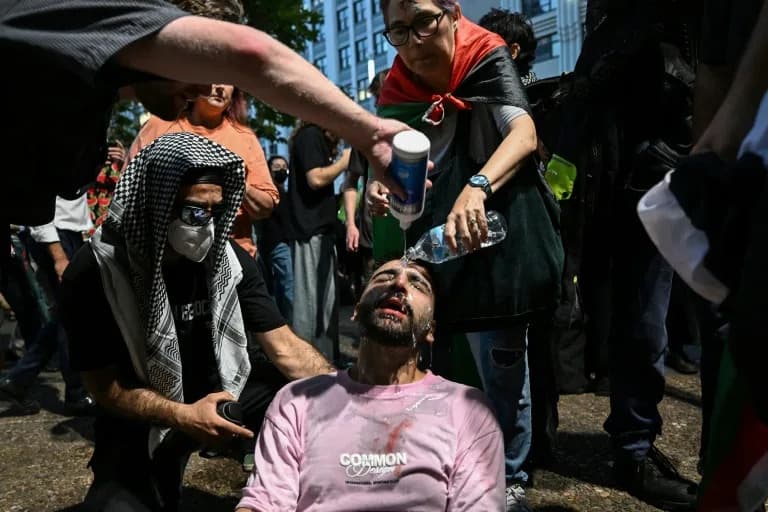
The law gave police the power to restrict public assemblies in declared areas, making it impossible to get a permit for any protests and allowing officers to order people to move away (Saeed Khan)(Saeed Khan/AFP/AFP)
A New South Wales Court of Appeal has overturned a law passed shortly after the December 14 Bondi Beach mass shooting that had sharply curtailed public protests in designated areas, a written judgment released on Thursday shows.
The legislation, introduced 10 days after the attack at a beachside Hanukkah festival that left 15 people dead and dozens injured, empowered police to restrict public assemblies inside declared zones, prevent demonstration permits and direct people to move on.
Chief Justice Andrew Bell, writing for the court, found those provisions "constitutionally impermissible". He said the law operated to discourage almost all forms of protest within the declared area regardless of the protest's purpose or its likely impact on social cohesion.
"The impugned provisions infringe the implied freedom of political communication," the ruling states, declaring the measures invalid.
Soon after the law was passed in December, the state police chief imposed restrictions across a wide area of Sydney. Enforcement continued in various forms through February, including during a visit by Israeli President Isaac Herzog when clashes between police and demonstrators occurred in central Sydney.
One of the three plaintiffs, pro-Palestinian activist Josh Lees, accused Premier Chris Minns of long seeking to restrict protest activity — particularly demonstrations relating to Gaza — and said the law was an attempt to curb democratic rights.
Premier Minns defended the government's decision in media statements, saying the measures were introduced in the aftermath of the worst terrorist attack the country had seen and were intended to protect community cohesion and public safety during a period of heightened tensions.
The Court of Appeal's decision focuses on constitutional protections around political communication, signaling that laws which broadly suppress protest in specified public areas are likely to face strict judicial scrutiny.
Help us improve.





















