
At 93, Gene Kranz—Apollo 13’s lead flight director and a director on Apollo 11—said watching Artemis II “took me back” and made him feel young again. He praised the new generation of NASA engineers and interns and called Artemis a return to the Moon that marks a new era. Kranz noted that modern imaging could have improved Apollo surface operations and reflected on his long career helping lead humanity’s earliest lunar missions.
93-Year-Old Gene Kranz Says Artemis II ‘Took Me Back’ — A Veteran Flight Director Reflects on the New Era of Moon Exploration

Gene Kranz at Mission Control in 1965 (left) and in 2022 (right).
Gene Kranz, the veteran flight director best known for guiding the Apollo 13 recovery and serving as a flight director for Apollo 11, says watching the Artemis II mission stirred powerful memories and optimism about humanity’s return to the Moon.
In April 1970 — about a year after Apollo 11’s historic landing — Apollo 13 launched on what was meant to be NASA’s third lunar landing. Two days after liftoff, an explosion severely damaged the spacecraft and turned the mission into a desperate fight for survival. As lead flight director, Kranz helped coordinate the team that improvised solutions and brought the crew safely home. His leadership was later dramatized by Ed Harris in the 1995 film Apollo 13.
Now 93, Kranz told WTVG-TV that seeing the new images and progress from Artemis II “took me back, made me young again.” He recalled being 34 when the Apollo landings took place and said the modern program brings back the spirit of those early days.
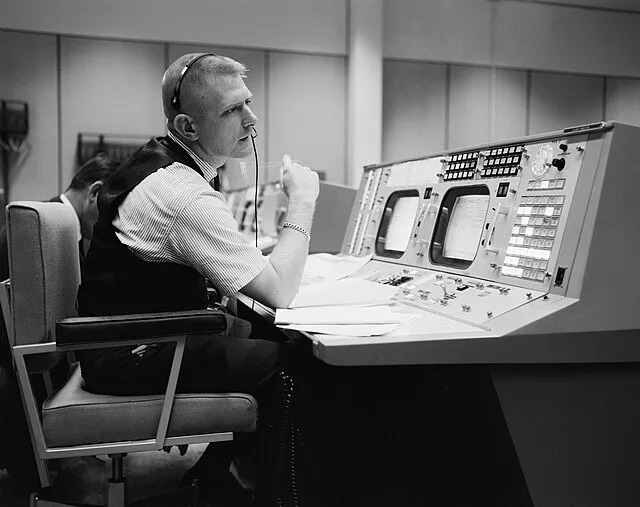
Gene Kranz working in the Mission Control Center in Houston in 1965.Photo credit: NASA
“It took me back, made me young again,” Kranz said. “Anything I’ve ever done, I would trade to be in their position.”
Kranz said the new generation of NASA interns and engineers fills him with admiration and even a touch of envy. He praised the Artemis program for putting NASA “back on track” and said plans to return to the Moon and build a sustained habitat mark “a new era in space exploration.”
Reflecting on the Apollo era, Kranz noted one big difference: imaging and video technology have improved dramatically. He said that higher-quality lunar imagery today could have helped Apollo crews and controllers perform surface operations with greater precision.
Kranz also shared a personal anecdote: in high school he wrote a paper titled The Design and Possibilities of an Interplanetary Mission, earning a 98. He later helped oversee the mission that landed Neil Armstrong on the Moon and described his career as living among explorers.
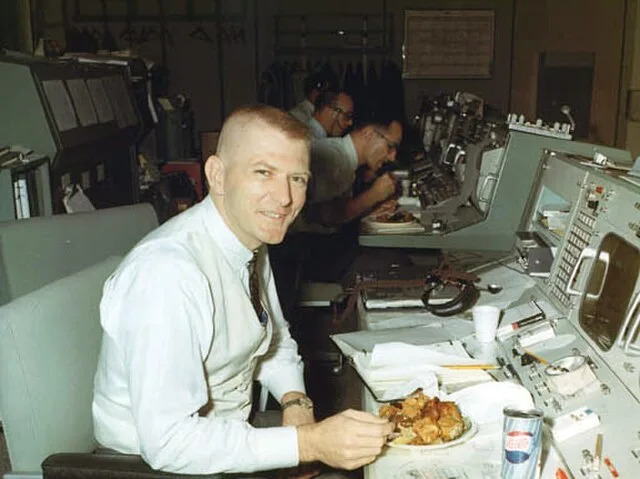
Gene Kranz working at his flight director’s console in the Mission Operations Control Room, 1965.Photo credit: NASA
When asked about Apollo 13, Kranz’s famous line — “Failure is not an option” — still resonates. He credited the ingenuity and determination of engineers and flight controllers who improvised critical solutions under intense pressure.
Why Kranz’s Perspective Matters
Kranz’s reflections bridge the early days of lunar exploration and today’s ambitious plans. His pride in his colleagues, his respect for new talent, and his appreciation for better tools highlight both how far spaceflight has come and the continuity of teamwork, creativity, and courage that drives it forward.
“I’m too proud to even describe” how he feels about NASA’s progress, Kranz said — a sentiment that captures both personal history and the broader sweep of human exploration.
Help us improve.





















