Russian President Vladimir Putin marked the 65th anniversary of Yuri Gagarin's 1961 flight, calling the mission 'legendary' and a milestone that opened a new chapter in human history. Gagarin completed one 108-minute orbit in the Vostok 1 capsule and landed near Saratov, becoming a national hero at 27. The ceremony came as NASA's Artemis 2 returned to Earth, underscoring continued global activity in human spaceflight within the Cold War-era context of Sputnik and Apollo 11.
Putin Hails Gagarin's 'Legendary' 1961 Flight On 65th Anniversary — A Milestone As Artemis 2 Returns
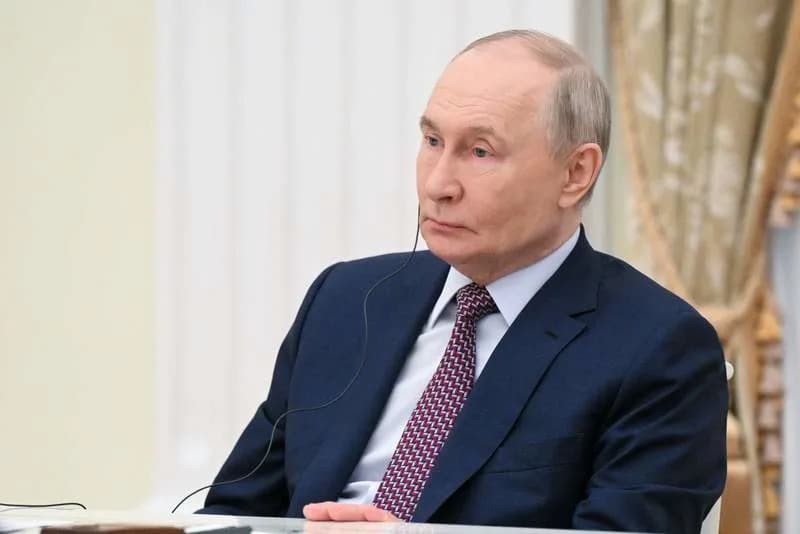
Russian President Vladimir Putin meets with Egypt's Foreign Minister Badr Abdelatty at the Moscow Kremlin. Kristina Solovyeva/TASS via ZUMA Press/dpa
Russian President Vladimir Putin on Sunday praised Yuri Gagarin's historic 1961 spaceflight at a Moscow ceremony marking the 65th anniversary of the mission, calling it a turning point in human history. The remarks were read during a concert at the State Kremlin Palace and came shortly after the return to Earth of NASA's Artemis 2 lunar mission.
'Gagarin realized humanity's bold, daring dream of conquering the universe and paved the way for humankind to reach the stars,' the statement said, describing the launch as 'legendary' and one of the most unforgettable events of the 20th century.
Travelling in the compact Vostok 1 capsule, Gagarin completed a single orbit of Earth in roughly 108 minutes before landing near Saratov in Russia's southern Volga region, according to official accounts. The flight transformed the 27-year-old cosmonaut into a national hero and a global symbol of human spaceflight.
Legacy and Context
Gagarin's successful orbit marked another Soviet milestone in the Cold War-era space race, following the launch of Sputnik in October 1957. While the Soviet Union achieved early high-profile firsts, the United States later secured the first human landing on the Moon with Apollo 11 on July 20, 1969.
Gagarin died in 1968 during a routine training flight in a fighter jet; the circumstances of the crash have been the subject of continued inquiry and debate. Despite lingering questions around his death, Gagarin remains a cherished figure in Russia and an enduring icon in the broader history of space exploration.
Looking Forward
Putin's remarks highlighted both the historical significance of Gagarin's mission and the ongoing global interest in human spaceflight, underscored by recent missions such as Artemis 2. The anniversary prompted reflection on past achievements and renewed attention to future endeavours to explore the Moon, Mars and beyond.
Help us improve.