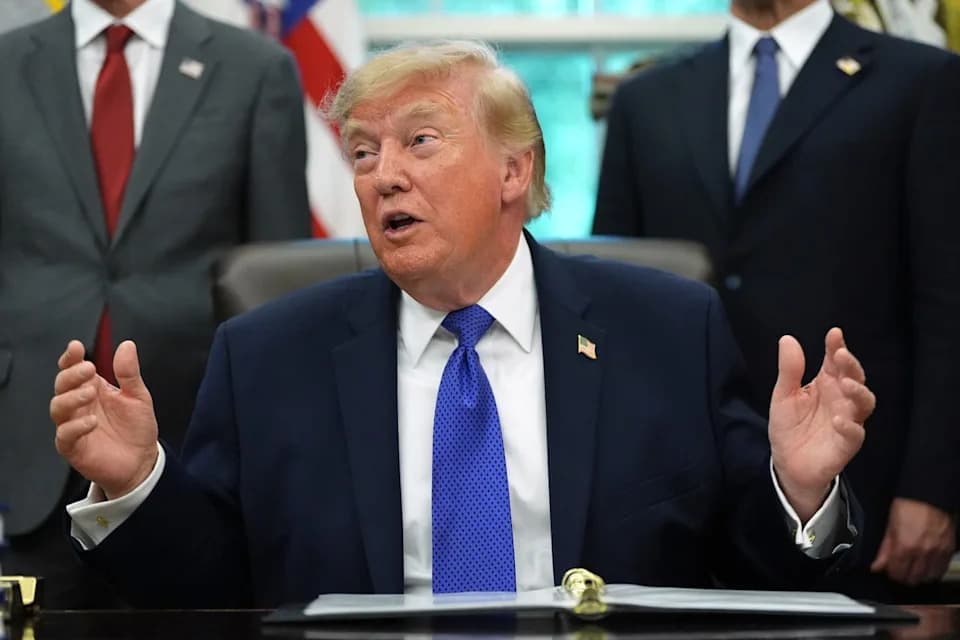
The author argues that President Trump’s extreme rhetoric toward Iran reflects a deliberate "madman" strategy — a form of brinkmanship historically associated with Nixon and Eisenhower — intended to force concessions. The piece credits such tactics with moving Tehran toward a ceasefire but acknowledges that key claims remain contested and the long-term durability of any agreement is uncertain. Critics warn that this approach risks escalation, while supporters say it can achieve results where diplomacy alone has failed.
Madman Diplomacy: How Trump Echoes Nixon — Risky, Persuasive, and Controversial
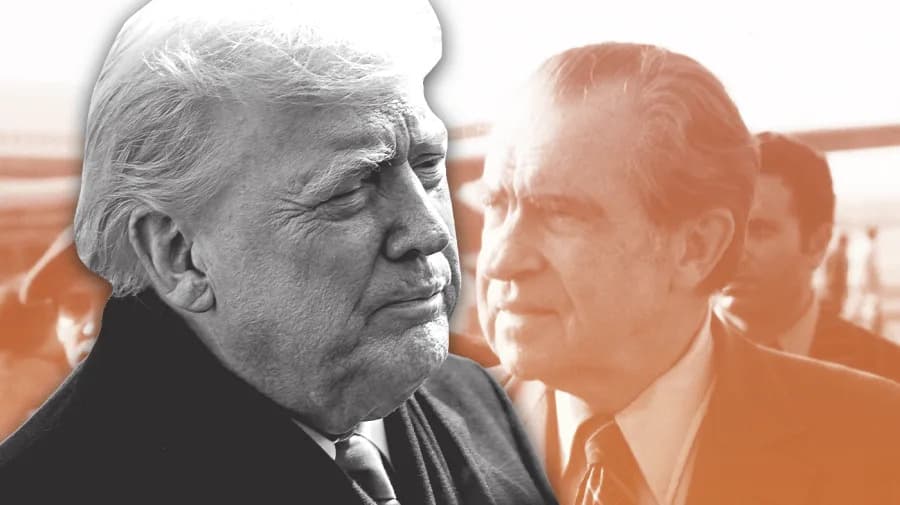
Dozens of Democrats have called for President Trump’s removal after his extreme public threats toward Iran — even as many members of Congress remain away from Washington. The author of the original piece argues that critics misunderstand how Trump operates and that his confrontational style echoes a long-standing diplomatic tactic: the so‑called "madman" approach.
The 'Madman' Theory Explained
Proponents of the madman theory say that a leader who cultivates unpredictability and issues exaggerated threats can convince adversaries that the risks of confrontation are intolerable, prompting concessions. The article contends that Trump deliberately starts with maximalist rhetoric, then retreats toward more achievable goals once adversaries are rattled — a pattern the author links to his negotiating playbook, famously outlined in The Art of the Deal.
Historical Precedents
The piece cites historical examples to show that brinkmanship can produce results. It quotes H.R. Haldeman’s recollection of Richard Nixon’s strategy in Vietnam, which Nixon described as a desire to convince North Vietnam and the Soviets that he might do anything to end the war. Declassified documents show that in October 1969 U.S. forces, including nuclear-capable units, were secretly put on alert — an action historians say may have signaled U.S. resolve and helped move negotiations.
"I call it the Madman Theory, Bob. I want the North Vietnamese to believe that I’ve reached the point that I might do anything to stop the war," Haldeman recalled Nixon saying.
The article also points to Dwight Eisenhower’s use of a veiled nuclear threat to encourage Chinese negotiators to accept a truce that ended the Korean War — a reminder that existential threats have been used before to break deadlocks.
Did Trump's Rhetoric Work?
The author argues that Trump’s extreme language — including a post on Truth Social that included a profanity-laced demand to reopen the Strait of Hormuz and an apocalyptic warning about Iran’s survival — may have pressured Tehran to agree to a ceasefire. That outcome, if it endures, would be offered as evidence that coercive brinkmanship can produce diplomatic gains.
It is important to note that several specific claims in the original column (for example, assertions about particular covert actions or strikes) are presented as the author’s view and remain contested or unverified in public records. Whether any ceasefire will hold, whether Iran will abandon nuclear ambitions, or whether the Strait of Hormuz will remain open are unresolved questions.
Balance and Consequences
The article recognizes that many find Trump’s style dangerous and morally troubling. Critics say overt threats risk escalation, miscalculation, and harm to civilians. Supporters counter that decades of bipartisan warnings about a nuclear-armed Iran produced little action, and that aggressive pressure may force concessions where diplomacy and sanctions did not.
Ultimately, this is an opinion piece asserting that Trump’s employment of brinkmanship and unpredictability resembles historical examples and — according to the author — has produced tangible diplomatic movement. Readers should weigh the evidence, consider the risks of escalation, and track whether any agreements reached under high-pressure tactics endure.
About the Author
This is an edited opinion recap of a column by Liz Peek, a former partner at Wertheim & Company. The piece reflects the author’s arguments and interpretations rather than an independent factual investigation.
Help us improve.