
NASA's Artemis II (launched 1 April) successfully completed SLS liftoff, a 5m55s translunar injection burn and a crewed lunar flyby. The flight validated Orion's propulsion and systems with humans aboard while exposing only minor, manageable issues such as toilet and water-dispenser faults. The crew recorded about 35 geological observations, including striking views of the Orientale basin. The mission's defining test remains re-entry at ~25,000 mph before splashdown near San Diego; if that succeeds, a crewed landing within a few years becomes more likely, though lander development and launch cadence remain key challenges.
Artemis II: What the Crewed Flyby Tells Us About Returning Humans to the Moon
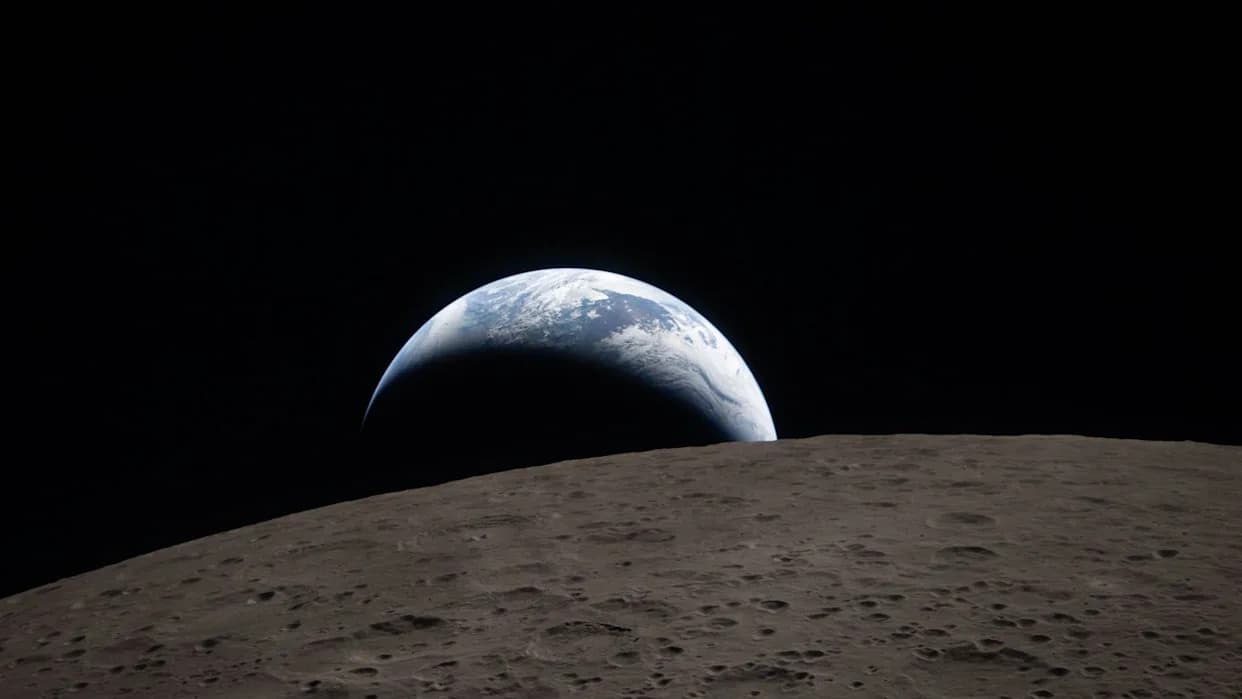
Nasa has released stunning images from the mission, including our world setting below the lunar surface [NASA]
NASA's Artemis II mission has cleared every major test since liftoff on 1 April, with the Space Launch System (SLS), the Orion crew capsule and the four-person crew performing even better than many engineers expected.
Across the opening days of the flight, the Orion capsule demonstrated how it behaves with people aboard — lessons that no simulator could fully reproduce. Beyond the hardware's performance, the mission's unscripted human moments have delivered a surge of public optimism and reminded many why crewed spaceflight still grips the imagination.
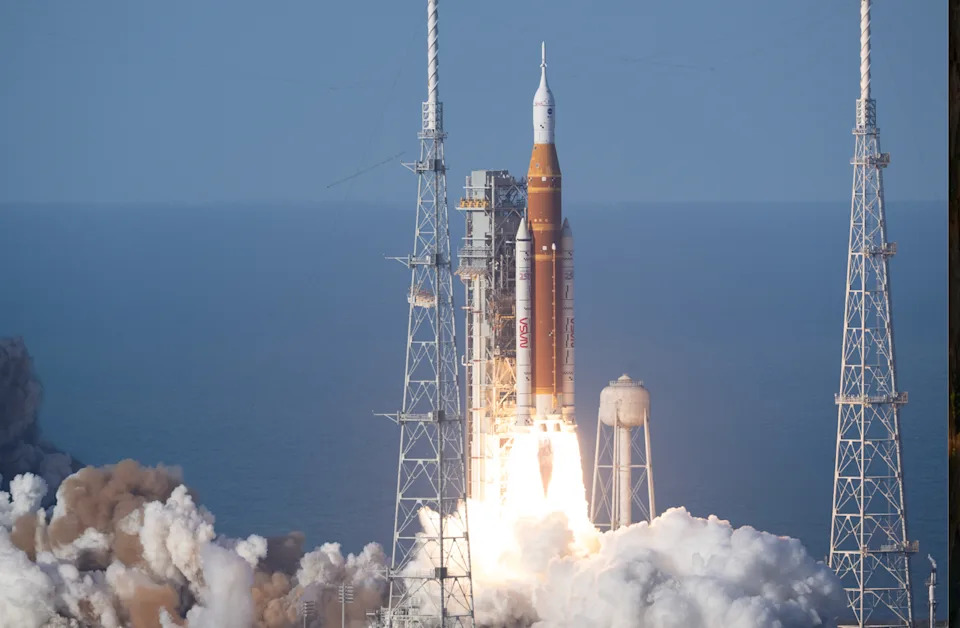
A suprisingly smooth ride said the astronauts as Nasa's most powerful rocket took them into Earth orbit last week [NASA]
Launch, Trajectory and Propulsion
The SLS produced about 8.8 million pounds of thrust at liftoff and, by engineering measures, executed ascent as planned. Mission control described key ascent events — maximum dynamic pressure, main engine cutoff and booster separation — as nominal. Two of three planned midcourse correction burns were cancelled because the trajectory was already so precise that the burns were unnecessary.
On the day after launch Orion performed its translunar injection burn: the main engine fired for 5 minutes 55 seconds, placing the spacecraft on a looping path toward the Moon. NASA program leaders described the burn as highly successful, and propulsion performance has emerged as a clear strength of this flight.
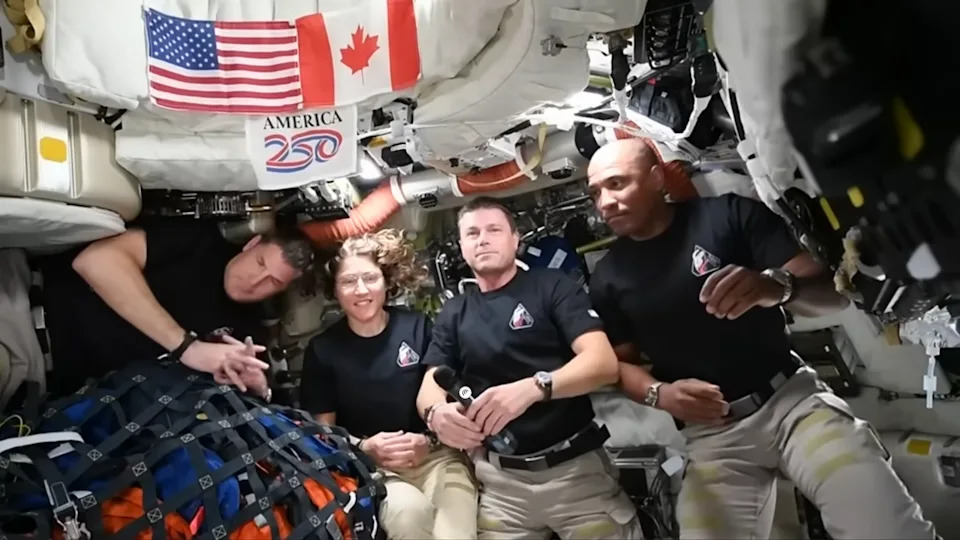
L-R Jeremy Hansen, Christina Koch, Reid Wiseman and Victor Glover were also guinea pigs to test how humans interacted with the spacecraft [NASA]
Humans In The Loop
The stated aim of Artemis II is deliberately simple: put people inside Orion and learn how the vehicle and crew interact. That human-in-the-loop testing produced a mix of expected and mundane anomalies — toilet problems, a water-dispenser fault that led the crew to bag water as a precaution, and a minor redundancy loss in a helium system that was resolved without mission impact. Engineers also monitored the capsule's carbon-dioxide removal system during exercise sessions and ran handling tests with selected thrusters disabled.
Those checks matter: they validate life-support systems, crew procedures and the vehicle's behavior in ways that software models cannot. As mission scientists have noted, seeing people live and work in the spacecraft is the essential test for future crewed lunar operations.

The Moon eclipses the Sun, as photographed by the Orion crew in deep space [NASA]
Scientific Observations And Cultural Moments
The crew recorded roughly 35 geological observations during the flyby, noting color variations and features that may inform later scientific study. A standout visual was the Orientale basin, an approximately 600-mile-wide impact feature on the Moon’s far side, seen in full by human eyes during this mission.
However, experts caution that the scientific novelty of such human observations is limited compared with modern robotic mapping and sample-return missions. Recent robotic successes — including Chandrayaan-3 and Chang'e-6 — have already advanced lunar science significantly. Still, images and firsthand views have strong cultural and inspirational value.
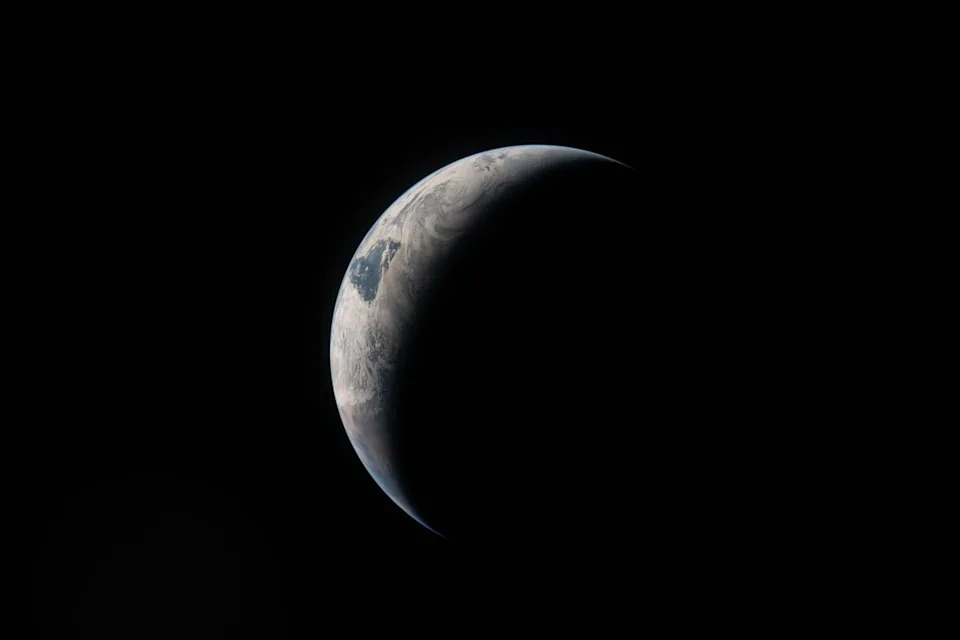
Pictures that inspired a new generation: a view of the Earth from Orion. [NASA]
Perhaps the mission's most powerful moment was human: a spontaneous dedication by the crew as they broke the distance record set during Apollo 13. That unscripted display of grief and solidarity resonated widely, underscoring the emotional power that keeps public support for crewed exploration alive.
What Remains And What It Means
The mission's final—and most severe—test is atmospheric re-entry. Orion will return at roughly 25,000 mph (about 40,000 km/h) and splash down near San Diego. Re-entry performance will be a decisive factor in judging the mission's overall success; heat-shield concerns after Artemis I led to further inspections before Artemis II, so engineers and managers are watching this phase closely.
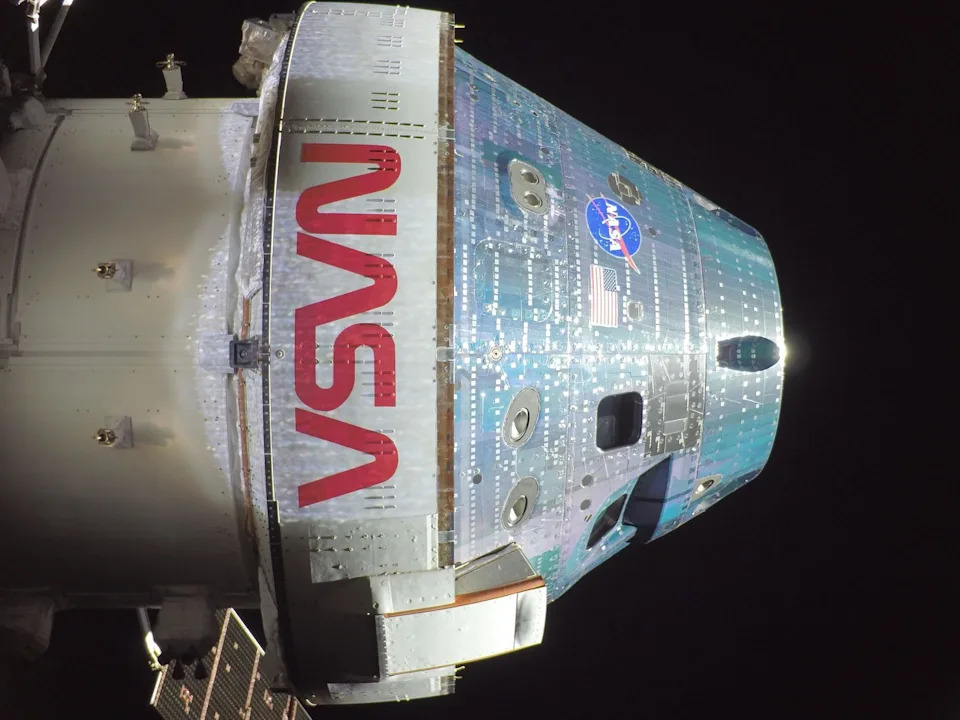
Orion's heatshield will be tested as it renters the Earths atmosphere [NASA]
If re-entry and recovery go smoothly, Artemis II will offer encouraging evidence that Orion reliably carries humans to lunar vicinity. That strengthens confidence in the spacecraft itself; it does not, however, remove other major program challenges. A crewed lunar landing will also require mature landers, a steady launch cadence, sustained funding and political commitment.
Many experts now judge a crewed lunar landing within three to four years as plausible if the program maintains momentum, but a 2028 surface touchdown remains ambitious. In short: Orion has done its part; the remaining questions concern lander readiness, operational cadence and program resources.
Artemis II is both a technical test and a cultural moment. It blends routine engineering checks with images and human moments that remind a global audience why crewed exploration continues to matter. This flight is a step on a long path toward sustained human activity on and around the Moon, not the final chapter.
Help us improve.





















