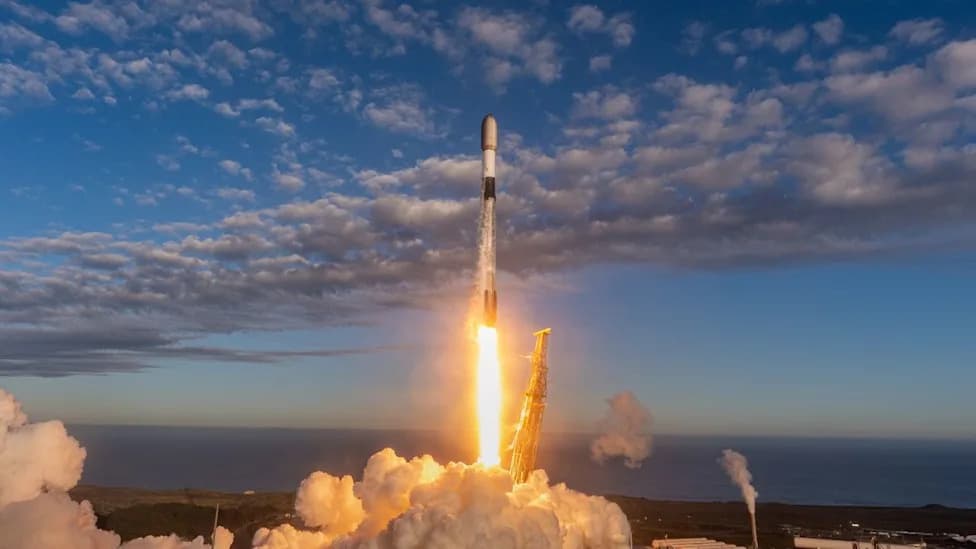
SpaceX launched 27 Starlink satellites from Vandenberg Space Force Base on April 6, 2026, with a Falcon 9 liftoff at about 7:49 p.m. PT. The mission used a first‑stage booster on its 10th flight, intended to land on the drone ship Of Course I Still Love You in the Pacific. A live webcast began roughly five minutes before liftoff on SpaceX.com. Starlink satellites operate near 550 km altitude to provide broadband service to user antennas.
SpaceX Launches 27 Starlink Satellites From Vandenberg; Falcon 9 Booster On 10th Flight Heads For Drone Ship Landing
Art Harral
SpaceX successfully launched 27 Starlink broadband satellites into low‑Earth orbit from Vandenberg Space Force Base on Monday, April 6, 2026, shortly after sunset.
The Falcon 9 rocket lifted off from Space Launch Complex 4 East (SLC‑4E) at about 7:49 p.m. PT. Earlier plans had listed a 25‑satellite payload for the mission, but the vehicle ultimately deployed 27 spacecraft into the assigned orbit. The launch had originally been scheduled for Sunday evening before moving to Monday.
SpaceX said the mission used a first‑stage booster on its 10th flight. After stage separation, the booster was planned to return for a landing on the autonomous drone ship Of Course I Still Love You, positioned in the Pacific Ocean — a routine that highlights Falcon 9’s reusability.
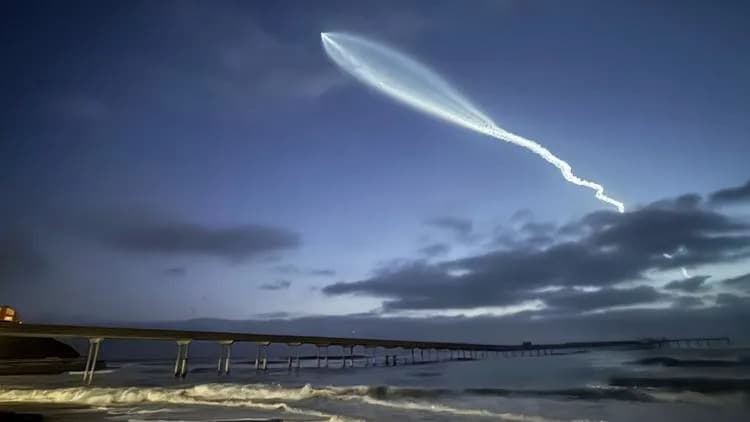
A live webcast of the mission began roughly five minutes before liftoff and was available on SpaceX.com. Many Southern California residents also reported seeing recent SpaceX launches streak across the evening skies.
About the Vehicles
SpaceX describes Falcon 9 as a “reusable, two‑stage rocket designed and manufactured by SpaceX for the reliable and safe transport of people and payloads into Earth orbit and beyond.” The Falcon 9 family is widely regarded as the world’s first orbital‑class reusable rocket.
Starlink is the company’s satellite broadband service. According to SpaceX, it is “the world's first and largest satellite constellation using a low Earth orbit to deliver broadband internet capable of supporting streaming, online gaming, video calls and more.” The constellation includes thousands of satellites operating at approximately 550 km (about 342 miles) altitude. Individual satellites communicate with user antennas installed at homes to deliver internet access.
Launch Notes
Launch schedules are always subject to change — brief delays or slips to another day can occur because of weather or unexpected technical issues. This mission demonstrated SpaceX’s continued focus on reusability and rapid cadence for Starlink deployments.
Help us improve.