
Researchers recreated birch tar using methods likely available to Neanderthals and tested its antibacterial effects. Laboratory assays showed the tar inhibited Staphylococcus aureus but not Escherichia coli, and it was less effective than gentamicin. The tar was produced via three methods — including a Mi'kmaq-inspired tin-heating technique and two Neanderthal-style approaches — and the authors suggest prehistoric remedies could offer chemical leads against antibiotic-resistant infections.
Study Suggests Neanderthals Used Birch Tar as Early Antibacterial Treatment
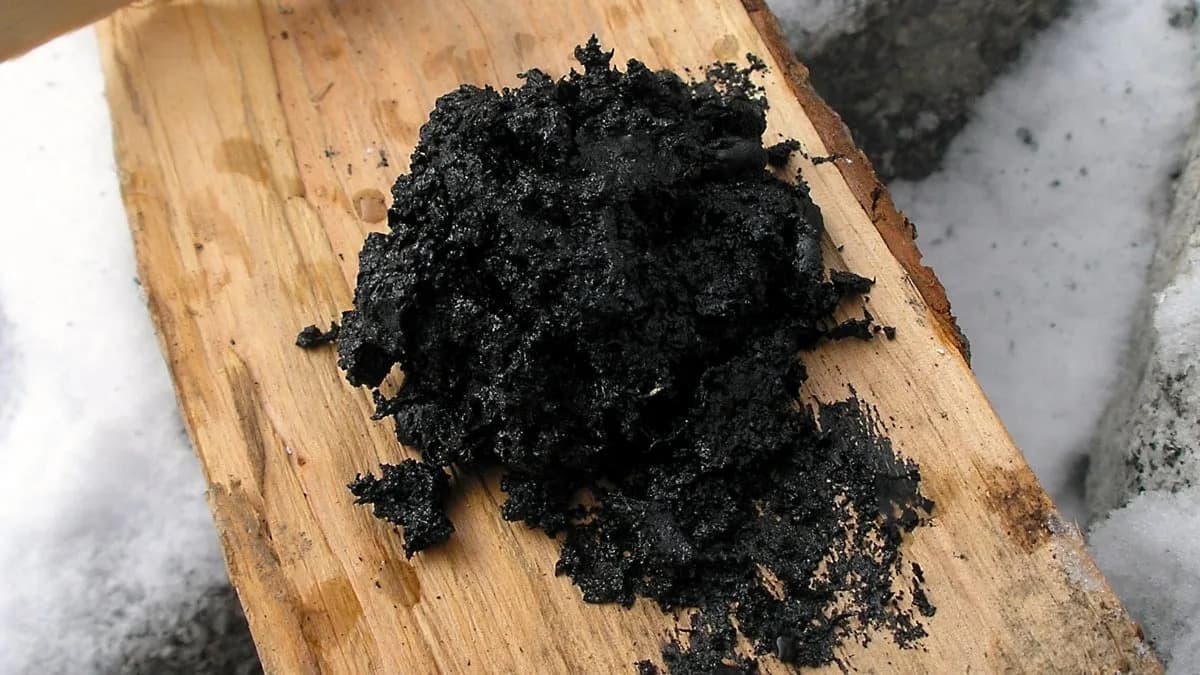
Birch bark pitch. (Jorre/Wikimedia Commons/CC BY-SA 3.0)
New research indicates that Neanderthals — our closest extinct relatives — may have produced a sticky birch-derived tar that served both as an adhesive and as a topical remedy for wounds, potentially foreshadowing aspects of modern medicine by up to 200,000 years.
Background
Archaeologists have long documented birch tar across Europe, where it was used to haft spear points and as an early sealant and chewing-gum analogue. Recent interest has turned to whether the compound also had medicinal value.
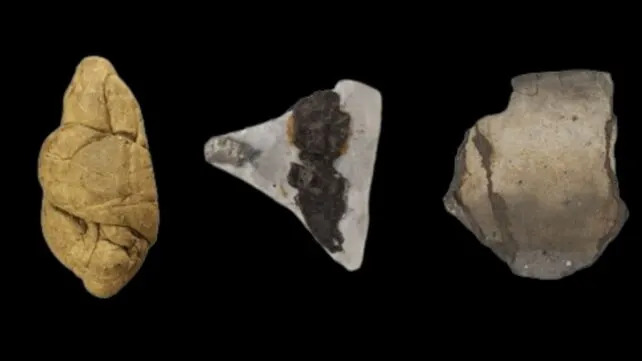
'Chewed' pieces of birch tar analyzed. (White et al.,Proc. R. Soc. B, 2025)
What The Researchers Did
Teams from the University of Cologne, the University of Oxford and the University of Liège recreated birch tar using materials and techniques plausibly available to Neanderthals. Bark from two birch species common in the Late Pleistocene was processed into tar using three methods:
- Tin heating — heating bark in a tin, a practice informed by the Mi'kmaq nation's traditional use of birch tar in Nova Scotia.
- Pit distillation — burning bark in a sealed underground pit to produce tar via dry distillation (low-oxygen conditions).
- Stone condensation — burning bark beside a flat stone and scraping tar condensed on the surface, a technique modelled on likely Neanderthal practice.
Biological Testing and Results
Biological assays conducted at Cape Breton University showed that tar samples from these methods exhibited measurable antibacterial activity against Staphylococcus aureus, a common cause of wound infections. The tar was less potent than the antibiotic gentamicin, and it showed no inhibitory effect on Escherichia coli, a bacterium typically found in the lower intestine.

Subscribe to ScienceAlert's free fact-checked newsletter
The properties observed are consistent with targeted topical use: the tar is tacky and easy to spread — only about 0.2 g can cover roughly 100 cm² of skin — which would make it practical for dressing wounds.
Implications
While birch tar is not a replacement for modern antibiotics, the study authors suggest prehistoric remedies from ethnographic and archaeological contexts may provide useful chemical leads. This is particularly relevant as strains of S. aureus — including methicillin-resistant types — are a major clinical concern and contribute to hundreds of thousands of hospitalizations annually in the United States.
“It might be worthwhile to examine targeted antibiotics from ethnographic contexts — or, as in this case, from prehistoric contexts — in greater depth,” says Tjaark Siemssen, lead author and archaeologist affiliated with the University of Cologne and the University of Oxford.
The study is published in PLOS One.
Help us improve.





















