
Artemis II astronauts Reid Wiseman, Christina Koch, Victor Glover and Jeremy Hansen are carrying certified iPhones and Android phones on their 10-day lunar flyby, following a recent NASA policy change that allows agency astronauts to bring consumer smartphones after certification. The policy, implemented ahead of the Crew-12 mission in February 2026, is intended to help crew document the flight and share images with family and the public. Artemis II will be the first human return near the Moon since Apollo and will send these astronauts farther from Earth than anyone before.
Artemis II Astronauts Bring Certified iPhones and Androids on Historic Lunar Flyby
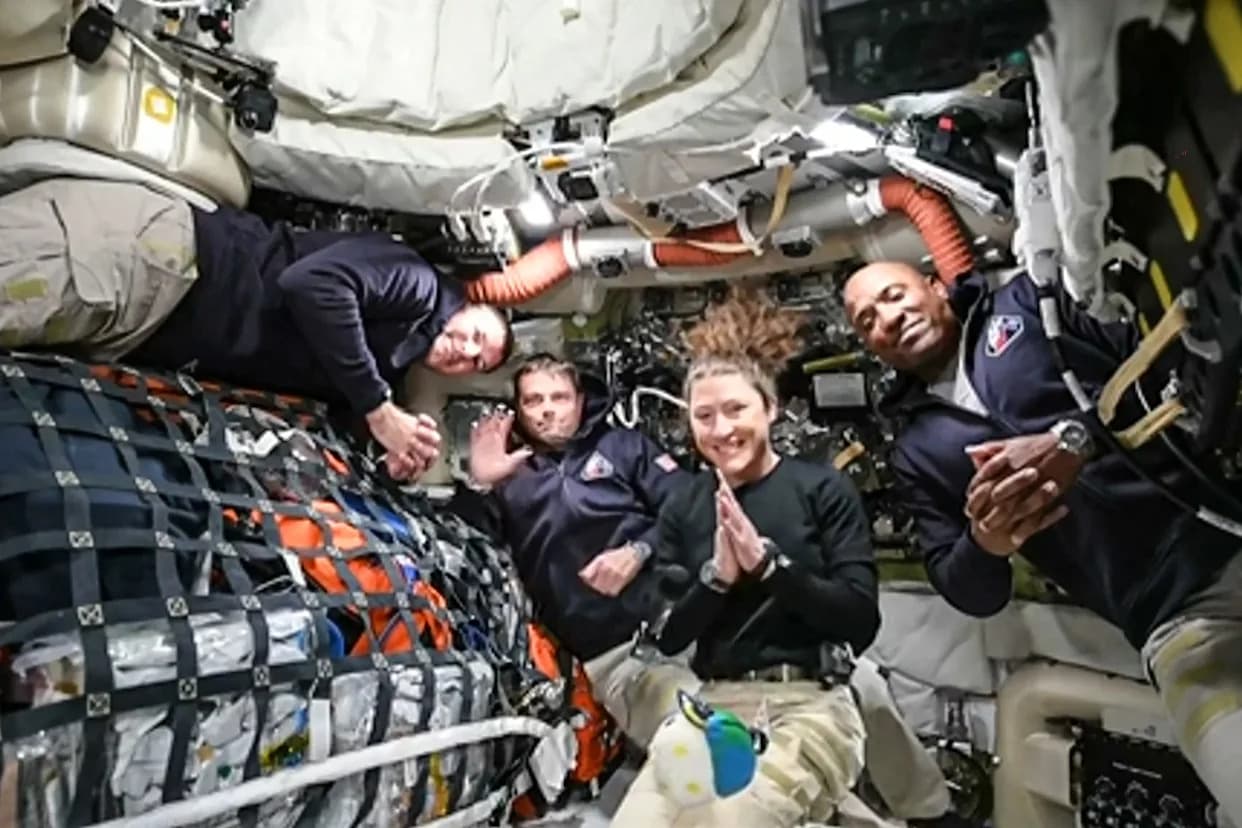
Artemis II astronauts among 1st to take smartphones to space
The Artemis II crew — NASA astronauts Reid Wiseman, Christina Koch and Victor Glover, together with Canadian Space Agency astronaut Jeremy Hansen — are carrying certified iPhones and Android smartphones on their 10-day lunar flyby. The mission launched April 1, 2026, and will send these four astronauts farther from Earth than anyone in history while returning humans to the moon’s vicinity for the first time since Apollo.
Smartphones Cleared for Agency Flights
Under a recent change to NASA policy, agency astronauts may now bring modern smartphones on missions beyond low Earth orbit after those devices complete a certification process. The policy took effect ahead of SpaceX’s Crew-12 flight in February 2026, which became the first NASA government mission to carry certified personal phones. Artemis II is the second NASA crew to fly under the new guidance.
Why Phones, and How They Were Approved
NASA says the allowance aims to make it easier for crew members to document their surroundings, capture personal moments for family and friends, and quickly share inspiring images and video with the public. A NASA spokesperson told reporters that the phones taken aboard underwent a certification process "to ensure that the devices will be safe to use during flight."
"The addition of smartphones to the agency's SpaceX Crew-12 mission gives our crew members flexibility to quickly capture informal, organic moments in an effort to better share their mission’s story with the world," NASA told USA TODAY Network.
Mission Overview and Milestones
Artemis II is a 10-day crewed lunar flyby that will not land on the Moon but will test spacecraft systems and operations ahead of future crewed lunar surface missions, possibly as early as 2028. The mission is scheduled to perform a close approach to the Moon on April 6, 2026, and conclude with a Pacific Ocean splashdown off San Diego on April 10.
During the flight the crew will travel farther from Earth than any humans in history, surpassing the distance record set during Apollo 13 in 1970. The mission also includes notable firsts: Victor Glover will become the first Black man to travel near the Moon, Christina Koch will be the first woman to do so, and Jeremy Hansen will be the first Canadian.
Public Engagement and Visual Documentation
Photographers and space enthusiasts captured images of the Space Launch System rocket and Orion crew capsule on Launch Pad 39B in the days before launch. With certified smartphones available, expect a wider range of personal and informal images and videos from the crew in addition to the more traditional high-quality DSLR and mission camera footage NASA typically releases.
Contact: Eric Lagatta, Space Connect reporter for the USA TODAY Network ([email protected])
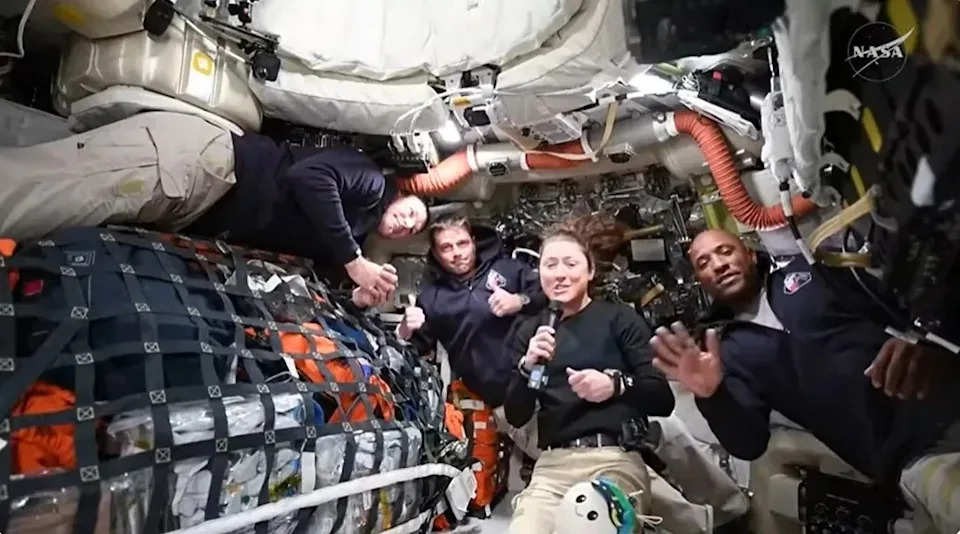
Artemis II crew members Jeremy Hansen, Reid Wiseman, Christina Koch, and Victor Glover answer questions from reporters during the first downlink event of their mission.
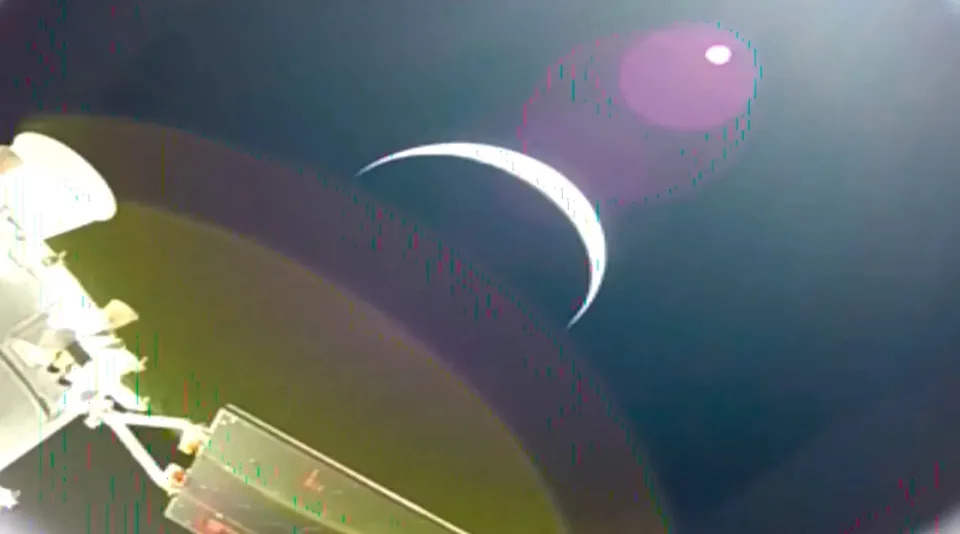
Earth’s crescent is seen from a solar array camera on the Orion spacecraft on the first flight day of the Artemis II mission.
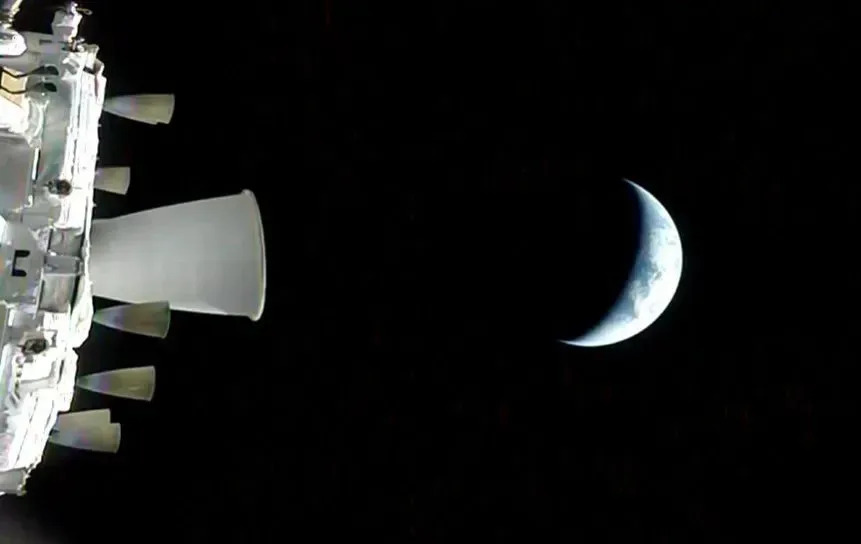
A view of the Earth from NASA’s Orion spacecraft as it orbits above the planet during the Artemis II test flight.
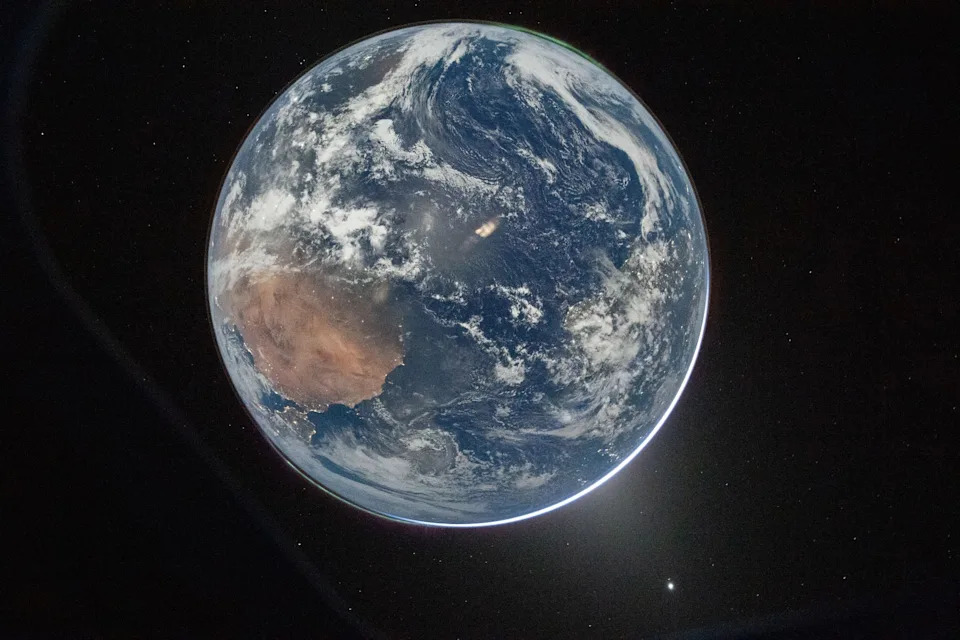
In an image posted by NASA on April 3, 2026, shows a full disk image of Earth, as seen from the Orion capsule. The planet is pale blue, swirling with white clouds and glowing slightly lighter blue in places from reflected light. From the lower left, a large brown landmass is Africa, with the Iberian peninsula twinkling with lights just where the planet curves. In the upper right, aurora glow in a thin green glow, just barely separated from the planet’s surface. Earth is set against the black of space.
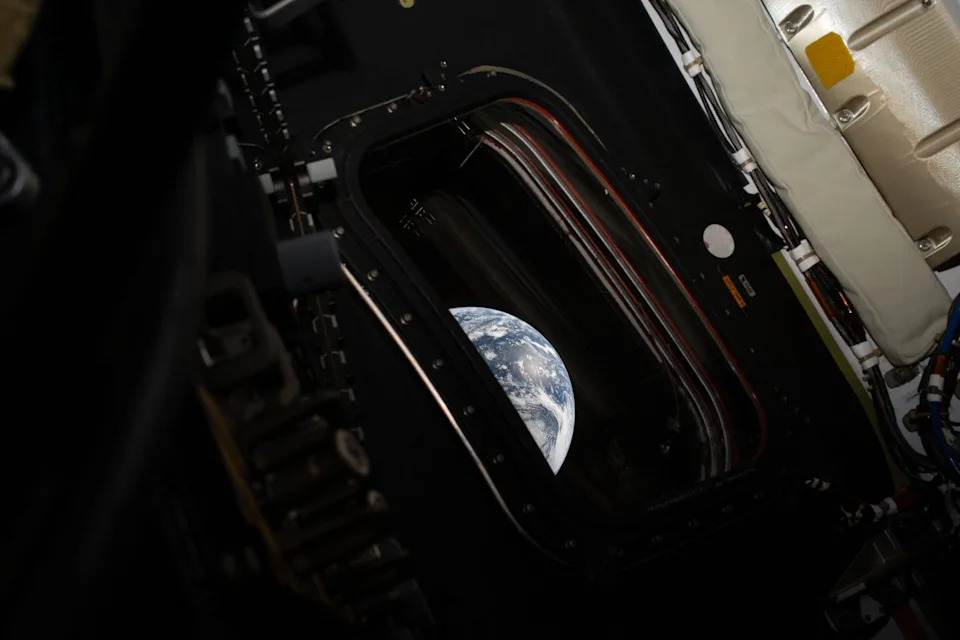
In an image posted by NASA on April 3, 2026, One-third of Earth is seen through the Orion capsule window as the NASA Artemis II mission continues towards the moon.
Although Earth only fills a fraction of the image it is the brightest object in the image. The capsule window is surrounded by a thick frame held in place with bolts. It is dark in the capsule, but the outlines of straps and various components of the capsule are visible.
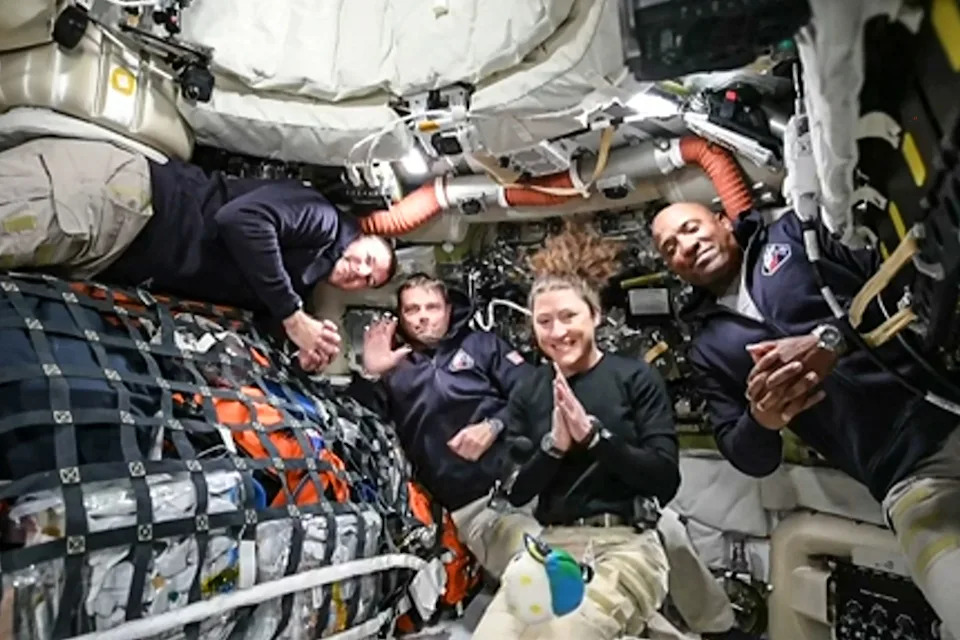
This screen grab from NASA's feed released on April 3, 2026, shows the four Artemis II crew members (L-R) Canadian Space Agency (CSA) astronaut Jeremy Hansen, Artemis II mission specialist, NASA astronauts Reid Wiseman, Artemis II commander, Christina Koch, Artemis II mission specialist and Victor Glover, Artemis II pilot as they head to orbit the Moon for the first time in more than half a century.
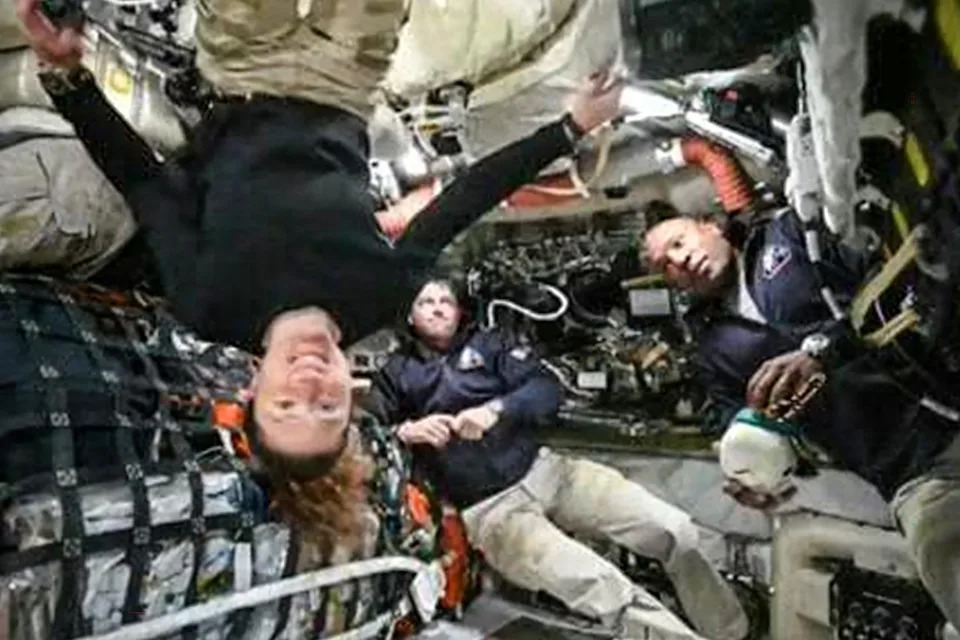
This screen grab from NASA's feed released on April 3, 2026, shows the four Artemis II crew members (L-R) Canadian Space Agency (CSA) astronaut Jeremy Hansen, Artemis II mission specialist (hidden), NASA astronauts Reid Wiseman, Artemis II commander, Christina Koch, Artemis II mission specialist and Victor Glover, Artemis II pilot as they head to orbit the Moon for the first time in more than half a century.
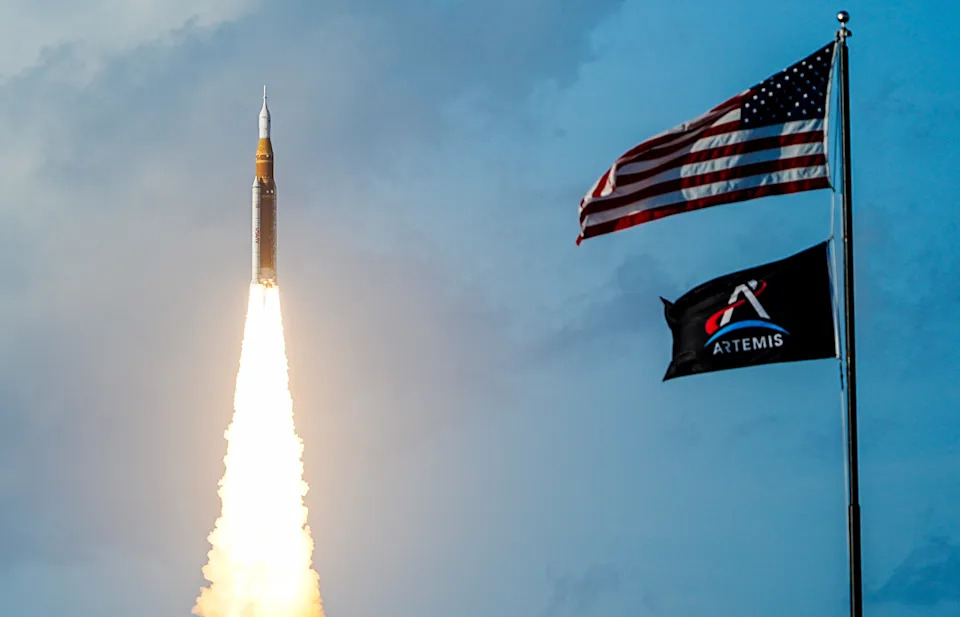
Artemis IIand it’s crew of four lift off from Kennedy Space Center April 1, 2026 on a 10-day mission around the Moon and back. Craig Bailey, FLORIDA TODAY via USA TODAY NETWORK
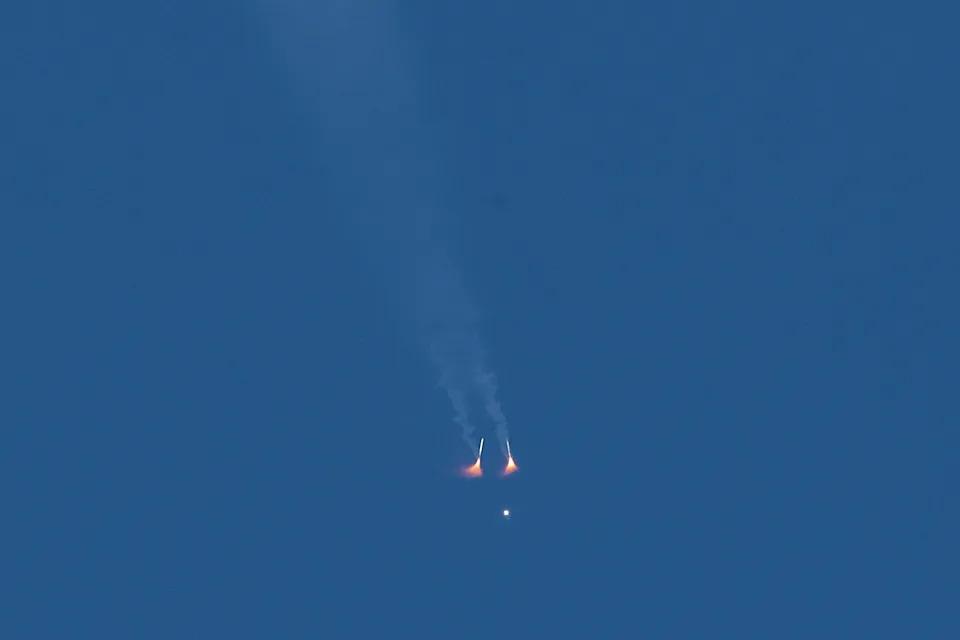
The solid rocket boosters (SRBs) detach after NASA's Artemis II Space Launch System rocket carrying the Orion spacecraft lifts off from Launch Complex 39B at Kennedy Space Center on April 1, 2026 in Cape Canaveral, Florida. The 10-day mission will take NASA astronauts Commander Reid Wiseman, Pilot Victor Glover and Mission Specialist Christina Koch and CSA (Canadian Space Agency) Mission Specialist Jeremy Hansen around the moon and back. The astronauts are supposed to fly 230,000 miles out into space, the farthest any human has ever traveled from Earth.
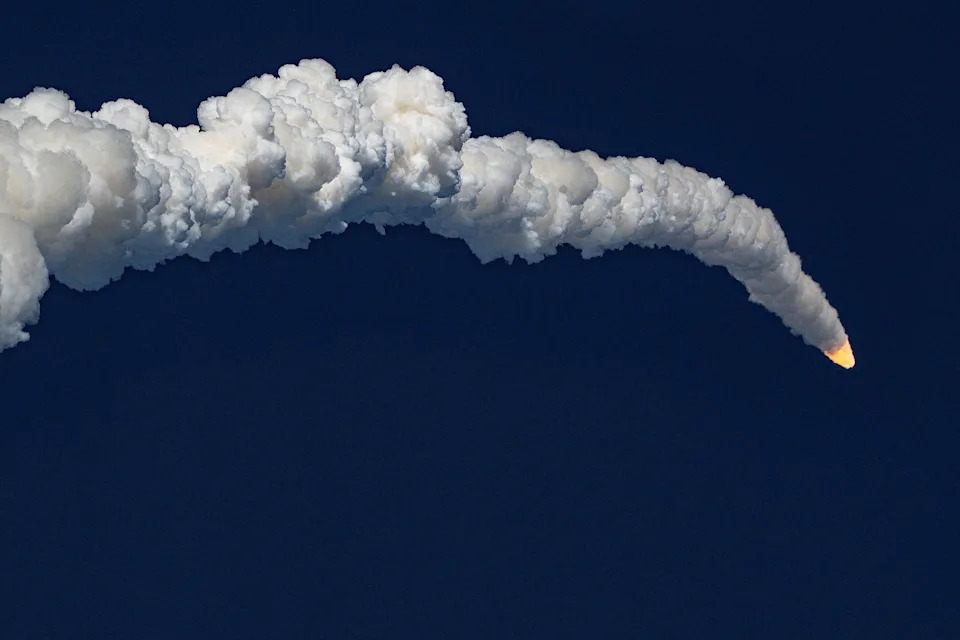
The Artemis II crewed lunar mission launches at Kennedy Space Center in Cape Canaveral, Florida, on April 1, 2026. Four astronauts blasted off aboard a massive NASA rocket April 1 on a long-anticipated journey around the Moon, the first crewed lunar flyby in more than 50 years.
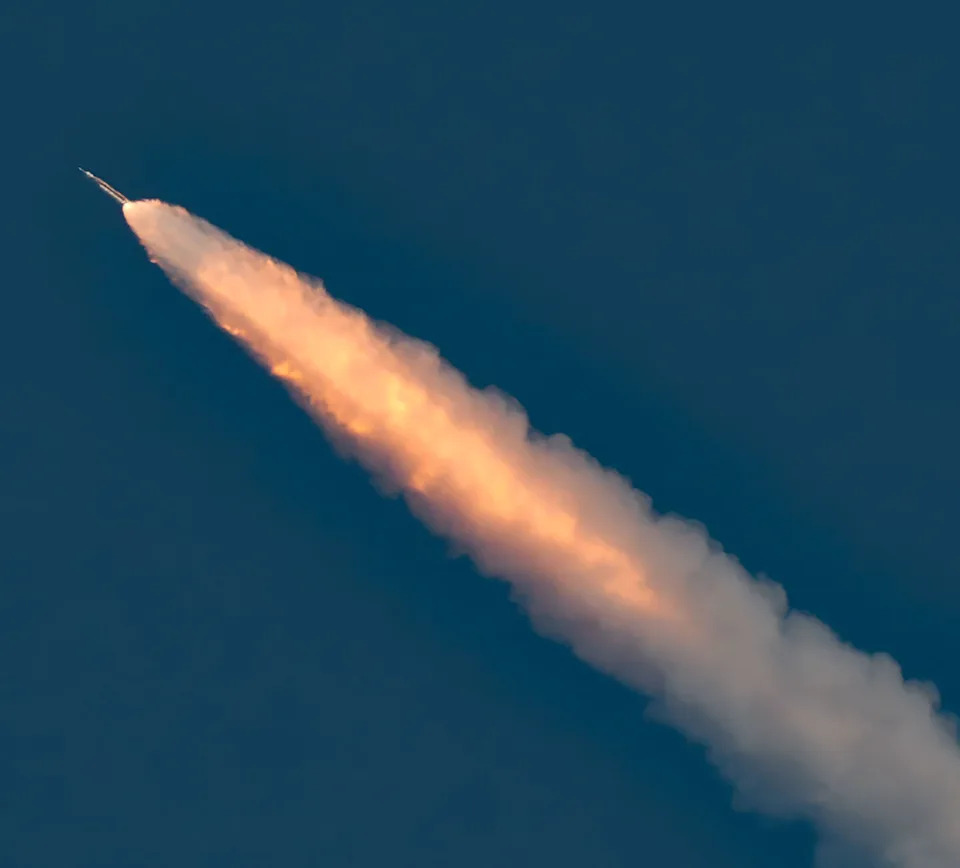
View from Port Orange, Fla. as Artemis II lifts off and heads to the moon, April 1, 2026 .
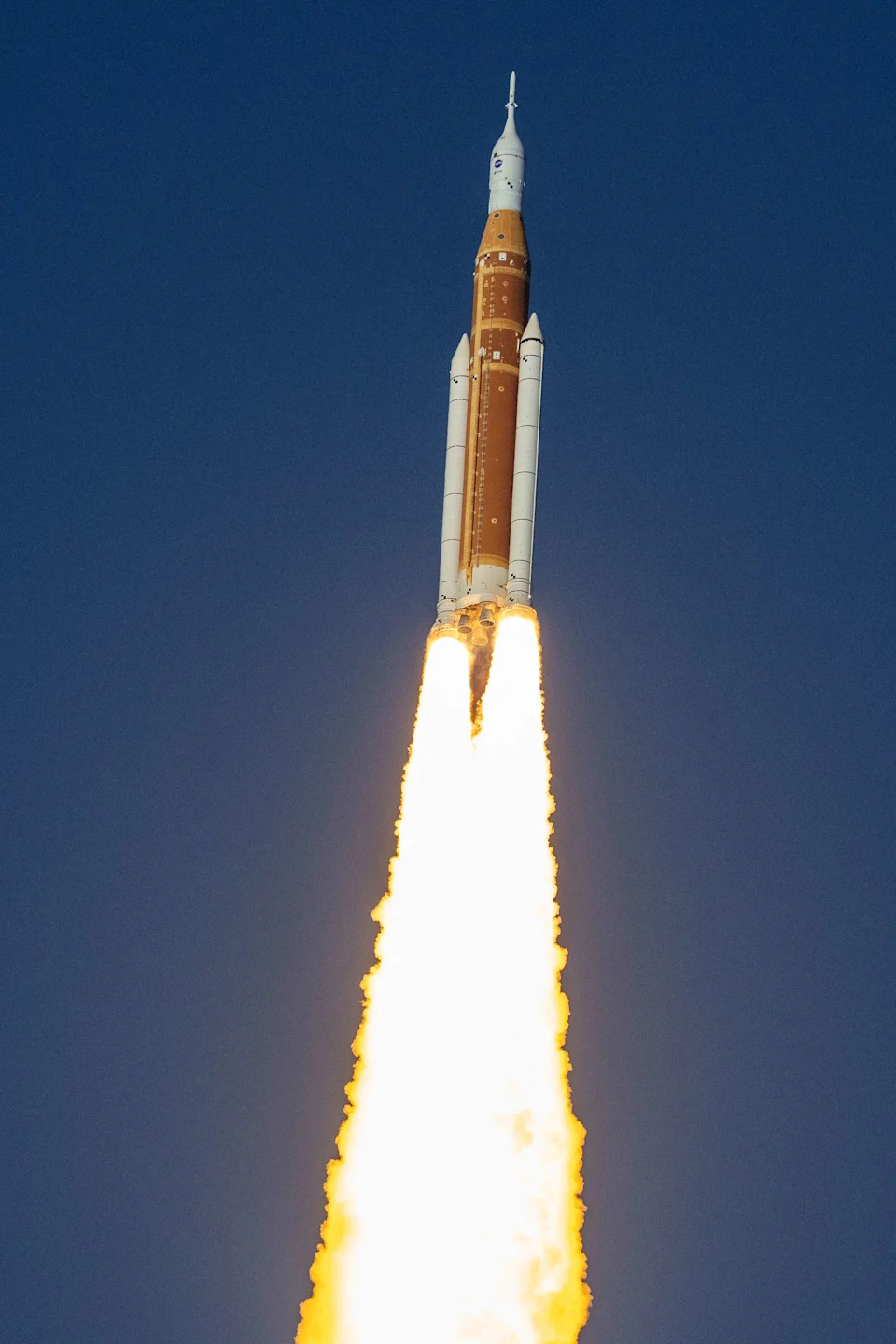
The Artemis II crewed lunar mission launches at Kennedy Space Center in Cape Canaveral, Florida, on April 1, 2026. Artemis II is a 10-day flight with four astronauts on a loop around the Moon, marking the first time humans have traveled beyond low Earth orbit since the Apollo 17 mission in 1972.
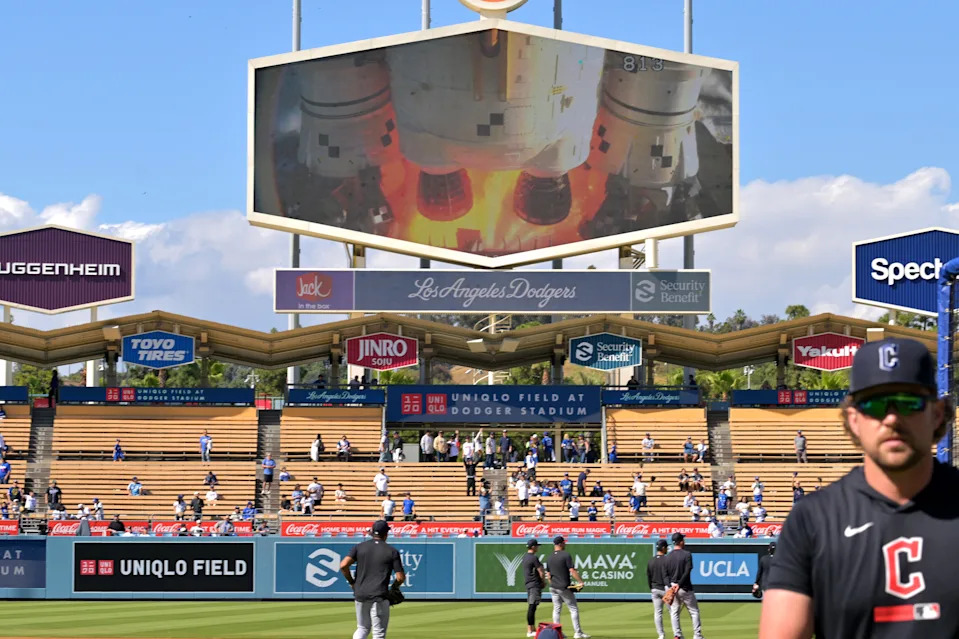
Cleveland Guardians players warm up as the NASA's Artemis II launches from Kennedy Space Center in Florida prior to the game against the Los Angeles Dodgers at Dodger Stadium.

People watch the Artemis II crewed lunar mission launch on a television outside of the News Corp building on April 1, 2026 in New York City. The 10-day mission will take NASA astronauts Commander Reid Wiseman, Pilot Victor Glover and Mission Specialist Christina Koch and CSA (Canadian Space Agency) Mission Specialist Jeremy Hansen around the moon and back. The astronauts are supposed to fly 230,000 miles out into space, the farthest any human has ever traveled from Earth.
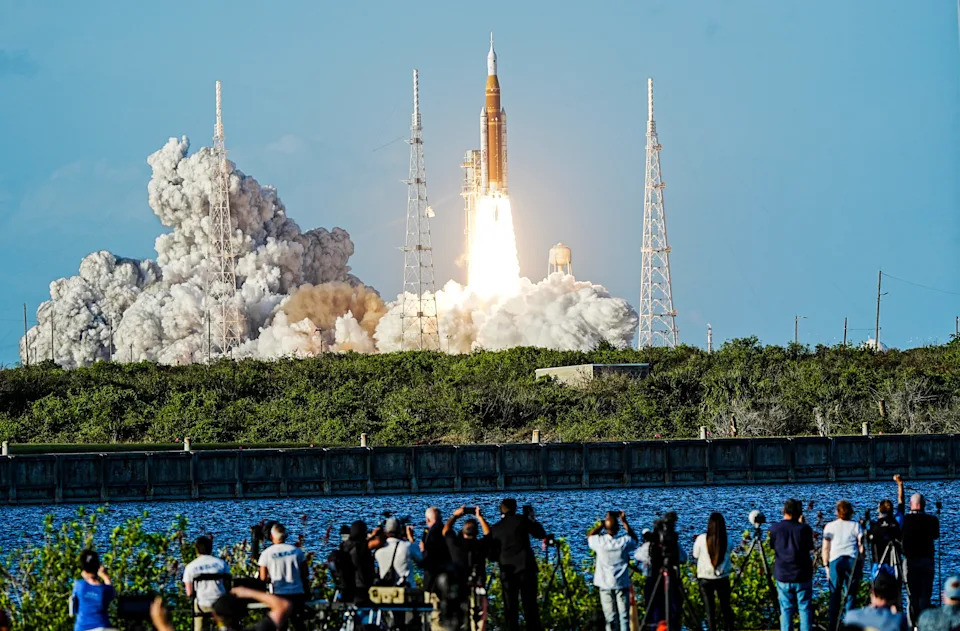
Artemis II and it’s crew of four lift off from Kennedy Space Center April 1, 2026 on a 10-day mission around the Moon and back.
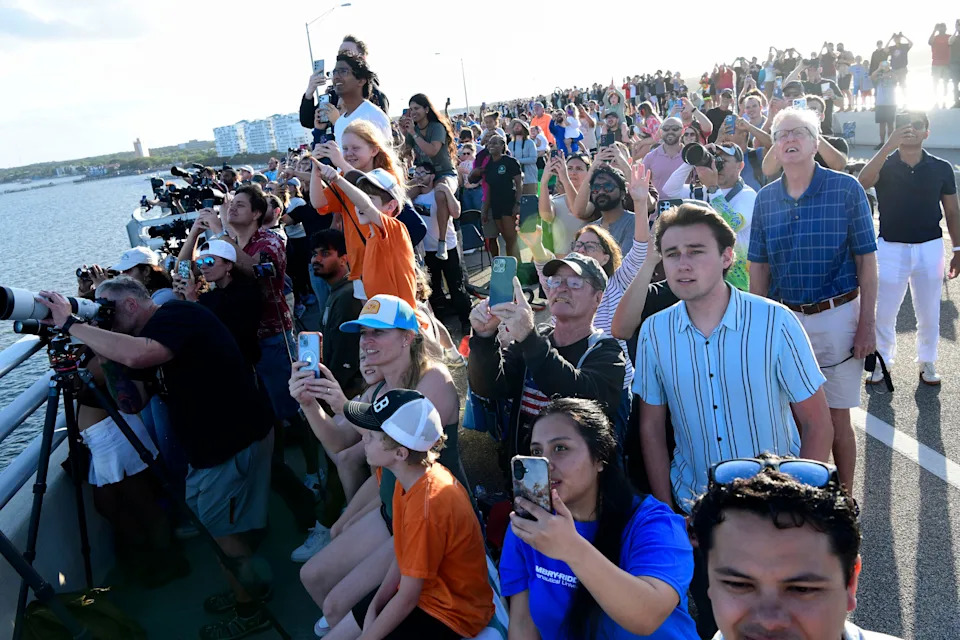
People observe the launch of Artemis II from the A. Max Brewer Bridge in Titusville, Florida on April 1, 2026 in Cape Canaveral, Fla. The 322-foot-tall rocket will take astronauts around the moon and back, 230,000 miles out into space and the farthest any human has ever traveled from Earth.
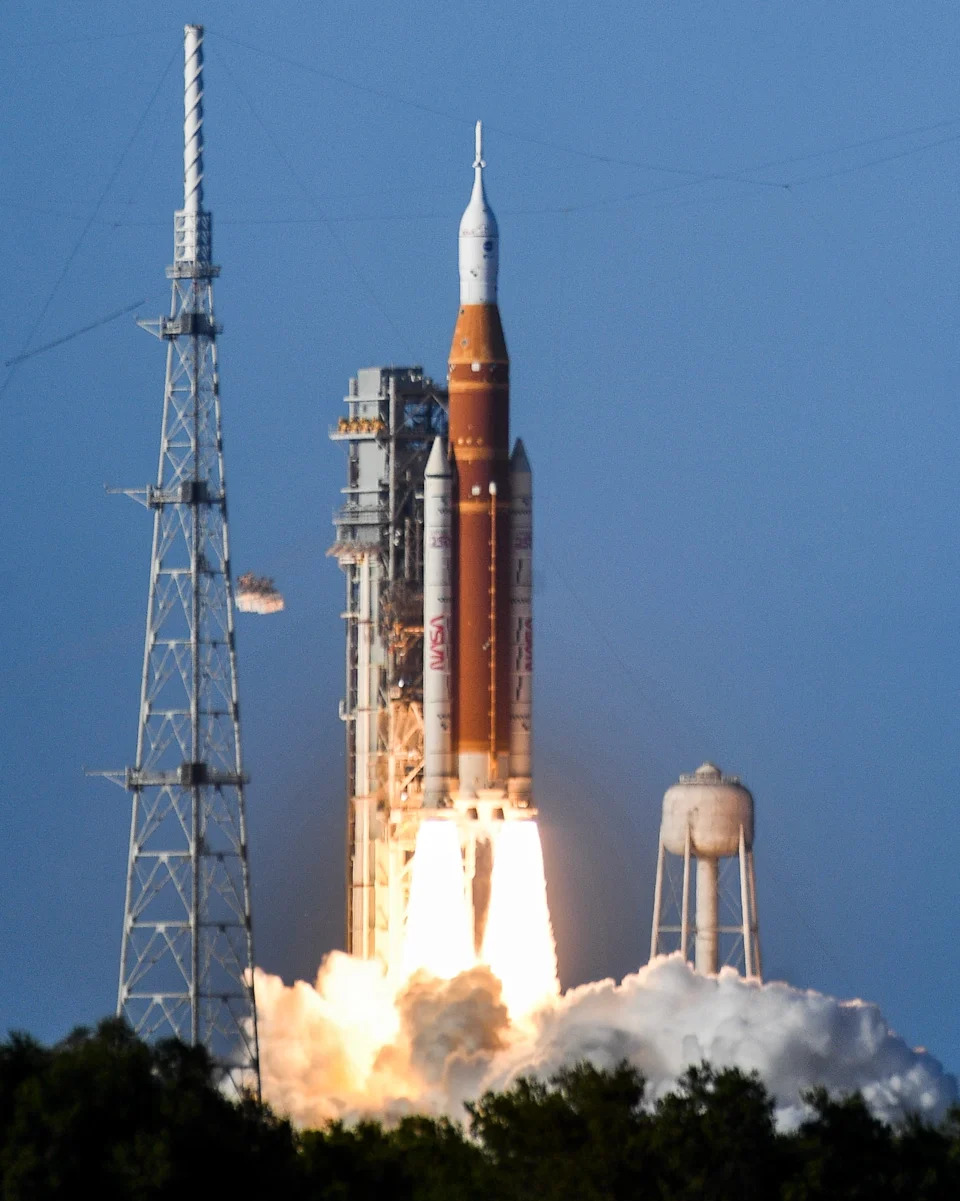
Artemis II and it’s crew of four lift off from Kennedy Space Center April 1, 2026 on a 10-day mission around the Moon and back. Craig Bailey, FLORIDA TODAY via USA TODAY NETWORK
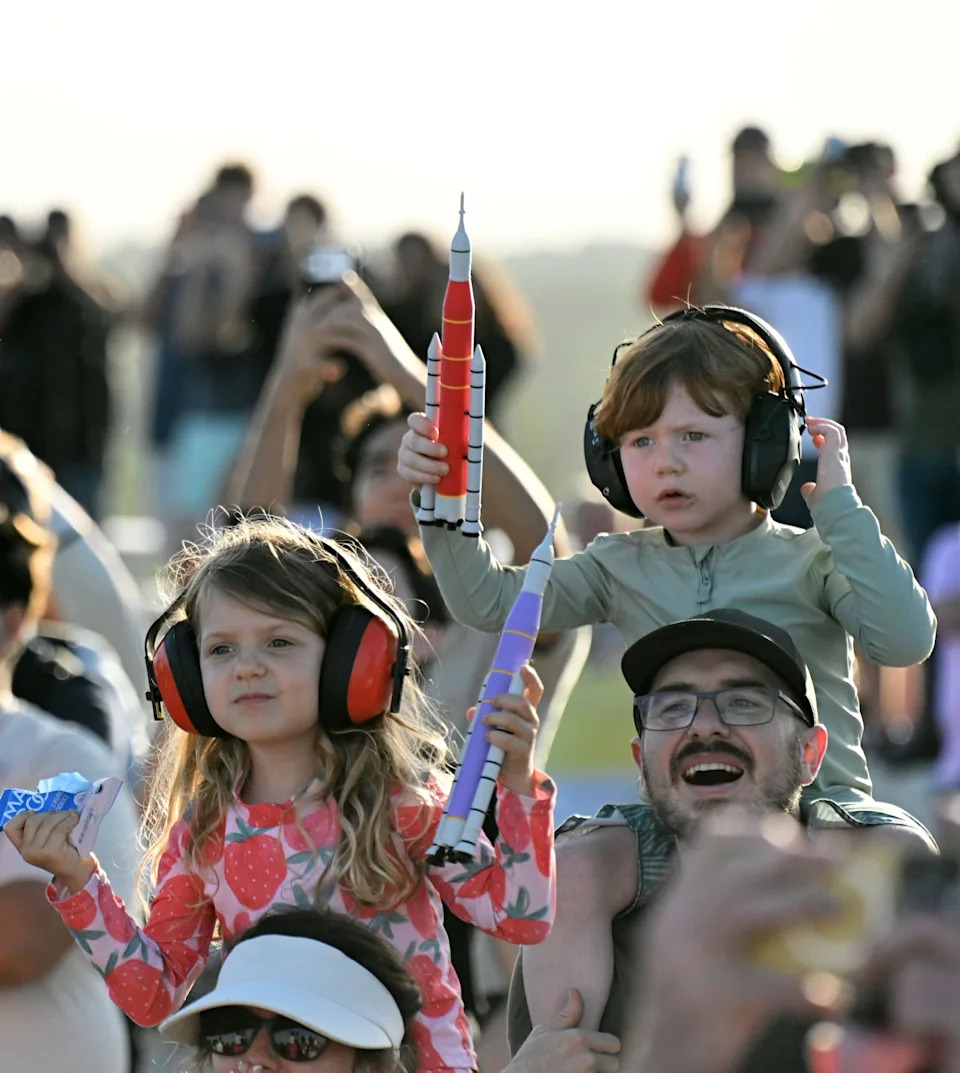
People observe and celebrate the launch of the Artemis II from the A. Max Brewer Bridge in Titusville, Florida on April 01, 2026 in Cape Canaveral, Florida. The 322-foot-tall rocket will take astronauts around the moon and back, 230,000 miles out into space and the farthest any human has ever traveled from Earth.
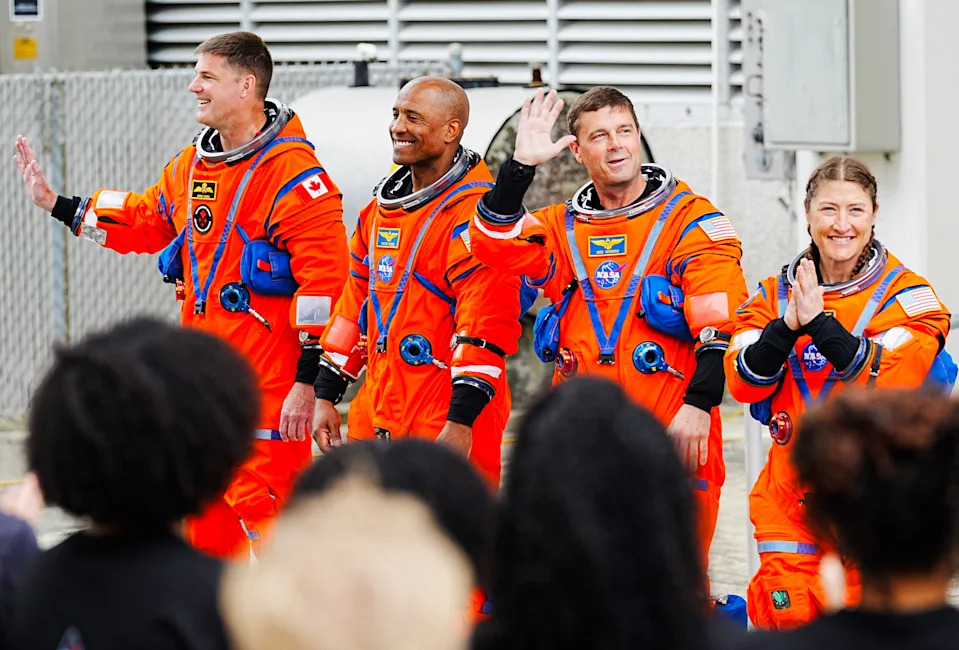
The Artemis II astronauts leave crew quarters at Kennedy Space Center, FL April 1, 2026 headed to Pad 39B for launch on an 10-day rendezvous with the Moon. Craig Bailey, FLORIDA TODAY via USA TODAY NETWORK
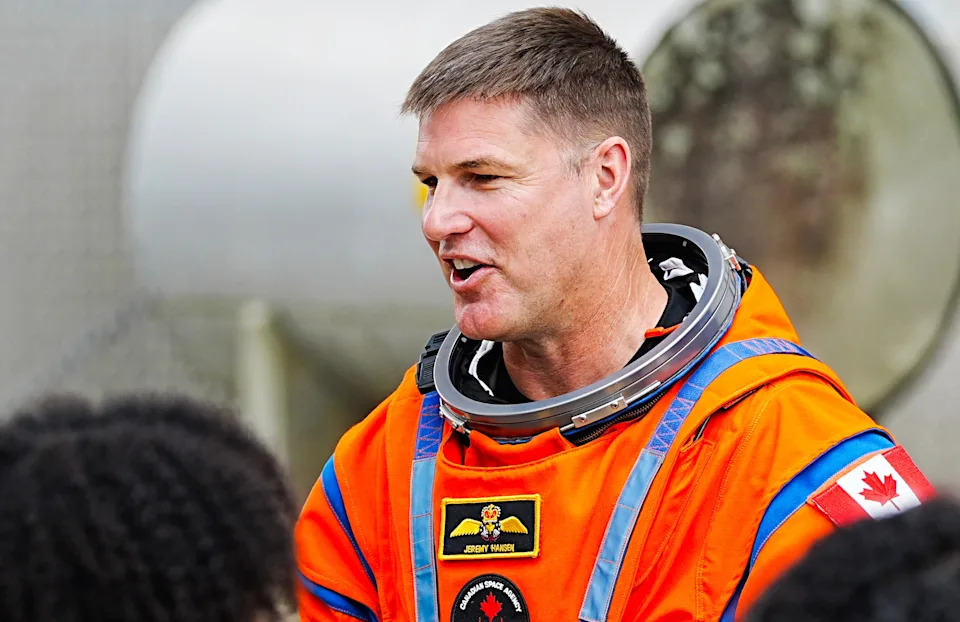
Artemis II Mission Specialist Jeremy Hansen talks with family as the crew leaves crew quarters at Kennedy Space Center, FL April 1, 2026. They’re headed to Pad 39B for launch on an 10-day rendezvous with the Moon. Craig Bailey, FLORIDA TODAY via USA TODAY NETWORK
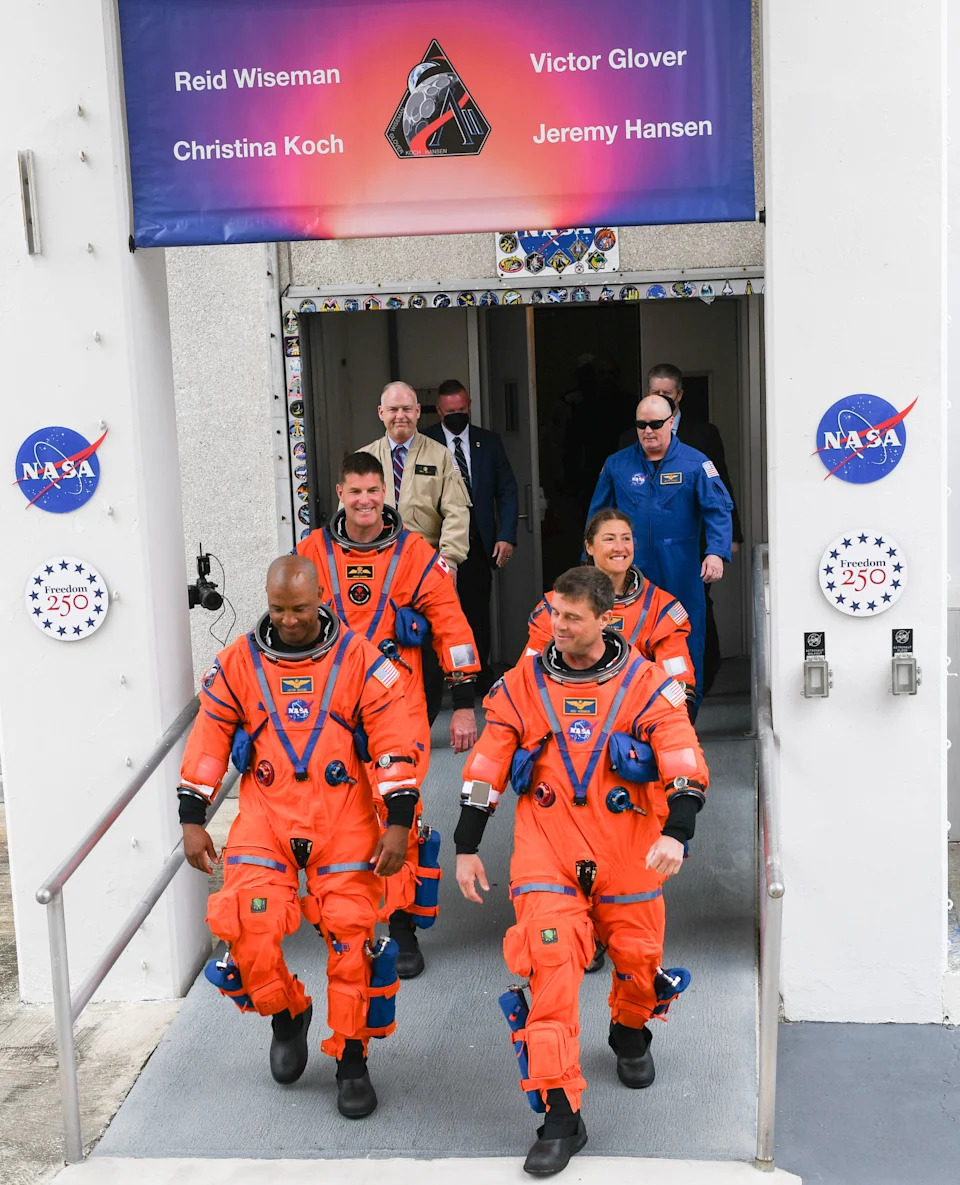
The Artemis II astronauts leave crew quarters at Kennedy Space Center, FL April 1, 2026 headed to Pad 39B for launch on an 10-day rendezvous with the Moon. Craig Bailey, FLORIDA TODAY via USA TODAY NETWORK
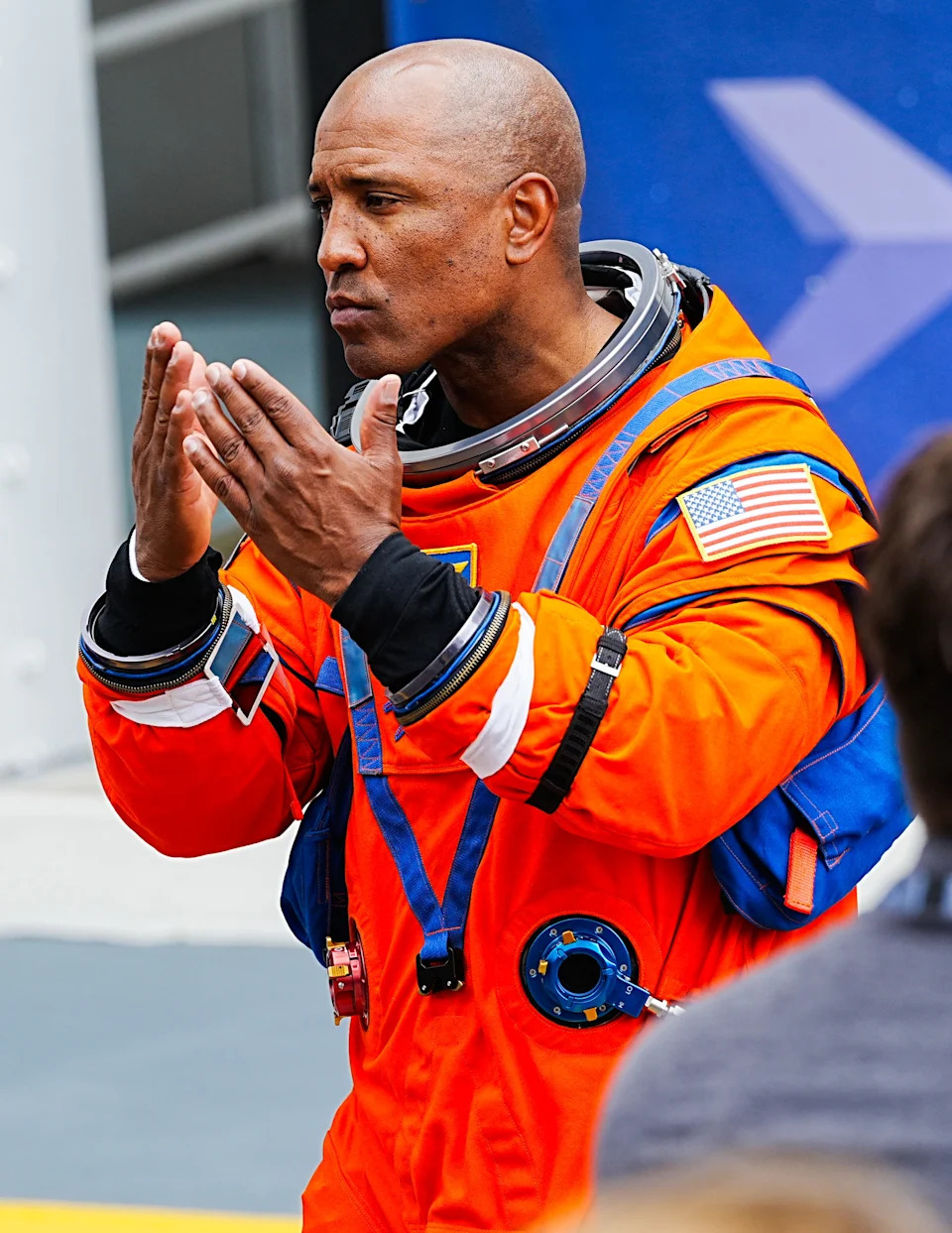
Artemis II Pilot Victor Glover blows kisses to his family as the crew leaves crew quarters at Kennedy Space Center, FL April 1, 2026. They’re headed to Pad 39B for launch on an 10-day rendezvous with the Moon.

The Artemis II astronauts (from left) Mission Specialist Jeremy Hansen, Pilot Victor Glover, Commander Reid Wiseman and Mission Specialist Christina Koch leave crew quarters at Kennedy Space Center, FL April 1, 2026 headed to Pad 39B for launch on an 10-day rendezvous with the Moon. Craig Bailey, FLORIDA TODAY via USA TODAY NETWORK
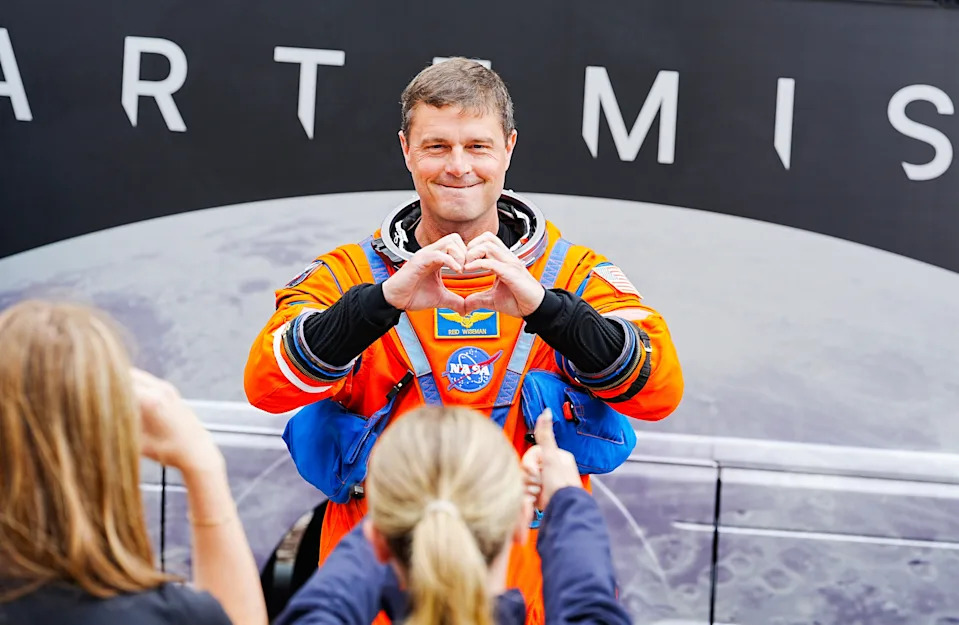
Artemis II Commander Reid Wiseman sends a heart of loved ones as the crew leaves crew quarters at Kennedy Space Center, FL April 1, 2026. They’re headed to Pad 39B for launch on an 10-day rendezvous with the Moon. Craig Bailey, FLORIDA TODAY via USA TODAY NETWORK
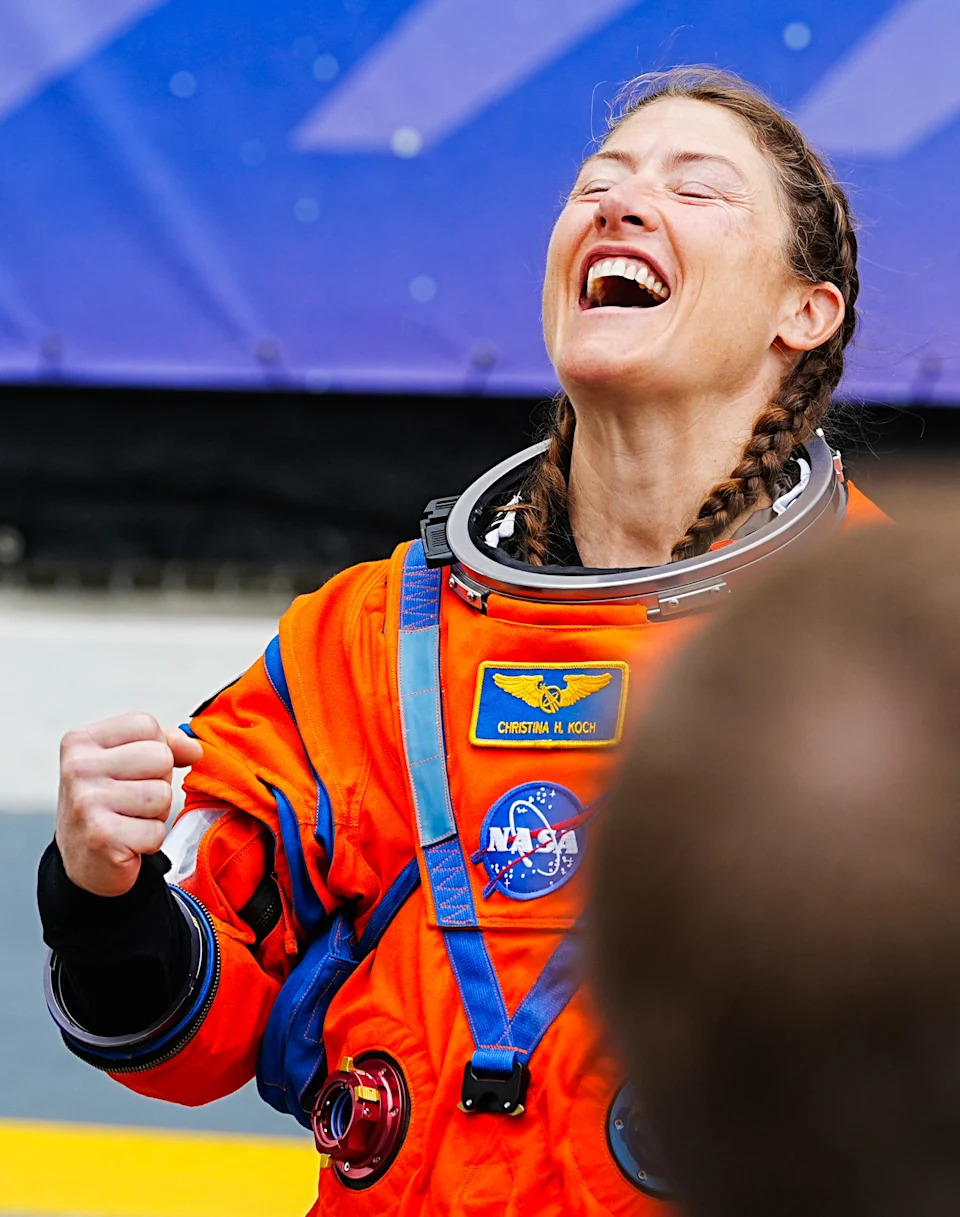
Artemis II Mission Specialist Christina Koch laughs as the crew leaves crew quarters at Kennedy Space Center, FL April 1, 2026. They’re headed to Pad 39B for launch on an 10-day rendezvous with the Moon. Craig Bailey, FLORIDA TODAY via USA TODAY NETWORK
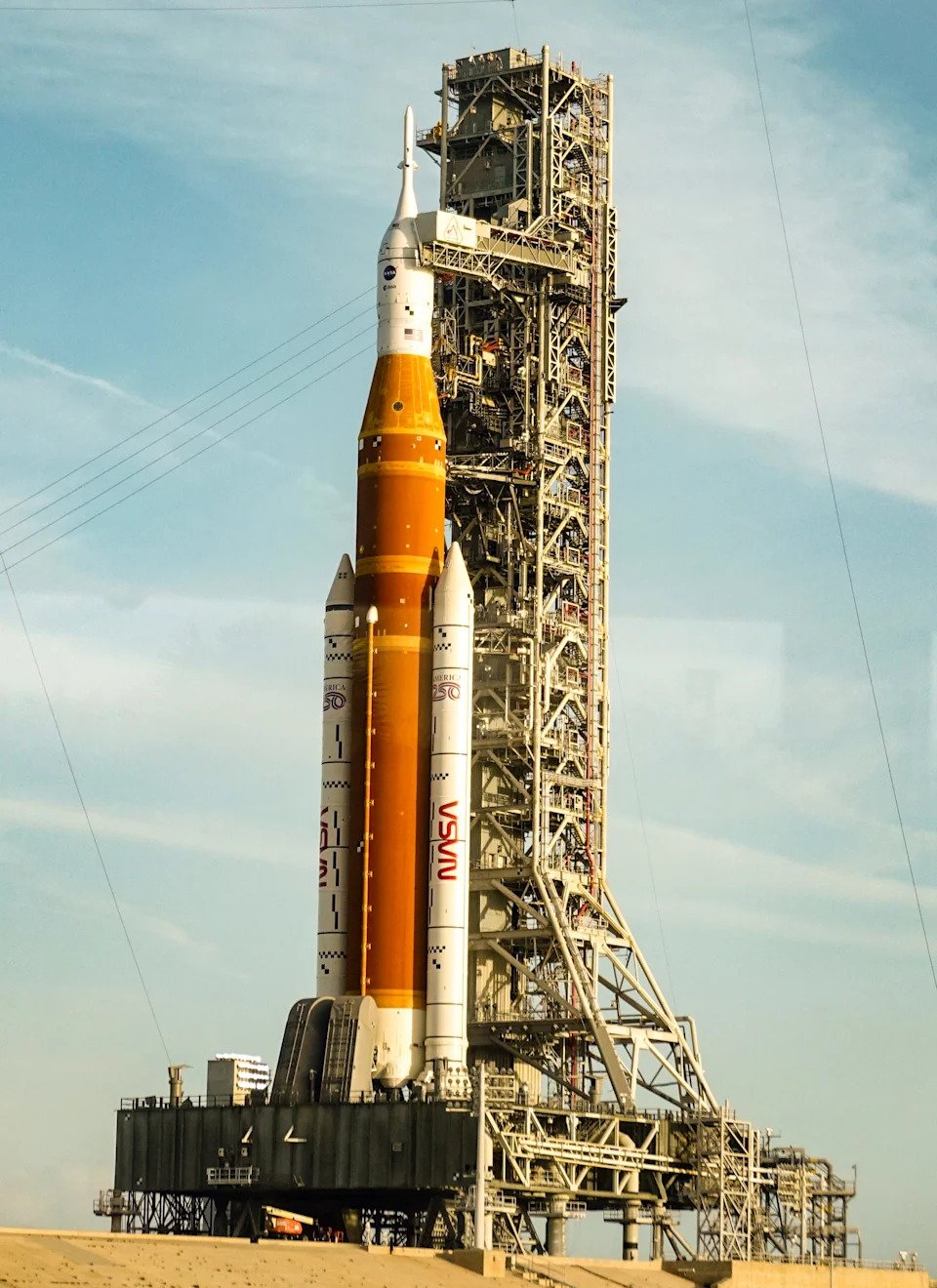
Photographers set up remote cameras inside Pad 39B March 31, 2026 in advance of the launch of Artemis II. Craig Bailey, FLORIDA TODAY via USA TODAY NETWORK
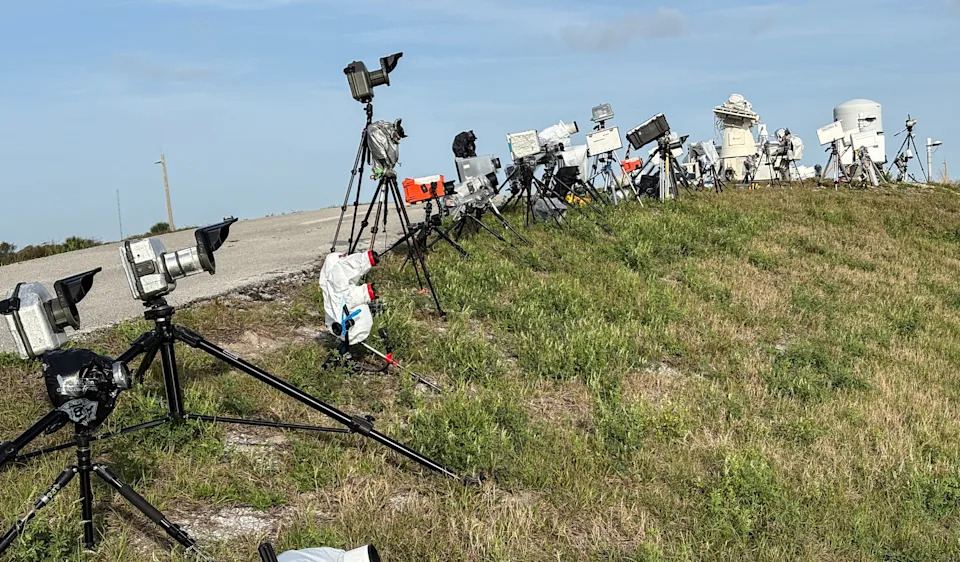
Remote camerasa are set up inside Pad 39B March 31, 2026 in advance of the launch of Artemis II. Craig Bailey, FLORIDA TODAY via USA TODAY NETWORK
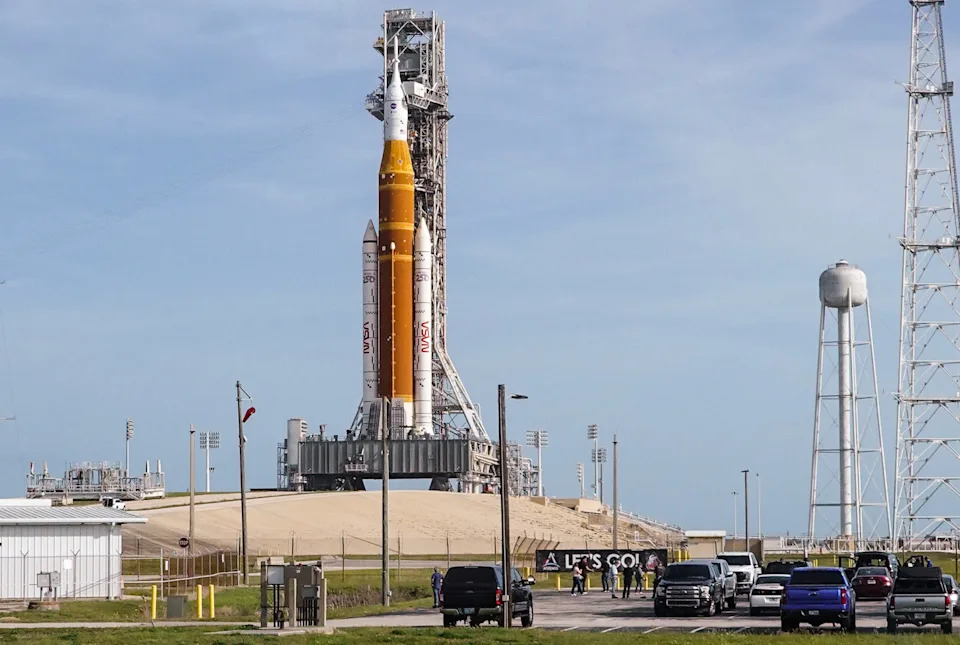
NASAÕs Space Launch System rocket Artemis II is readied for launch on Pad 39B at Kennedy Space Center, FL, March 31, 2026. Artemis II is scheduled to launch April 4, taking 4 astronauts around the Moon and back. Craig Bailey, FLORIDA TODAY via USA TODAY NETWORK
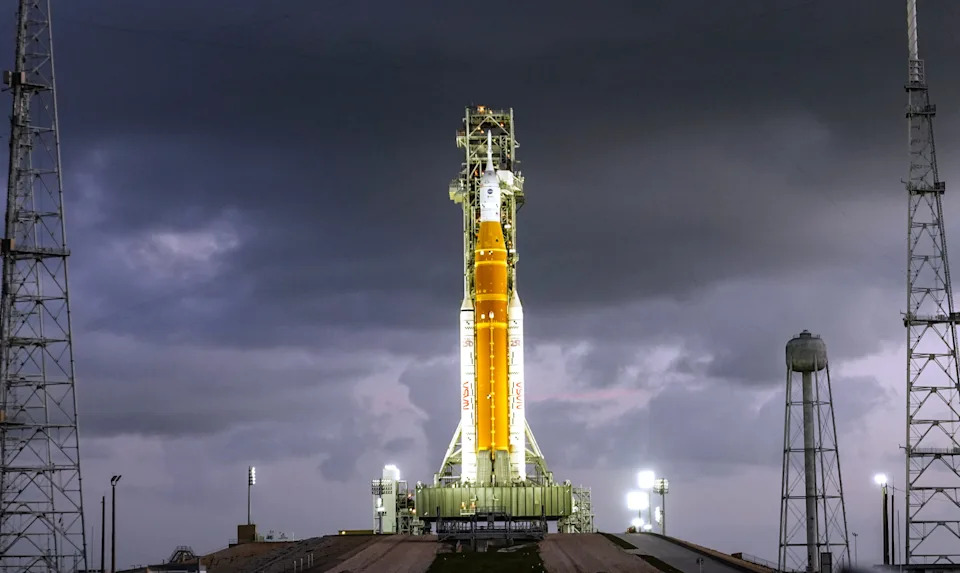
Photographers set up remote cameras inside Pad 39B March 31, 2026 in advance of the launch of Artemis II. Craig Bailey, FLORIDA TODAY via USA TODAY NETWORK
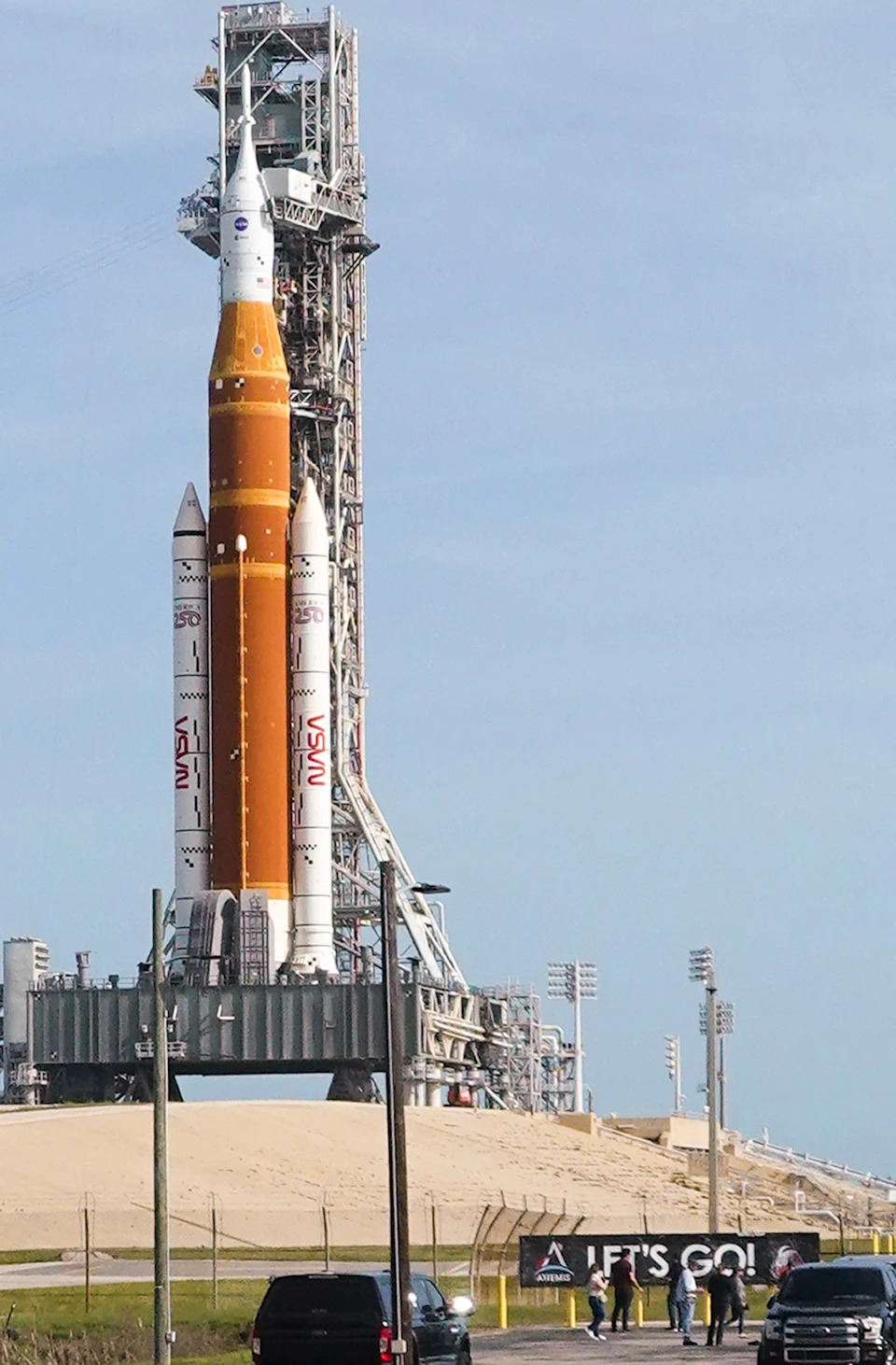
Photographers set up remote cameras inside Pad 39B March 31, 2026 in advance of the launch of Artemis II. Craig Bailey, FLORIDA TODAY via USA TODAY NETWORK
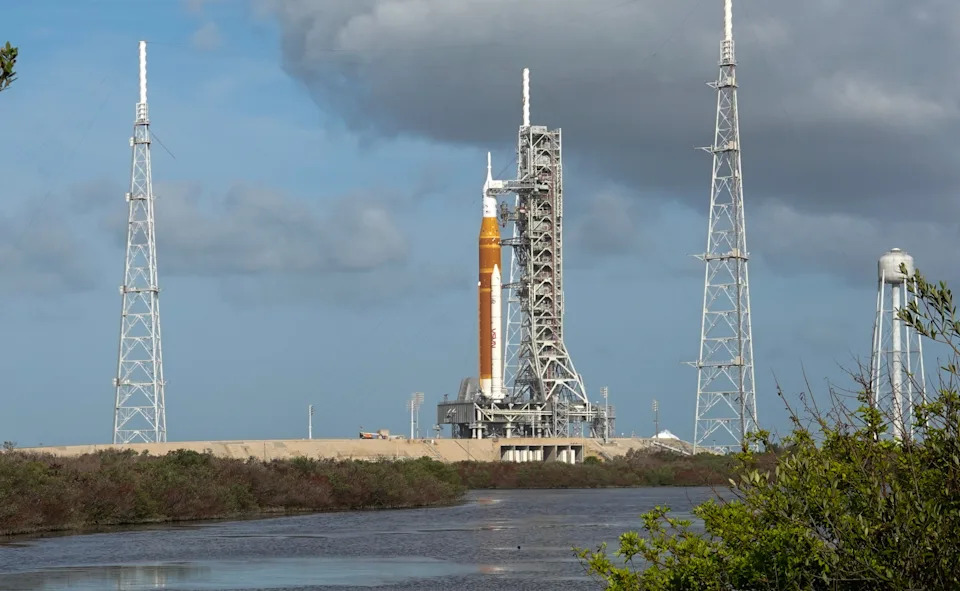
Photographers set up remote cameras inside Pad 39B March 31, 2026 in advance of the launch of Artemis II. Craig Bailey, FLORIDA TODAY via USA TODAY NETWORK
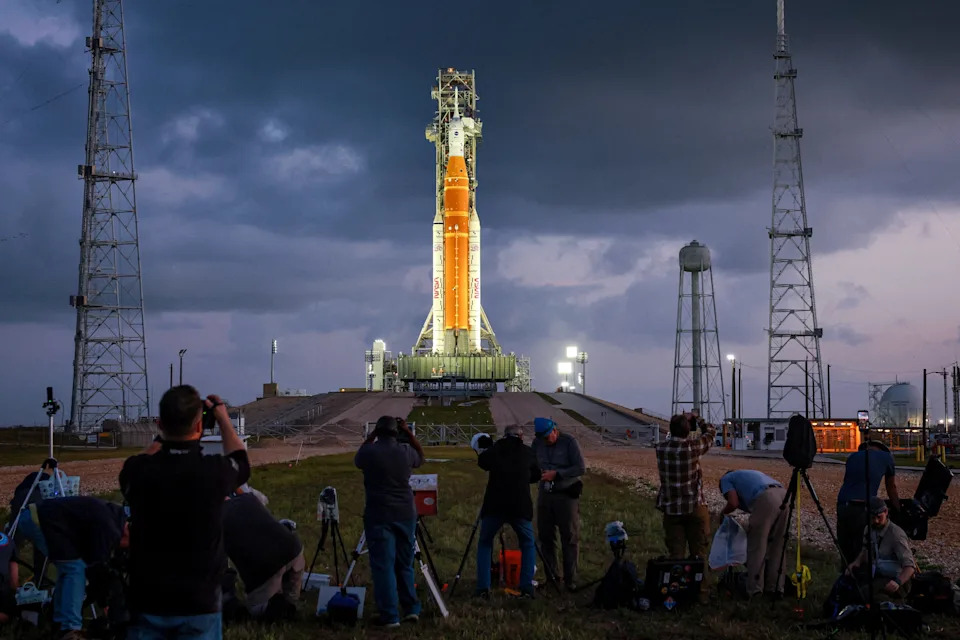
People set cameras to photograph NASA's Artemis II lunar flyby mission, with the next-generation moon rocket, the Space Launch System (SLS) rocket and the Orion crew capsule, on Pad 39B ahead of the launch of theArtemis II missionat the Kennedy Space Center in Cape Canaveral, Fla., March 31, 2026. The rocket is scheduled for an April 1, 2026, 6:24 p.m. launch of the 10-day mission.
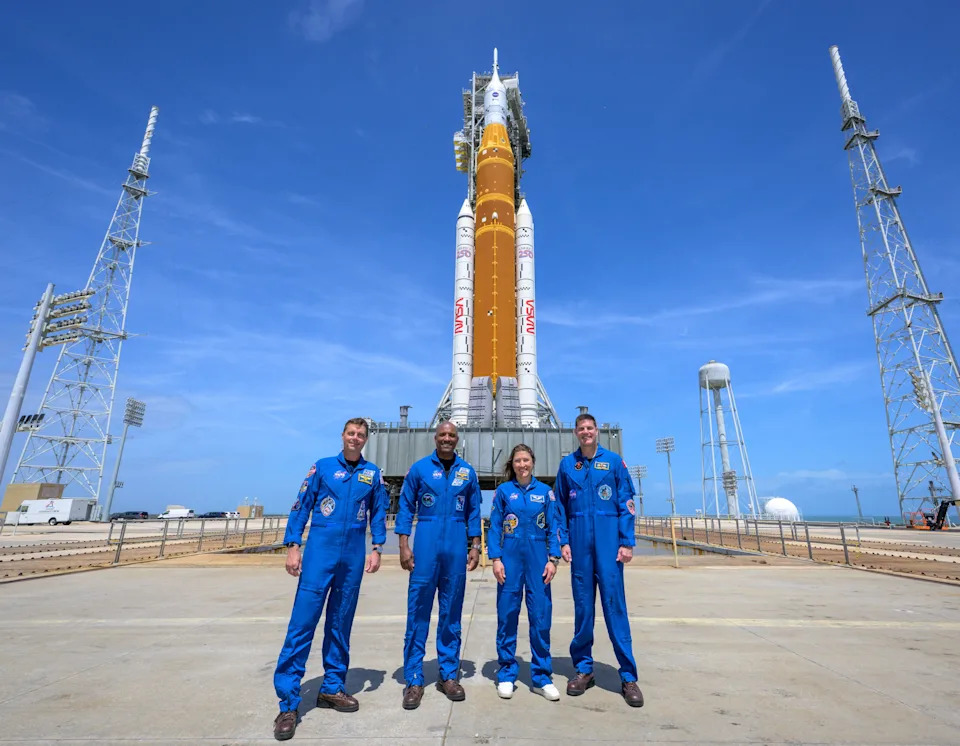
This NASA handout image shows NASA astronauts Reid Wiseman, Artemis II commander (L), Victor Glover, Artemis II pilot (2L), Christina Koch, Artemis II mission specialist (2R), and CSA (Canadian Space Agency) astronaut Jeremy Hansen, Artemis II mission specialist (R), as they pose for a group photo during a visit to NASA's Artemis II SLS (Space Launch System) rocket and Orion spacecraft, on March 30, 2026, at Launch Complex 39B of NASA's Kennedy Space Center in Florida.
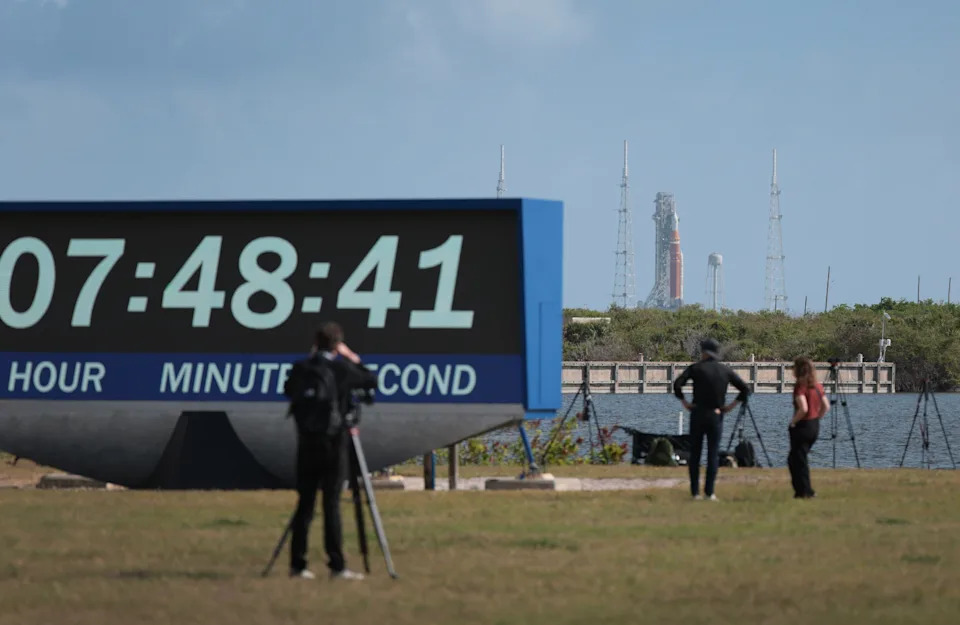
The countdown clock runs as NASA's Artemis II Space Launch System rocket and Orion spacecraft sit on Launch Pad 39B at the Kennedy Space Center on April 1, 2026 in Cape Canaveral, Fla.
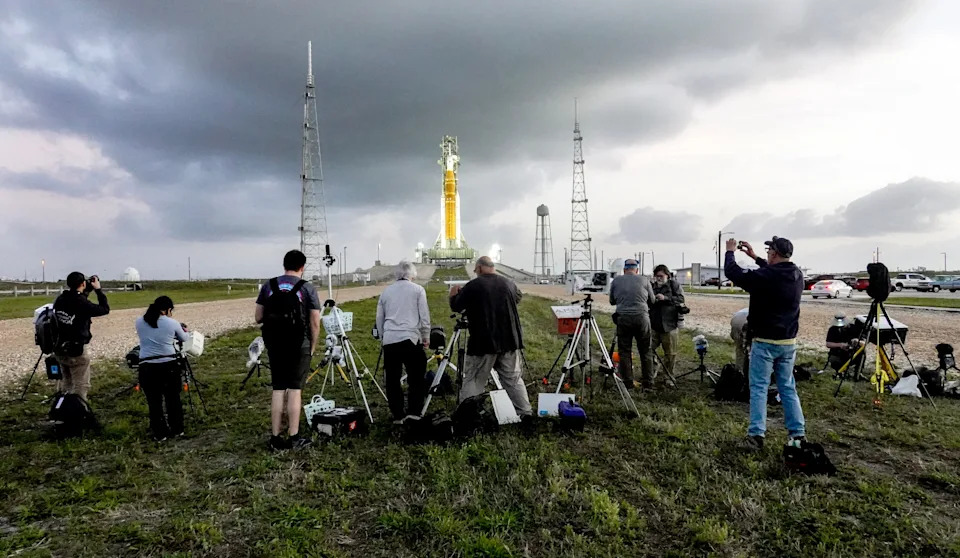
Photographers set up remote cameras inside Pad 39B March 31, 2026 in advance of the launch of Artemis II.

People gather ahead of the launch of the next-generation moon rocket, the Space Launch System (SLS) rocket and the Orion crew capsule, part of NASA's Artemis II lunar flyby mission, from NASA's Kennedy Space Center, in Titusville, Fla., April 1, 2026.
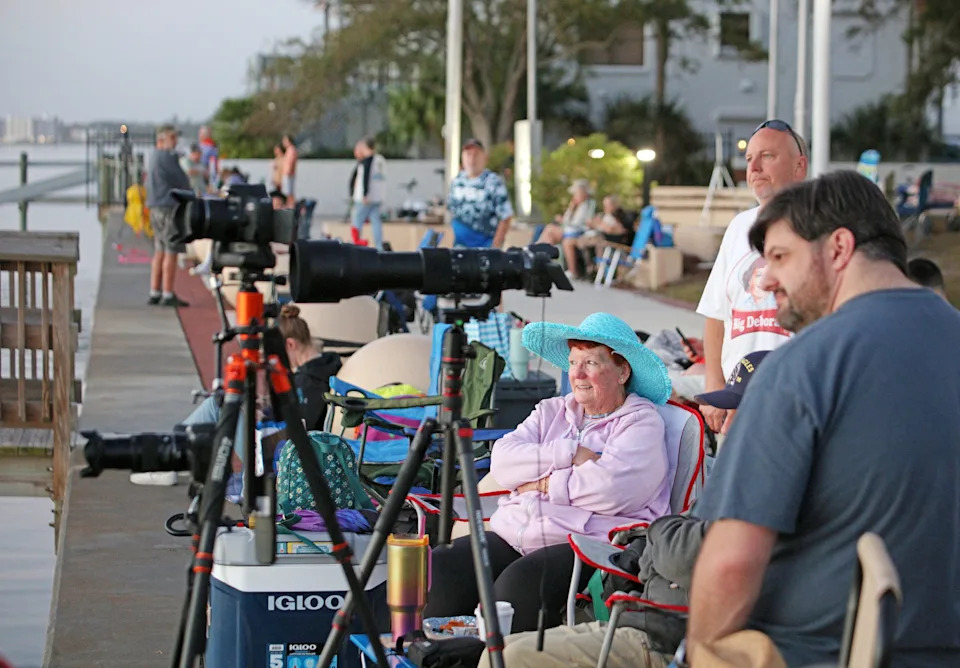
Space enthusiasts watch the sunrise from a park in Titusville, Fla. several hours before NASA's Artemis II Space Launch System (SLS) rocket is scheduled to launch from the Kennedy Space Center on April 1, 2026.
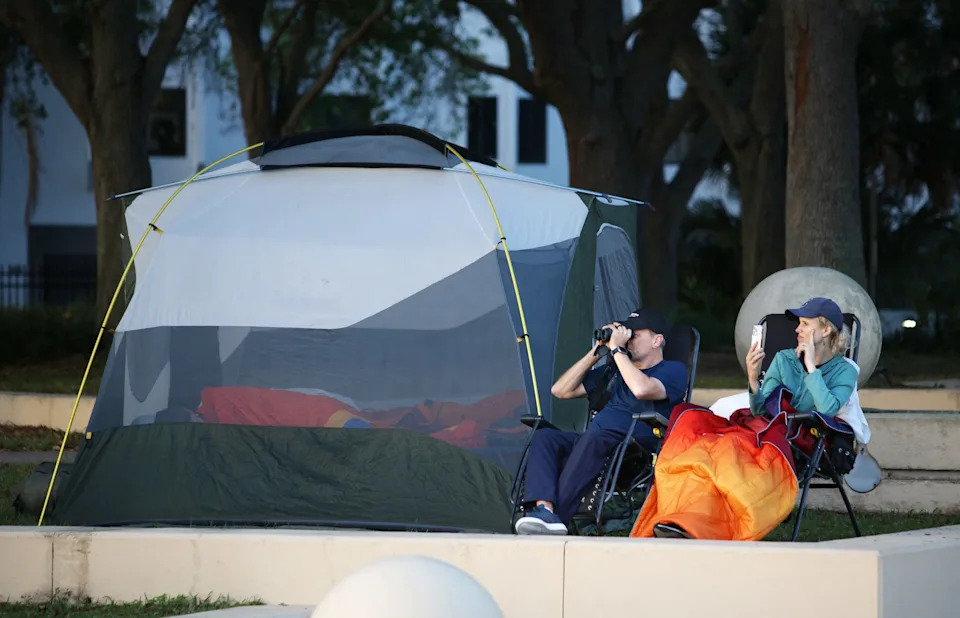
Space enthusiasts watch the sunrise from a park in Titusville, Florida several hours before NASA's Artemis II Space Launch System (SLS) rocket is scheduled to launch from the Kennedy Space Center on April 1, 2026.
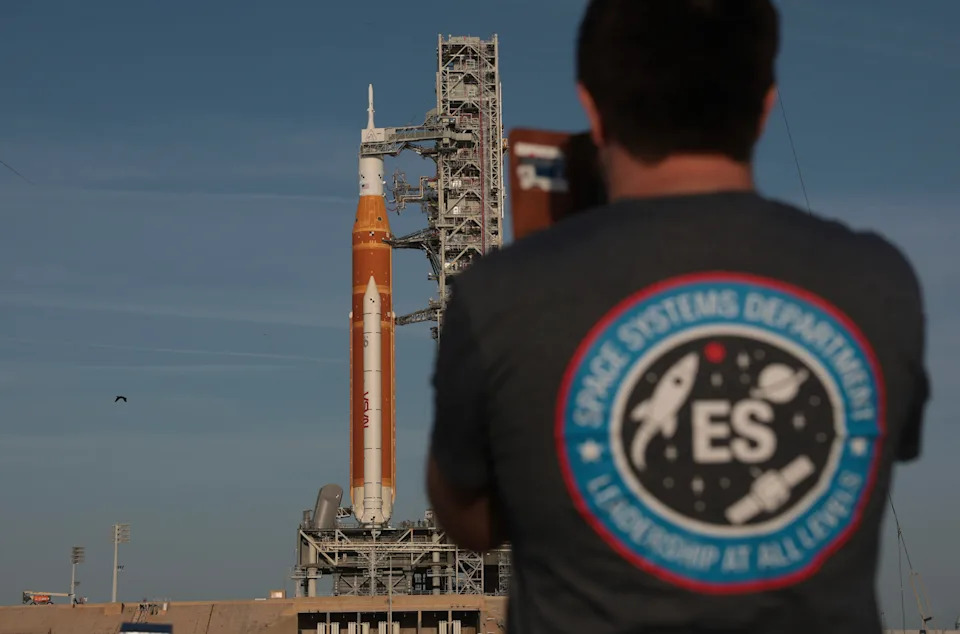
NASA's Artemis II Space Launch System rocket and Orion spacecraft sit on Launch Pad 39B at the Kennedy Space Center on March 31, 2026 in Cape Canaveral, Fla.

Brenda Mulberry, president of Pike Products and Space Shirts, holds up one of the thousands of Artemis II t-shirts she has printed in their north Merritt Island shop.
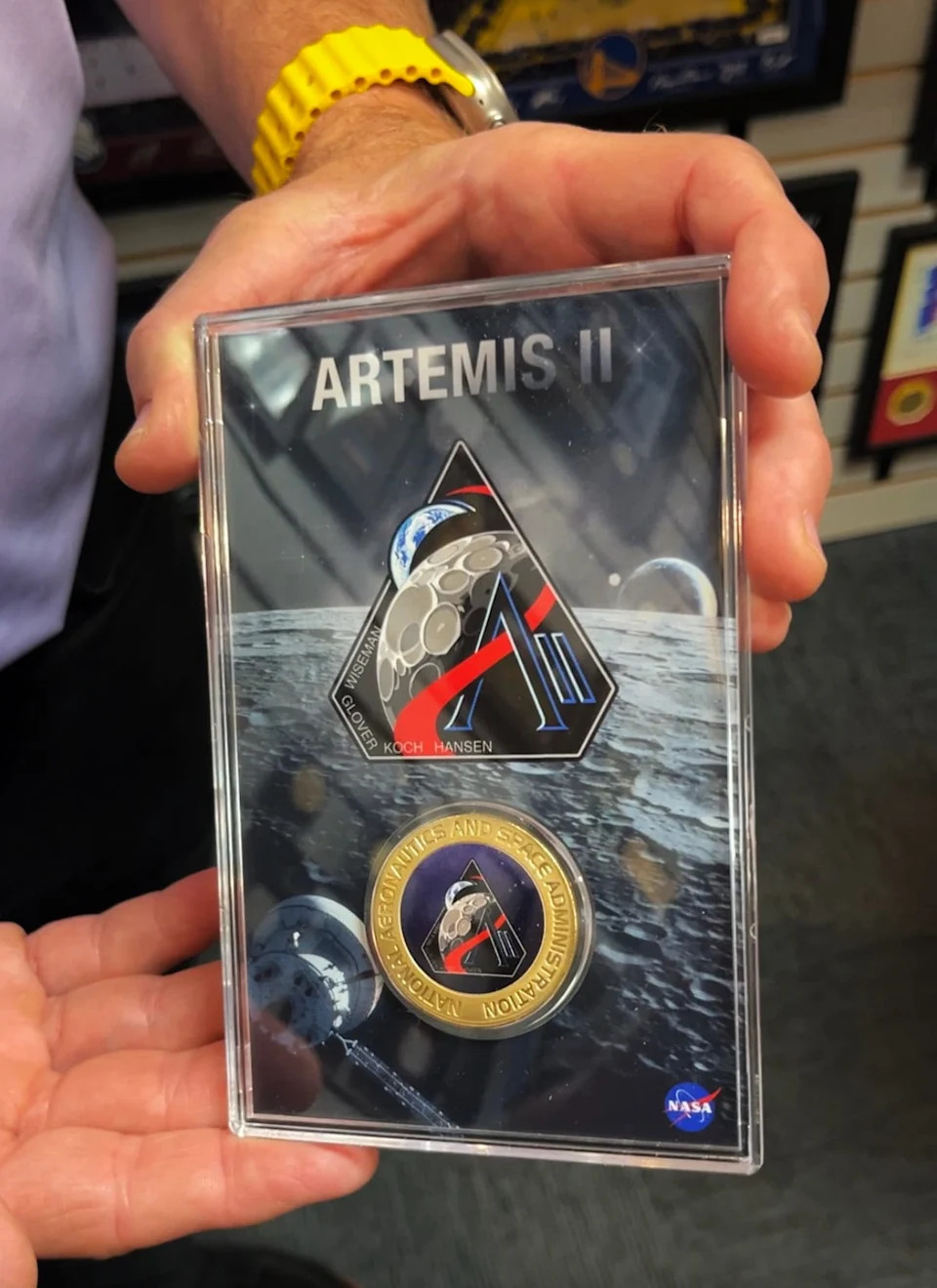
The Highland Mint in Melbourne, Fla. has minted an Artemis II collector coin.
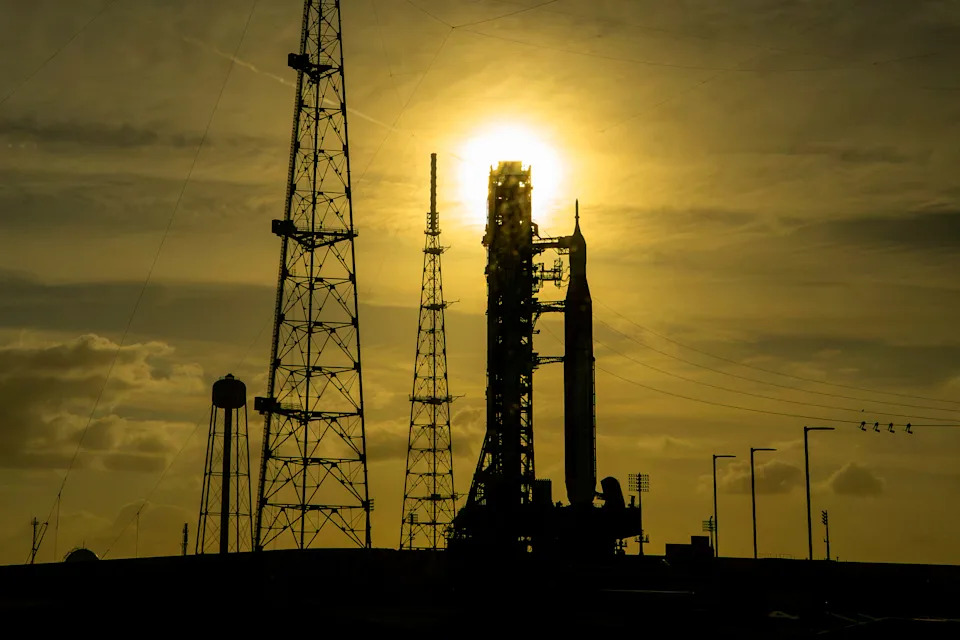
NASA's Artemis II Space Launch System rocket and Orion spacecraft rest on Launch Pad 39B at Kennedy Space Center in Cape Canaveral, Fla., on March 31, 2026, ahead of the crewed lunar mission.
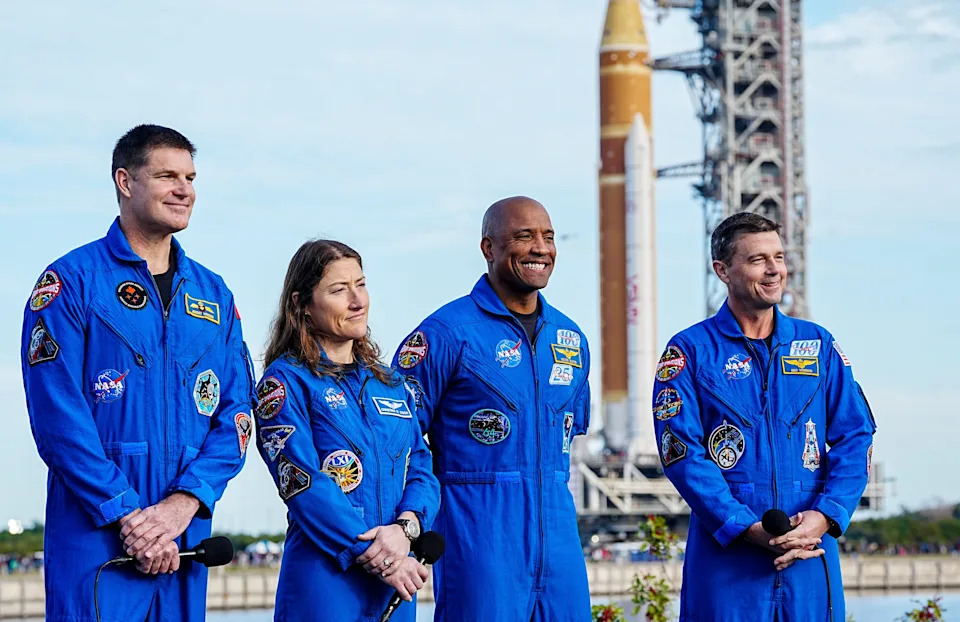
The crew of Artemis II (from left) Jeremy Hansen, Christina Koch, Victor Glover and Reid Wiseman pose for pictures as their ride to the moon is transported from the Vehicle Assembly Building at Kennedy Space Center, Fla. to the launch pad Jan. 17, 2026.
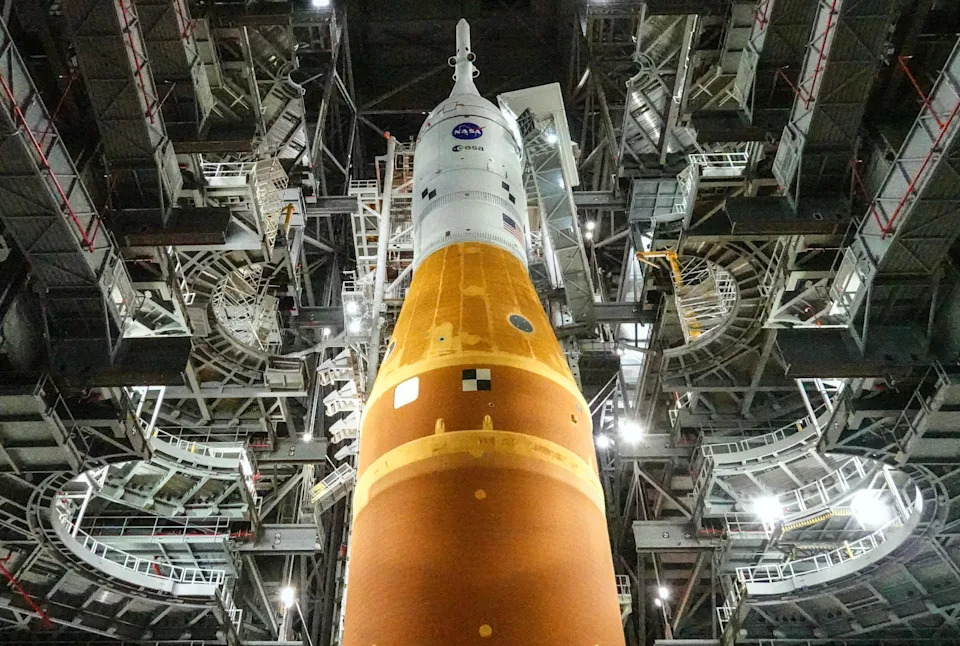
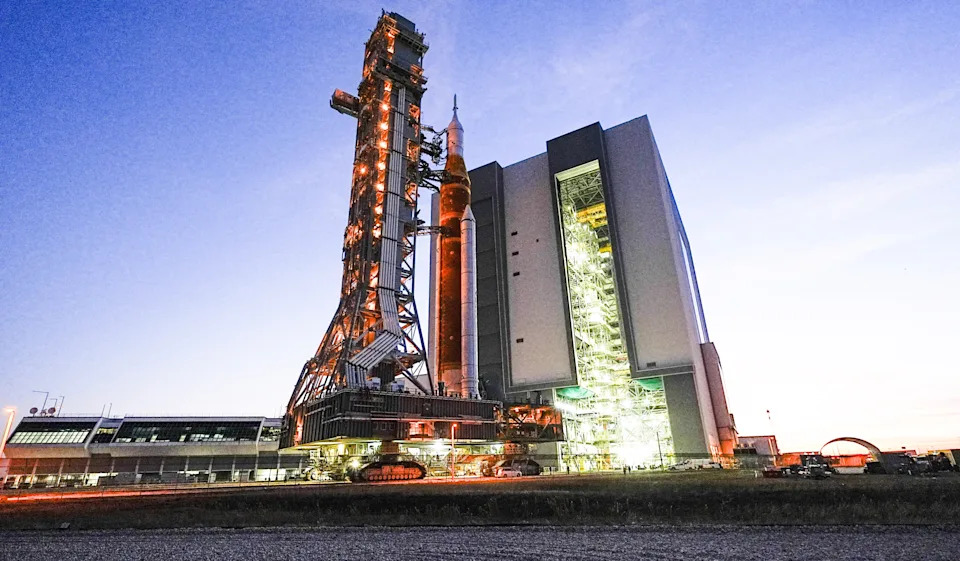
The Space Launch System rocket Artemis II begins its journey from the Vehicle Assembly Building to Pad 39B March 19, 2026.
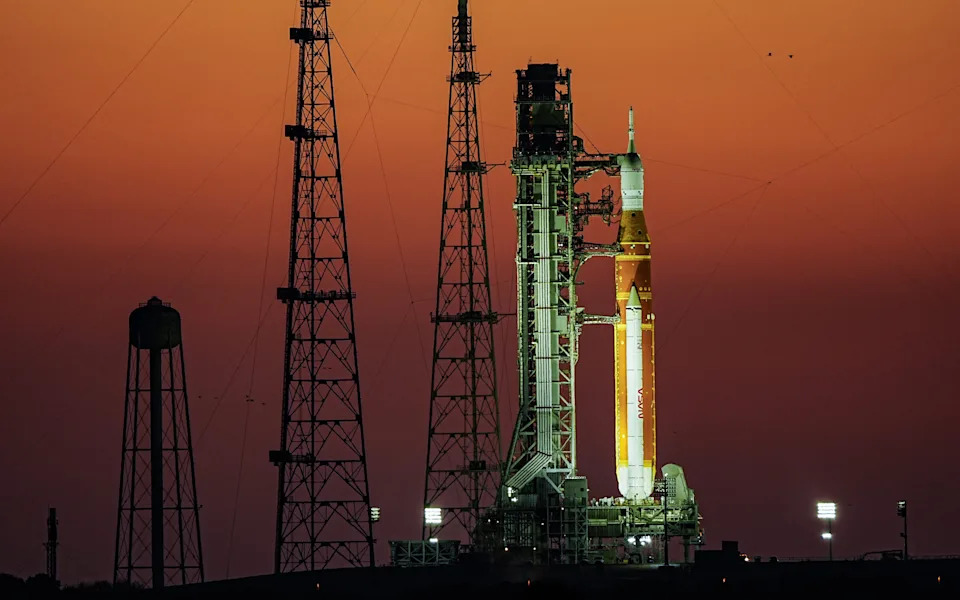
The sun rises over Kennedy Space Center and NASA’s Space Launch System vehicle Artemis II, March 24, 2026.
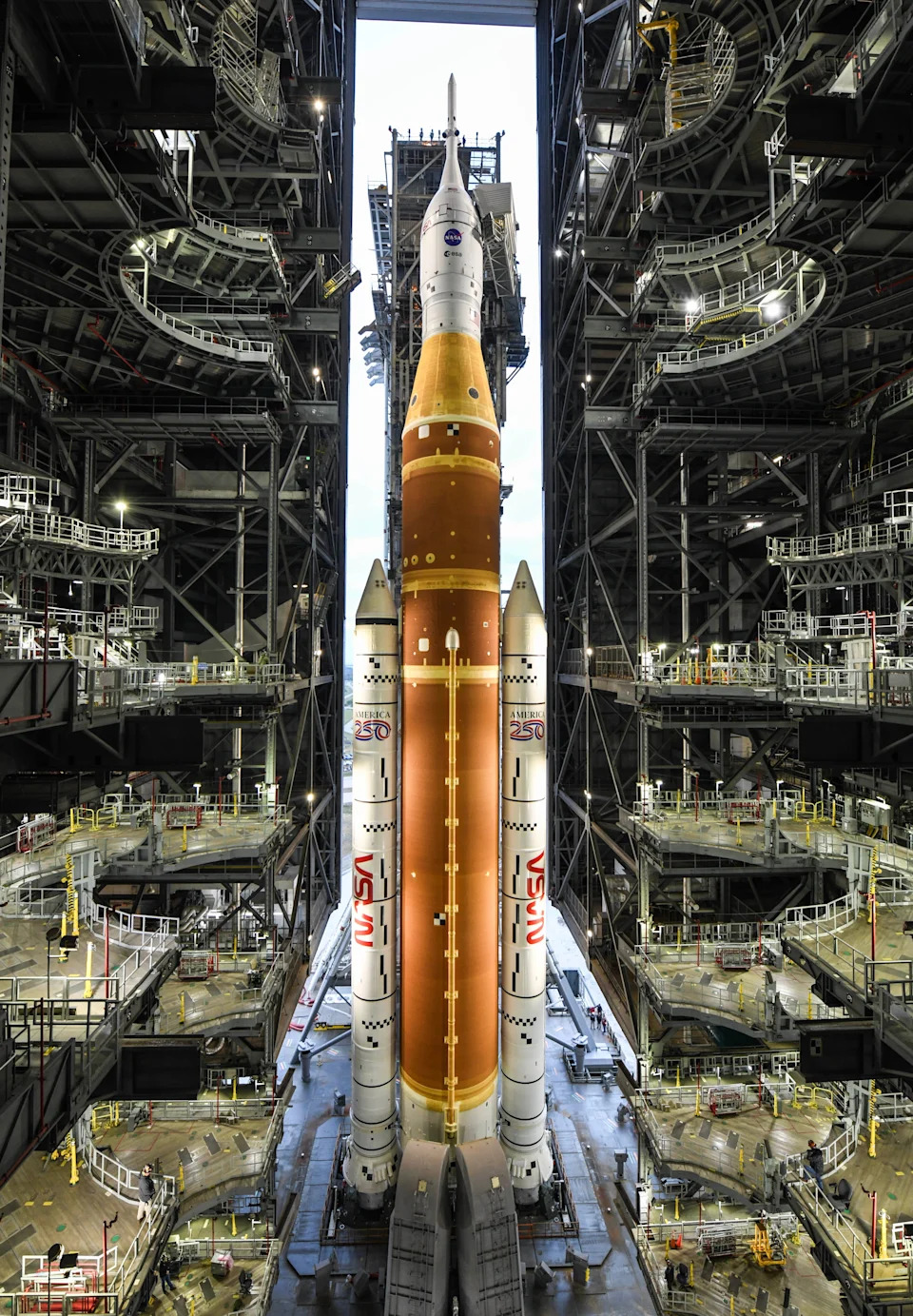
Artemis II begins its journey from the Vehicle Assembly Building at Kennedy Space Center, Fla. to the launch pad Jan. 17, 2026.
NASA’s Space Launch System rocket Artemis II is rolled back into the Vehicle Assembly Building at Kennedy Space Center, Fla,, February 25, 2026.
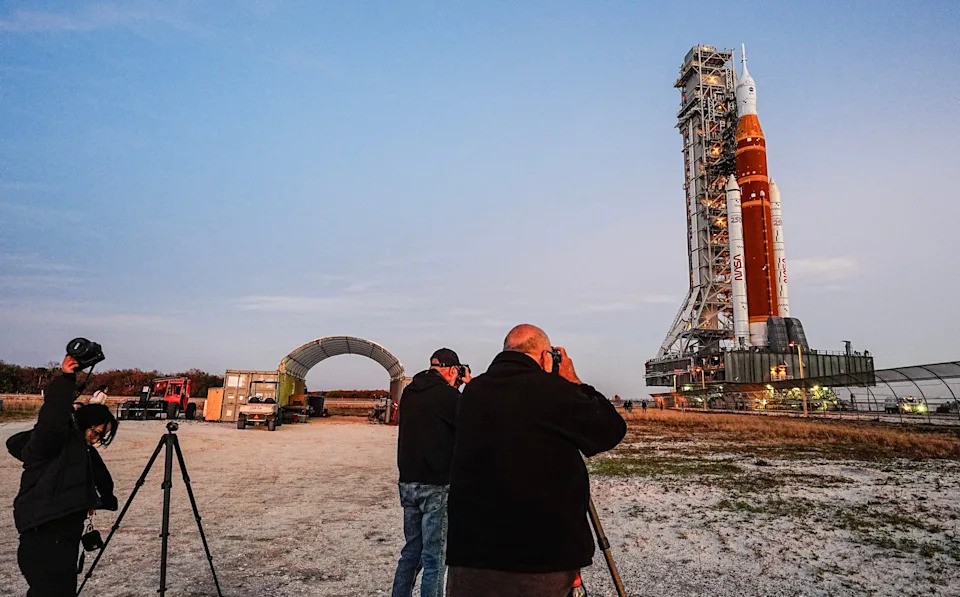
NASA’s Space Launch System rocket Artemis II is rolled back into the Vehicle Assembly Building at Kennedy Space Center, FL February 25, 2026.
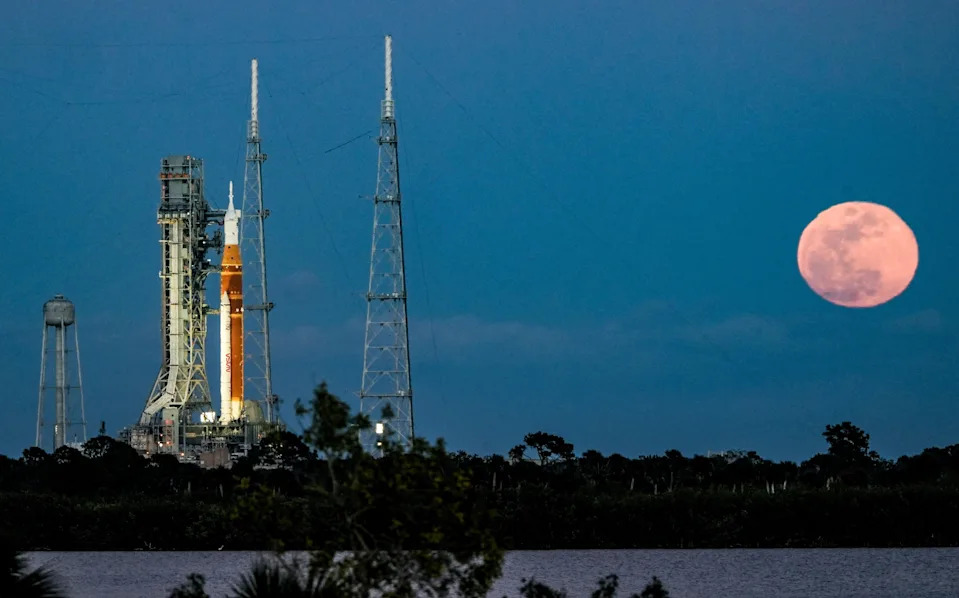
The full moon rises as Artemis II sits on Pad 39B at Kennedy Space Center Feb. 1, 2026.
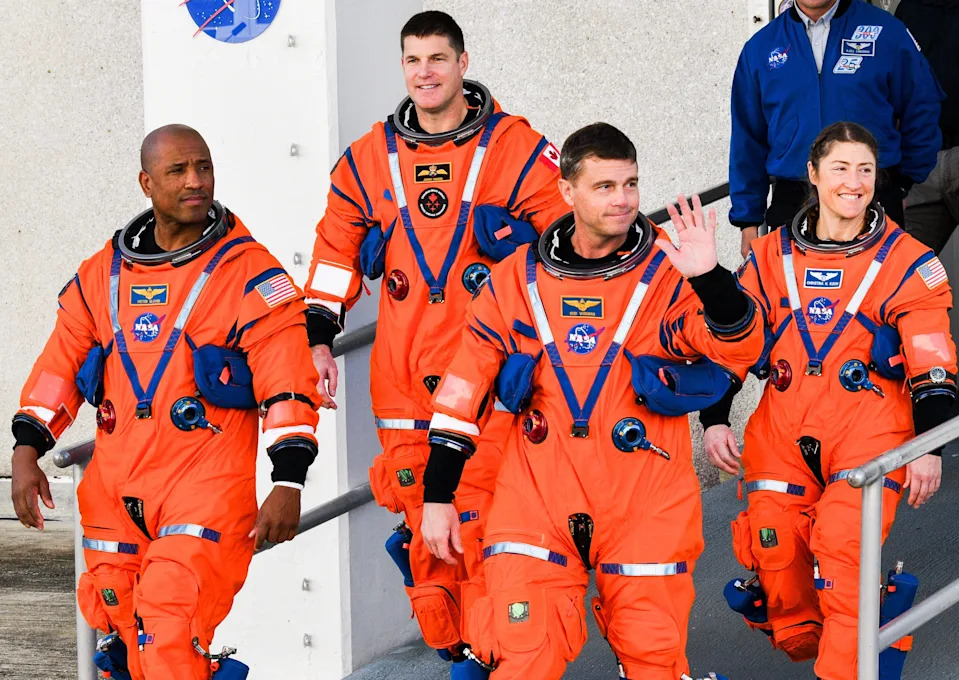
The astronauts of Artemis II (from left) Victor Glover, Jeremy Hansen, Reid Wiseman and Christina Koch leave crew quarters Dec. 20, 2025 during their pre-launch rehearsal.
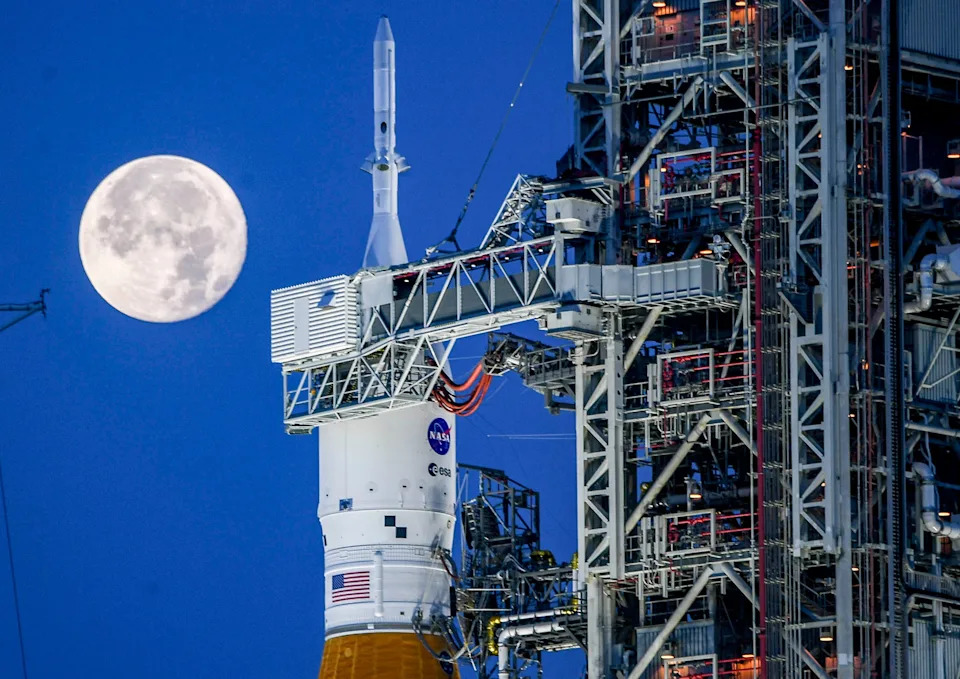
The first full moon in June, called the Strawberry Moon, sets over the Orion capsule atop NASA’s Space Launch System rocket just before dawn at Kennedy Space Center on June 15, 2022.
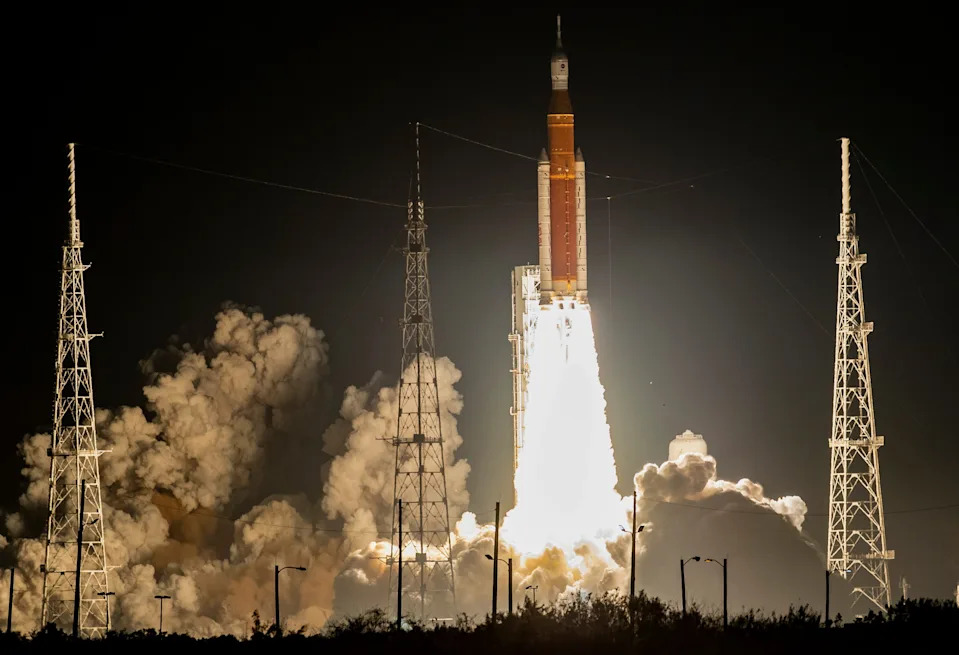
NASA’s Artemis I lifts off from Pad 39B at Kennedy Space Center on Merritt Island, Fla., Nov. 16, 2022
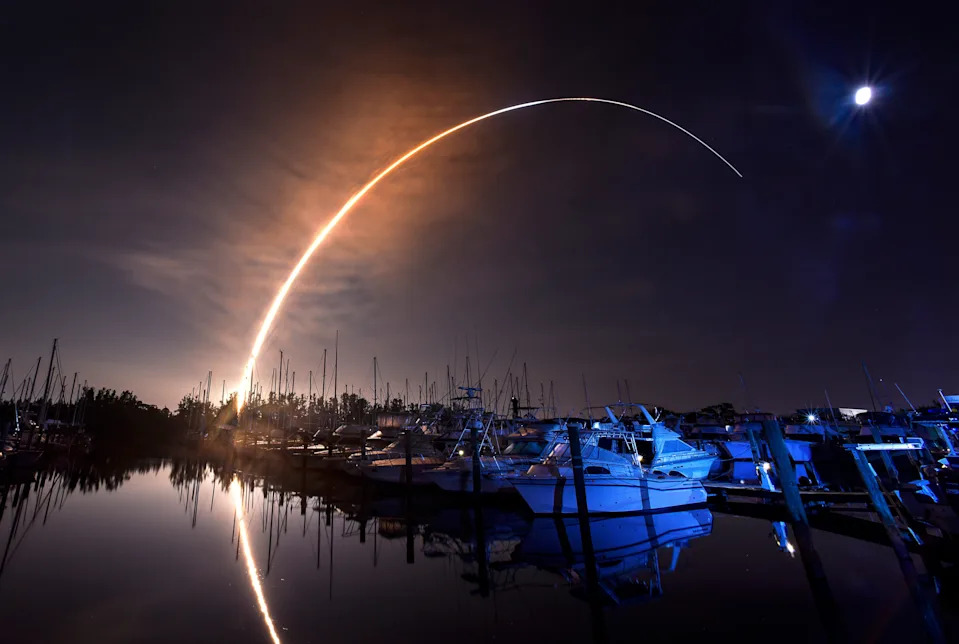
NASA’s Space Launch System rocket arcs into the sky on its maiden voyage, as seen from Harbortown Marina in Merritt Island. The moon, the destination of the Artemis I mission, is visible at top right. After delays and scrubs, the rocket lifted off from Kennedy Space Center at 1:47 a.m., Nov. 16, 2022.
Help us improve.





















