
NOAA’s SWPC has issued a Strong (G3) geomagnetic storm warning for Friday–Saturday after recent solar flares, a CME and a coronal hole high‑speed stream. A Kp index up to 7 could push auroras as far south as Pennsylvania, with brighter displays expected from Illinois to Oregon. Space weather may also disrupt power grids, satellites, GPS and radio. NOAA and NASA will closely monitor conditions to protect the Artemis II crew aboard Orion.
Strong Geomagnetic Storm Could Bring Northern Lights As Far South As Pennsylvania — G3 Alert
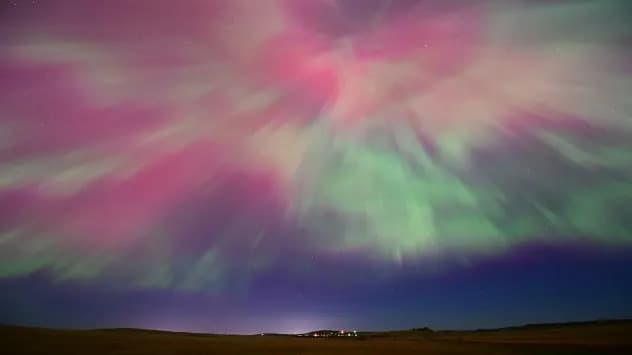
The northern lights seen from Gillette, Wyoming on Oct. 5, 2024. (Image credit: Tony Laubach/AccuWeather)
NOAA’s Space Weather Prediction Center (SWPC) has issued a Strong (G3) geomagnetic storm warning for Friday into Saturday after recent solar flares and a coronal mass ejection (CME) combined with a high‑speed stream from a coronal hole. Skywatchers across the northern half of the United States may be treated to vivid auroral displays this weekend.
What To Expect
The forecast calls for a maximum Kp index of up to 7 (on a 0–9 scale). At that level, faint auroras could be visible as far south as Pennsylvania, while brighter, more colorful displays may appear from Illinois across to Oregon. When strong geomagnetic activity occurs, the aurora can push well beyond polar regions, producing sweeping bands of green, red and purple across the night sky.
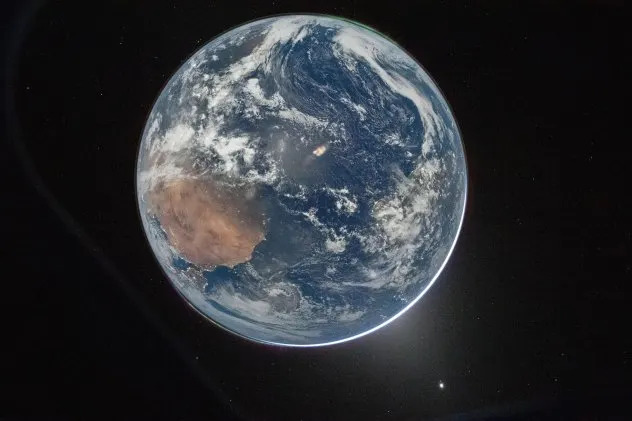
Earth as seen from the Orion spacecraft on April 2, 2026. (Image: Reid Wiseman/NASA)
Cause And Concerns
SWPC says the storm stems from the combined effects of an ongoing coronal hole high‑speed stream and a CME that left the Sun on Wednesday. Besides offering spectacular sky shows, powerful space weather events can disrupt technology: the power grid, communications and navigation systems, satellites and some radio services could experience interference.
Why This Matters For Artemis II
NASA’s Orion spacecraft is currently en route to the Moon with four astronauts on the Artemis II mission. NOAA and NASA will maintain continuous monitoring and provide real‑time space weather forecasts and decision support to help protect the crew from elevated radiation risks while they travel beyond Earth’s magnetic shield.
Viewing Tips
For the best chance to see the aurora, find a dark location away from city lights, give your eyes 20–30 minutes to adjust to the dark, and check local cloud cover and real‑time aurora maps. Cameras set to long exposure and a low ISO can capture fainter colors that might be hard to see with the naked eye.
Safety note: If you rely on satellite navigation or communications (aviation, maritime, or critical infrastructure), stay informed through official NOAA advisories while the storm warning is in effect.
Help us improve.





















