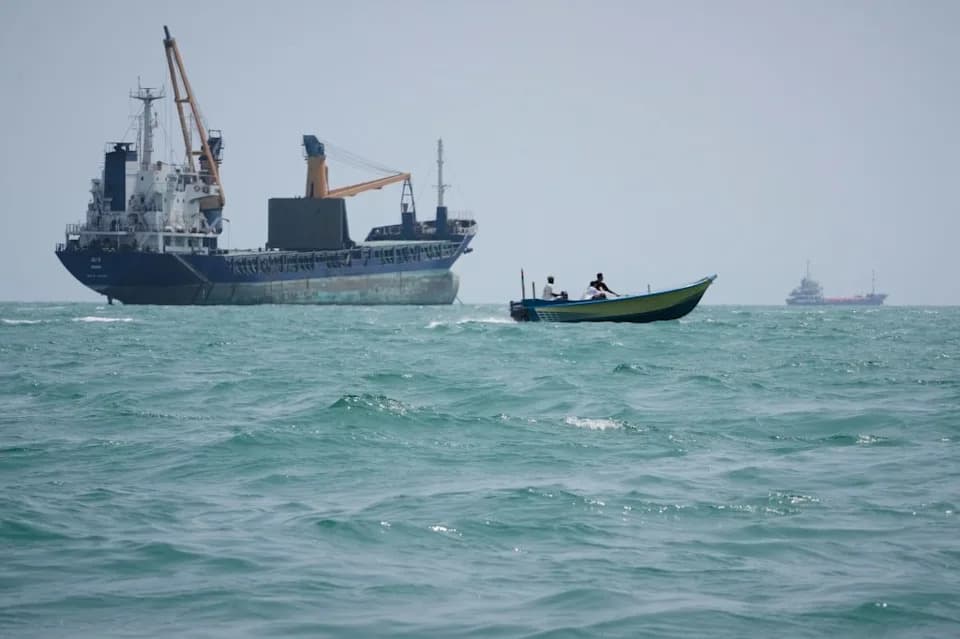
America’s renewed focus on maritime chokepoints—from the Strait of Hormuz to Malacca—reflects a strategic effort to protect trade routes and energy flows. Framed by Alfred Thayer Mahan’s theory that sea power underpins national strength, the approach mixes military readiness with economic tools and alliances. Critics warn of escalation and overreliance on force, but proponents see it as a recalibration to preserve U.S. influence amid China’s expanding global footprint.
Sea Power Returns: How "America First" Is Reasserting Control Over Global Maritime Chokepoints
When Tehran menaces the Strait of Hormuz, global markets can feel the shock within hours. As attention returns to the narrow corridor that carries roughly 20 percent of the world’s oil, the consequences extend far beyond any single confrontation.
Strategic Logic Behind A Renewed Maritime Focus
This episode highlights a longstanding strategic argument at the heart of President Trump’s "America First" approach: a renewed drive to secure the maritime chokepoints that sustain economic influence and geopolitical reach. Critics often portray Trump’s foreign policy as erratic; viewed through the framework of 19th-century naval strategist Alfred Thayer Mahan, however, it reads less like improvisation and more like a deliberate effort to restore U.S. sway over the sea lanes that underpin global trade.
Mr. Trump has not publicly invoked Mahan by name, but his emphasis on rebuilding U.S. maritime capacity and protecting vital trade routes closely mirrors Mahanian principles. In The Influence of Sea Power Upon History, Mahan argued that mastery of the seas underpins national strength: command of maritime arteries secures commerce, access to resources and strategic advantage.
From Postwar Dominance to Renewed Competition
After World War II the United States operationalized that doctrine, dominating key sea lanes and supporting an international order that fostered prosperity, technological diffusion and democratic norms. That edge has weakened over decades: OPEC reshaped global energy politics, offshoring hollowed out elements of U.S. industrial capacity, and China’s Belt and Road Initiative has extended Beijing’s influence into ports and logistics infrastructure worldwide.
Against this backdrop, "America First" can be read less as isolationism than as a course correction that prioritizes leverage over pivotal chokepoints such as Hormuz, the Suez Canal, the Panama Canal and the Malacca Strait. The disproportionate share of global energy that transits these narrow passages underscores both their vulnerability and their strategic value.
Policy Tools And Risks
Recent U.S. actions, sometimes coordinated with partners including Israel, to degrade Iranian capabilities reflect that calculation: protecting Hormuz aims to safeguard an essential energy corridor and to preserve freedom of navigation — a central tenet of Mahan’s theory. At the same time, critics warn that a posture built heavily on military coercion risks escalation and overreliance on force.
"Control of geography remains a powerful instrument of national influence."
Beyond the use of force, the current approach blends economic measures, energy policy and alliance diplomacy to reassert U.S. influence over global logistics networks. That mix is deliberately intended to complicate Beijing’s efforts to insulate its supply lines and expand its international freedom of action.
What Comes Next
Viewed through the lens of sea power, "America First" appears less a retreat from global affairs and more a recalibration of strategy around enduring geographic realities. In an international system still organized around narrow maritime arteries, control of key chokepoints remains a form of power. The central question is whether the United States will shape those flows going forward or yield that role to others.
Alan Waite is Chief Executive Officer of Praxis Consulting and an adjunct professor of project management at the University of Wisconsin–Milwaukee School of Continuing Education.
Copyright 2026 Nexstar Media, Inc. All rights reserved.
Help us improve.