Marco Rubio told Al Jazeera that indirect talks between the US and Iran are ongoing even as Washington pursues a military campaign aimed at dismantling Tehran's nuclear and missile capabilities. He warned the Strait of Hormuz will be kept open and claimed significant military objectives have already been met, with further results expected within weeks. Rubio said Washington would welcome political change in Iran if it emerges but insisted regime change is not the stated operational aim. Analysts in Tehran and US experts questioned parts of the US narrative and highlighted uncertainty about Iran's leadership and long-term objectives.
Rubio: Indirect Talks With Iran Continue While US Presses Military Campaign — 'Strait Of Hormuz Will Stay Open'
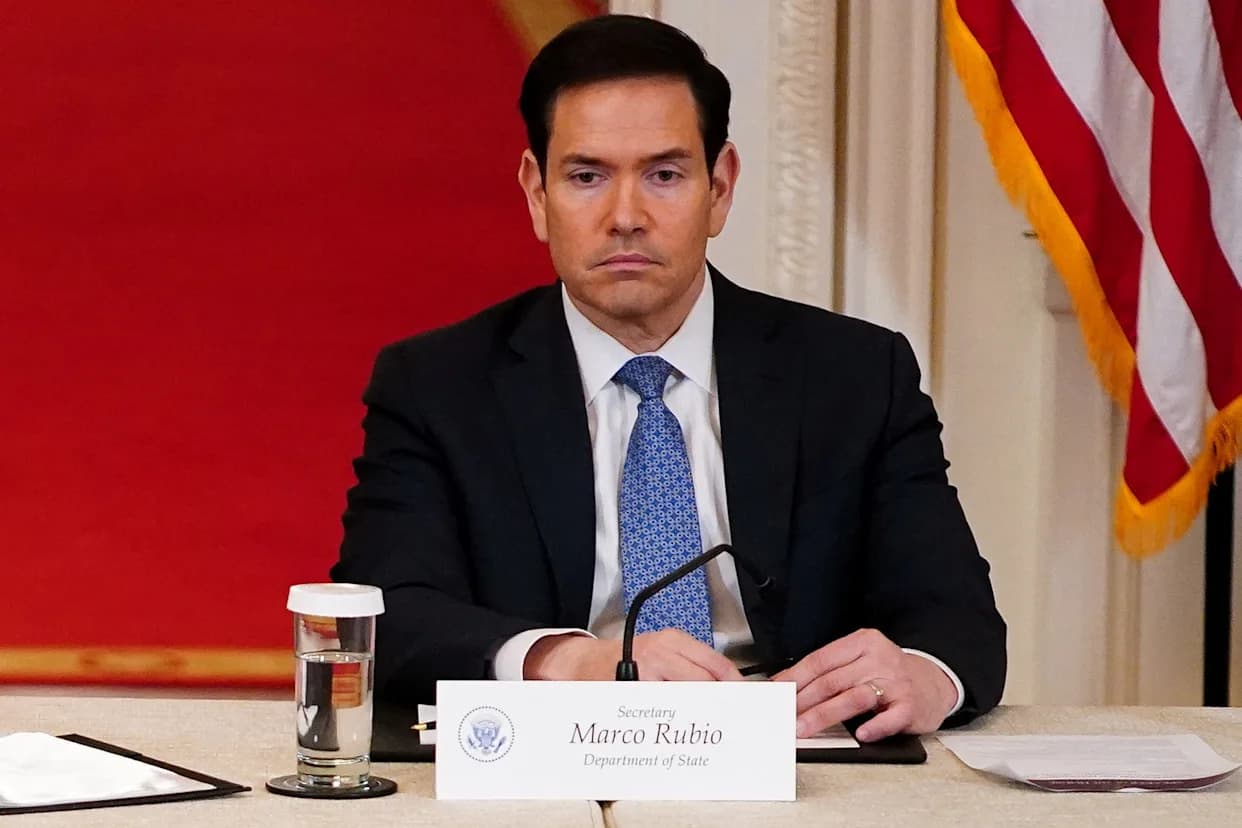
US Secretary of State Marco Rubio [File: Nathan Howard/Reuters]
US Secretary of State Marco Rubio told Al Jazeera that Washington is conducting indirect talks with Tehran through intermediaries while continuing a military campaign intended to force Iran to abandon its nuclear and advanced missile programmes. Rubio warned that the strategic Strait of Hormuz must remain open 'one way or another' and said key military objectives could be met within weeks.
Key Takeaways From the Interview
Diplomacy Runs Alongside Pressure
Rubio described communications between the United States and Iran as largely indirect but ongoing. 'There are messages and some direct talks going on between some inside of Iran and the United States, primarily through intermediaries,' he said, adding that US leaders prefer diplomacy when possible.
Dual-Track Strategy
Al Jazeera reporting noted a dual-track approach: keeping diplomatic channels open while increasing military and economic pressure. Rubio's comments came as President Donald Trump intensified online rhetoric and threatened to 'obliterate' Iran's energy infrastructure if a ceasefire was not reached soon.
Demands on Iran's Nuclear And Missile Programmes
Rubio insisted that Iran 'can never have nuclear weapons' and must halt missile and drone production that threaten Gulf neighbours. He said Iran could pursue civilian nuclear power only if it could not be converted quickly into a weapons programme.
Strait Of Hormuz: A Red Line
Rubio rejected any Iranian claim of sovereignty over the Strait of Hormuz and warned that the waterway would remain open, or Iran would face 'real consequences' from the US and other states. Iranian analysts, however, described any closure as a temporary wartime measure likely to be reversed after the conflict.
Military Progress, According To Rubio
Rubio listed campaign goals he said were already met or progressing: the degradation of Iran's air force, significant damage to its navy, reductions in missile launchers, and plans to destroy missile and drone factories. 'We will achieve them in weeks, not months,' he said.
Uncertainty Inside Iran
Asked about Iran's internal leadership, Rubio said the status of Mojtaba Khamenei as a new supreme leader appeared opaque. 'No one has seen him. No one has heard from him,' Rubio said, adding uncertainty about how decisions are currently made inside Iran.
Political Change And Regime Questions
Rubio said the US would welcome political change in Iran if it emerged but maintained that regime change is not the stated objective of current operations. He suggested Washington might assist if an organic opportunity arose, while analysts noted a shift and some inconsistency in US messaging on regime change.
NATO, Basing Rights And Alliance Strains
Rubio criticised some NATO allies for denying the US access to airspace and bases during the conflict, singling out Spain as an example. He said such denials raise questions about alliance reciprocity and suggested post-conflict reassessments of partnerships may be necessary.
Voices From Tehran And Analysts
Hassan Ahmadian, an assistant professor at the University of Tehran, questioned the characterization of Iran as an offensive regional aggressor, arguing that Tehran's strategy is shaped by asymmetric deterrence. Other analysts emphasised the long-standing focus of US policy on Iran and noted ambiguity in Washington's evolving objectives.
Throughout the interview, Rubio stressed a combined strategy of intermediary diplomacy, targeted military action to degrade capabilities, and political positioning that would welcome—but not officially pursue—regime change.
Help us improve.