
South African police fired rubber bullets and used teargas to break up hundreds of anti‑immigrant protesters in Durban after a breakaway group allegedly harassed bystanders and looted shops. The demonstrations were organised by political groups and the vigilante movement Operation Dudula, and featured calls for tougher immigration controls from figures such as ActionSA leader Herman Mashaba. Protesters cited crime, corruption and job losses amid a national unemployment rate near 32%; official data estimate about three million foreigners (5.1% of the population) live in the country.
Durban Protests Turn Violent: Police Use Rubber Bullets and Teargas as Anti‑Immigrant Marchers Clash
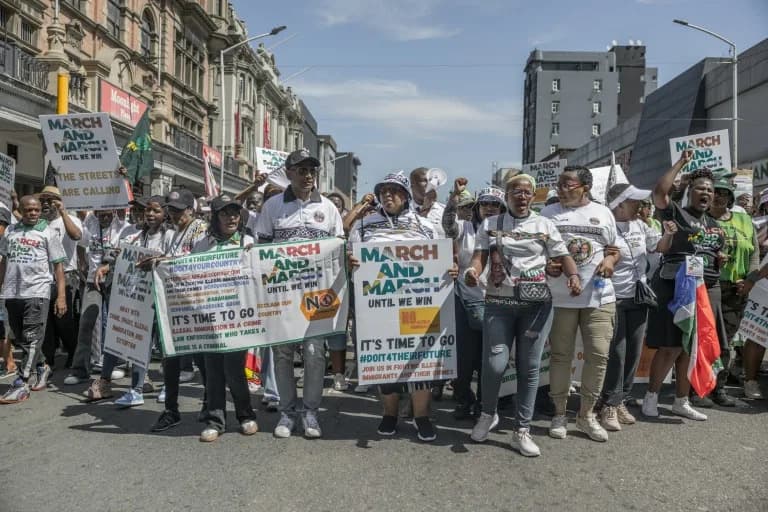
South Africa has been repeatedly swept by waves of anti-foreigner sentiment (RAJESH JANTILAL)(RAJESH JANTILAL/AFP/AFP)
South African police on Wednesday fired rubber bullets and used teargas to disperse hundreds of anti‑immigrant protesters in the coastal city of Durban after a small group split from a larger march and began harassing bystanders and looting shops.
Background and Drivers of the Protest
The demonstrations were organised by a mix of political parties and the vigilante movement Operation Dudula (Zulu for "push back"). Protesters — waving placards, singing and chanting — called for tougher action against undocumented foreign nationals, blaming migrants for crime and job losses amid persistent economic hardship.
With local elections less than a year away, immigration has become an acute political issue, amplifying tensions and drawing high‑profile political figures into the protests.
Escalation and Police Response
Authorities initially contained the march and prevented it from reaching beachfront areas that protesters said were plagued by drug dealing and other criminal activity. When a contingent broke away, allegedly harassing passers‑by and looting shops, police escalated their response to restore order.
"People can call us names but we cannot allow a situation where our country is being destroyed before our very own eyes," said Herman Mashaba, leader of the ActionSA party, which has pledged stricter immigration controls.
Some shop owners had already closed and shuttered businesses before the march began out of fear of violence and looting.
Voices From the March
Among the demonstrators was 81‑year‑old Thembi Dlamini from Clermont, west of Durban, who said she had attended last year’s protest as well. She accused officials of corruption and said migrants were taking jobs.
"I have seen my country going down because officials take bribes to give documents illegally, police allow drug trade because they are paid," she said. "Jobs are being taken away by our brothers from other parts of Africa who are here illegally. Where will our children get jobs?"
Context and Statistics
As Africa's most industrialised economy, South Africa remains a major destination for jobseekers despite its domestic challenges. The national unemployment rate is around 32%, a factor that has fuelled resentment and competition for work.
According to the national statistics agency, an estimated three million foreigners — roughly 5.1% of the population — live in South Africa.
The incident in Durban is the latest in a series of periodically violent anti‑foreigner episodes across the country, highlighting deep social and political tensions as the nation approaches local elections.
Help us improve.





















