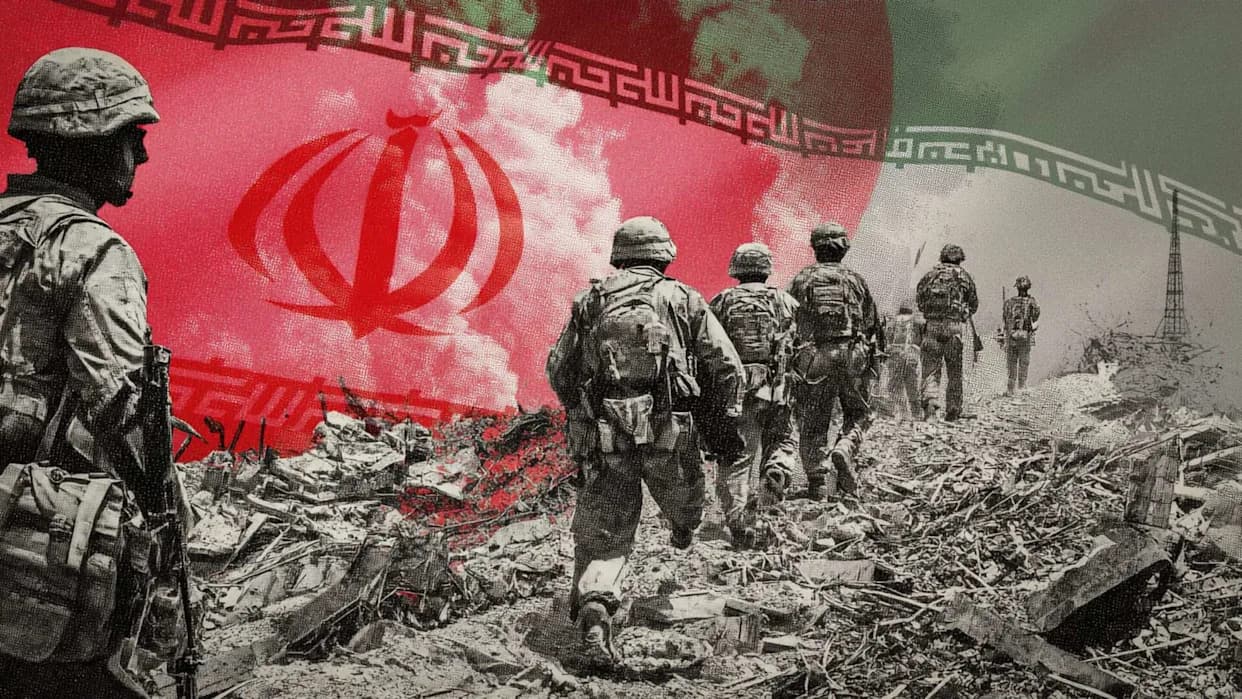
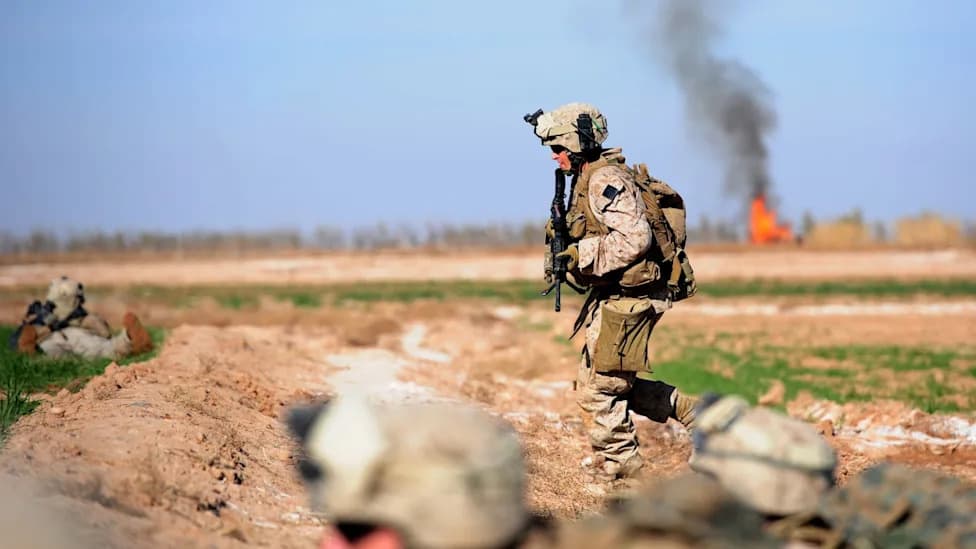
On February 28, President Donald Trump announced "major combat operations" aimed at eliminating what his administration described as "imminent threats from the Iranian regime," launching a bombing campaign dubbed Operation Epic Fury. By April 29 the campaign reached its 60th day—far beyond the four-to-five-week timeline the president once suggested.
Avoiding The W‑Word
Under the War Powers Resolution of 1973, the president must seek congressional authorization for sustained hostilities or request a 30‑day extension; absent that, the law requires termination of military action. Rather than confront that legal and political obligation, many White House allies and Republican lawmakers have largely avoided calling Operation Epic Fury a "war," instead using euphemisms such as "strategic strikes," "combat operations," or simply "a conflict."
Sen. Lindsey Graham (R–S.C.) told NBC's Meet the Press, "I don't know if this is technically a war," adding that the stated aim was "to change the threat, not the regime." House Speaker Mike Johnson (R–La.) said, "We're not at war right now," while Sen. Tommy Tuberville (R–Ala.) called it a "conflict" that he expected to be "short and sweet." Sen. Markwayne Mullin (R–Okla.) initially said, "This is war," then later noted, "We haven't declared war," calling his earlier remark a "misspoke."
President Trump himself has sometimes fumbled terminology—referring to the campaign as an "excursion" when he likely meant "incursion"—and his aides reportedly deem correcting such slips futile. At the same time, administration spokespeople have used the word "war" in some briefings, even as officials dispute whether the campaign fits traditional definitions or legal thresholds for a formal war.
Unclear Objectives, Open Questions
Administration messaging on goals has been inconsistent. Early statements framed strikes as preemptive: "If we didn't preemptively go after them before they launched those attacks, we would suffer higher casualties," said Sen. Marco Rubio. Other officials insisted the campaign is not intended to produce "regime change," with one saying, "This is not 2003," and rejecting the model of extended nation‑building. Yet rhetoric from the president—calling the campaign "the beginning of a new country" and stating that regime change could be "the best thing that could happen"—has raised concerns that the mission could expand.
With no clearly articulated end state, the central objectives remain ambiguous: Is the aim to degrade a nuclear or missile capability? To disrupt proxy networks? Or to topple and remake Iran's political order? The longer the campaign continues, the more difficult it becomes to sustain the distinction between a limited operation and sustained war.
Historical Pattern: Language As Authorization
U.S. leaders have a long record of using language to avoid formal declarations of war. President Harry Truman famously described the Korean conflict in 1950 as a "police action" conducted under United Nations auspices rather than a formal declaration of war. The fighting left millions dead and ended in an armistice, not a peace treaty; the peninsula remains divided.
Similarly, the escalation in Vietnam followed contested incidents in the Gulf of Tonkin in 1964 and led to the Tonkin Gulf Resolution, which authorized broad presidential military authority without using the word "war." In the post‑9/11 era, Congress passed the 2001 Authorization for Use of Military Force (AUMF), a short measure that granted sweeping powers to the president and became the legal basis for operations in many countries beyond Afghanistan.
Scholars have noted that the AUMF was cited as legal justification for counterterrorism operations in more than 20 countries. That broad interpretation, combined with rhetorical avoidance of "war," has eroded Congress's formal role in authorizing sustained hostilities and has created legal ambiguities about applicable international rules and detainee protections.
Why Words Matter
Some officials argue that semantics should not overshadow policy: as former Vice President Dick Cheney put it, "these are just words, and in the end, it's the policies that matter most." But terminology has practical consequences. Calling a campaign a "war" can trigger statutory and constitutional responsibilities, congressional oversight, and international legal obligations. Euphemisms can be used to sidestep those constraints—and to shrink public scrutiny.
Recent congressional attempts to limit presidential authority over the Iran campaign failed, leaving the executive branch with broad latitude to continue operations without formal congressional authorization. That political reality reinforces a longer trend: when labeling becomes optional, the boundary between "operations" and open war grows easier to blur.
Takeaway
Language is not just cosmetic. How leaders describe military action shapes legal responsibilities, political accountability, and public perception—and it has historically been a tool to expand executive war‑making authority without formal congressional approval.