
NASA is aiming for early April 2026 for Artemis II, a roughly 10-day crewed test flight using the SLS rocket and Orion capsule. The mission will carry four astronauts—Reid Wiseman, Victor Glover, Christina Koch and Jeremy Hansen—beyond the Moon to validate life‑support, propulsion and navigation systems. Technical leaks delayed earlier windows; Artemis II is a key rehearsal ahead of Artemis III (2027) and a planned lunar landing at Artemis IV (2028).
NASA Targets Early April For Artemis II — Meet The Crew Heading Beyond The Moon
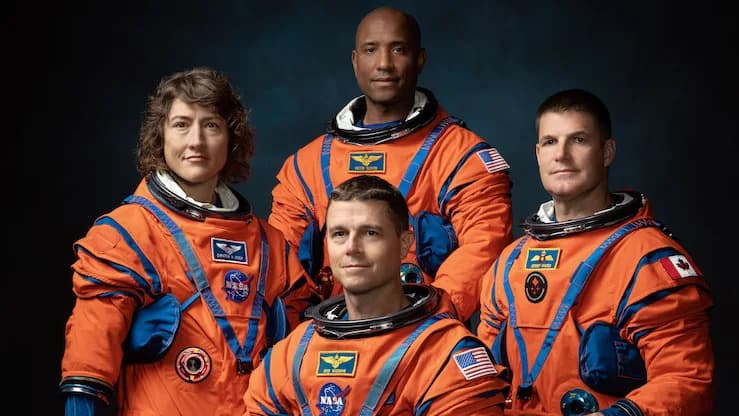
Artemis II Crew: left Christina Koch, back Victor Glover (pilot), front Reid Wiseman (commander), right Jeremy Hansen [NASA]
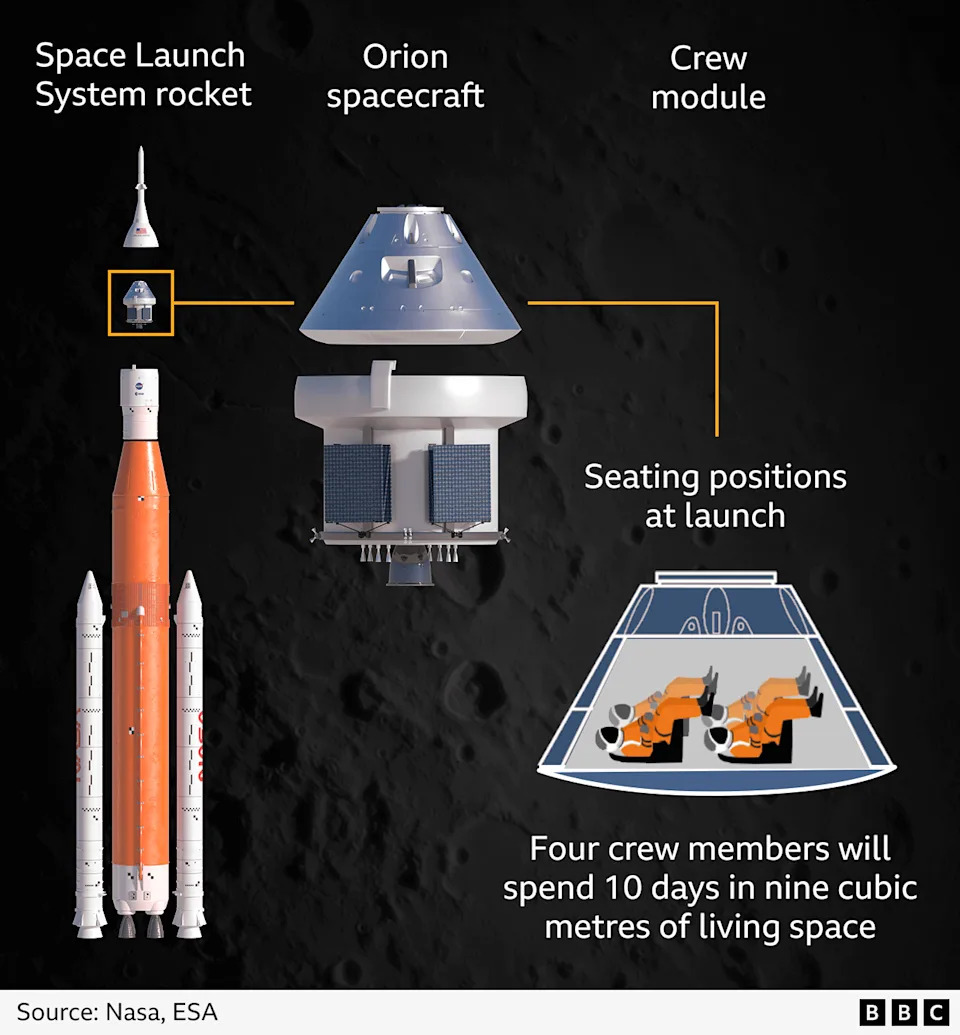
NASA is targeting early April 2026 for Artemis II, the agency's first crewed lunar mission in more than five decades. The roughly 10-day test flight will use the Space Launch System (SLS) rocket and the Orion crew capsule to carry four astronauts farther into deep space than anyone has gone since Apollo.
Launch Windows And Schedule
NASA has identified potential launch opportunities on April 1–6 and April 30. In December 2024 the agency set a requirement to launch Artemis II before the end of April 2026. Earlier opportunities were lost after pre-flight tests revealed technical problems: a wet dress rehearsal in February was cut short by a hydrogen leak at a ground connection, and a March attempt was ruled out after technicians found a helium leak.
Beyond resolving those technical issues, mission planners must also time liftoff to the Moon's position in its orbit. That geometry typically creates launch windows clustered in the first week of each month, followed by several weeks with no viable opportunities.
[BBC]
Who’s On Board
Artemis II will carry a four-person crew:
- Reid Wiseman (Commander) — A 27-year U.S. Navy veteran, pilot and engineer from Baltimore; selected as a NASA astronaut in 2009 and served as Flight Engineer on Expedition 41 to the International Space Station (ISS) in 2014.
- Victor Glover (Pilot) — Selected in 2013, pilot of NASA's Crew-1 mission with SpaceX, holds three master’s degrees, and is an experienced test pilot and engineer.
- Christina Koch (Mission Specialist) — Joined NASA in 2013, served on the ISS in 2019 where she set the record for the longest single spaceflight by a woman and participated in the first all-female spacewalk.
- Jeremy Hansen (Mission Specialist) — From the Canadian Space Agency, a former fighter pilot who joined the CSA in 2009; he is the first Canadian selected to go to the Moon.
Mission Objectives
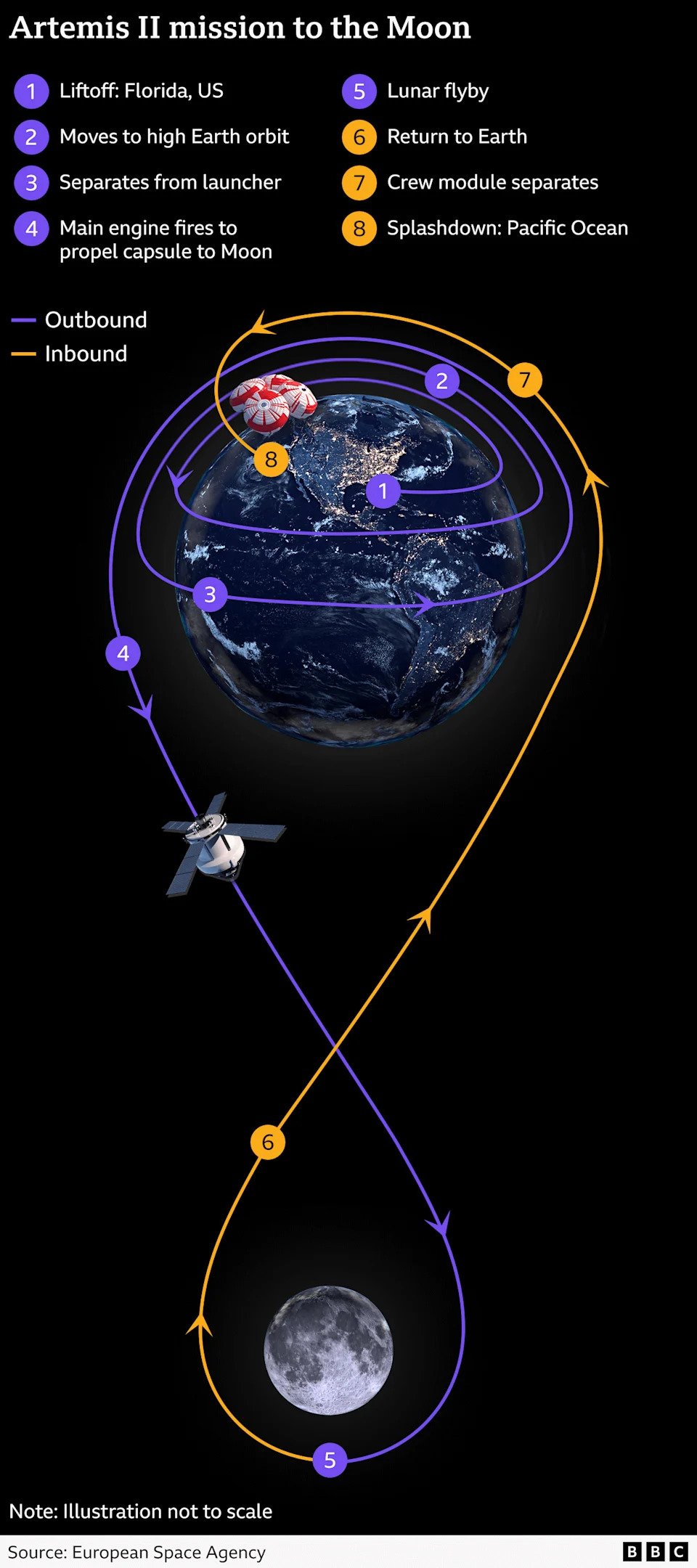
The flight is a systems and crew test. After reaching Earth orbit, astronauts will manually fly and practice steering the Orion capsule to validate handling and rendezvous procedures. The crew will then travel to a point thousands of kilometers beyond the Moon to exercise Orion's life-support, propulsion, power and navigation systems under deep-space conditions.
Throughout the mission the crew will provide medical and operational data from deep space, operating in a compact, weightless cabin where radiation exposure will be higher than on the ISS but maintained within accepted safety limits. Re-entry will conclude with a high-speed atmospheric descent and a Pacific Ocean splashdown off the U.S. west coast.
[BBC]
How Artemis II Fits Into The Bigger Plan
Artemis II is a rehearsal to prepare for crewed lunar landings. NASA plans Artemis III in 2027 as another crewed test to rehearse Orion's rendezvous and docking with lunar landers and—if ready—to test new spacesuits. Artemis IV is currently planned for 2028 and aims to return astronauts to the lunar surface, focusing on the Moon’s south pole.
NASA has shortlisted two commercial lander providers for Artemis missions—SpaceX's Starship and a design from Blue Origin—and will assign missions closer to launch. Future Artemis flights will also assemble Gateway, a small lunar-orbiting station, add habitation and logistics modules, deploy robotic rovers, and expand international participation.
International Context And The Return To The Moon
The last crewed lunar landing was Apollo 17 in December 1972. In total, 24 astronauts traveled to the Moon and 12 walked on its surface during Apollo; only a handful of those veterans remain alive. The Artemis programme aims not merely to visit but to establish a sustainable human presence built on new technologies and commercial partnerships. Several countries are pursuing their own crewed lunar ambitions: China targets a south-pole landing around 2030, Russia has long-term plans that face funding and technical hurdles, and India has signaled crewed lunar goals for the 2030s–2040 timeframe following Chandrayaan 3's success.
Additional reporting contributed by Kevin Church and Emily Selvadurai.
Help us improve.





















