
Adm. Brad Cooper, head of U.S. Central Command, told Iran International that the campaign against Iran is "ahead or on plan" as Israel conducted wide-scale strikes early Monday. Cooper said Iran has deliberately targeted civilian sites more than 300 times in recent weeks and that the tempo of attacks has slowed from large waves of drones and missiles to isolated launches. He added that U.S. and Israeli strikes are targeting drone, missile and naval manufacturing to degrade future threats, and urged Iranian civilians to stay indoors until it is declared safe to protest.
US Central Command: Campaign Against Iran 'Ahead Or On Plan' as Israel Launches Wide-Scale Strikes
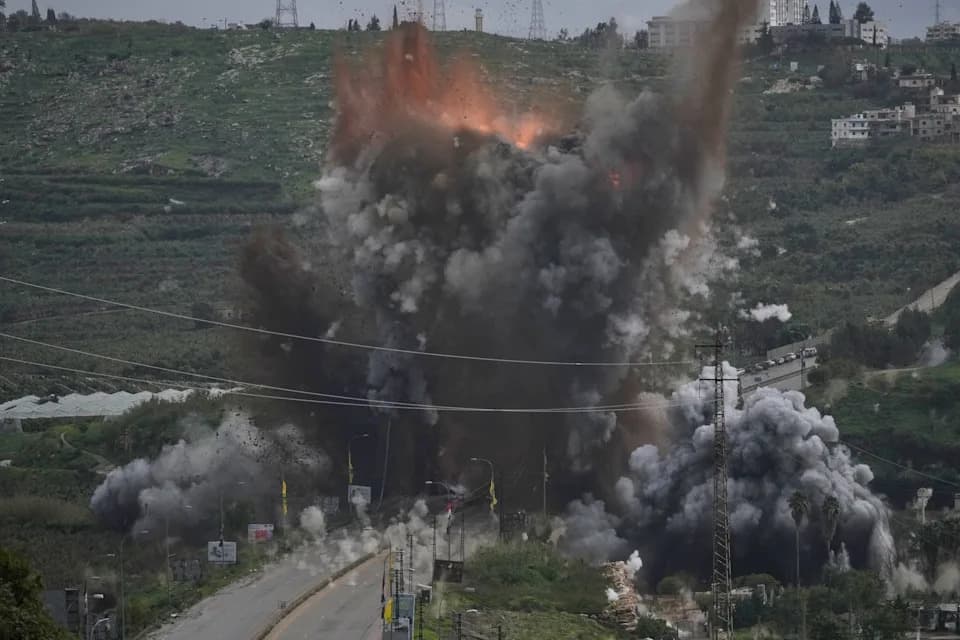
Smoke and flames rise from an Israeli airstrike that hit the Qasmiyeh Bridge near the coastal city of Tyre, Lebanon, Sunday, March 22, 2026. (AP Photo/Mohammad Zaatari)(ASSOCIATED PRESS)
U.S. Central Command leader Adm. Brad Cooper said the U.S.-led campaign against Iran is "ahead or on plan" as Israel launched what it described as a wide-scale wave of strikes early Monday targeting Iranian infrastructure.
Adm. Cooper granted his first one-on-one interview about the conflict to the Farsi-language satellite network Iran International, which aired the remarks early Monday. Iranian media separately reported fresh airstrikes on Tehran but did not identify specific targets.

A displaced girl feeds a baby as other children stand at tents sheltering people who fled Israeli airstrikes in Dahiyeh, in Beirut's southern suburbs, along the wall of the Pine Residence, the official residence of the French ambassador, in Lebanon. (AP Photo/Hassan Ammar)(ASSOCIATED PRESS)
Key Developments
Tehran warned the day before that it might strike U.S. and Israeli energy and infrastructure sites if either country followed through on an online ultimatum from President Donald Trump that the U.S. would "obliterate" Iran's power plants unless the Strait of Hormuz is fully reopened. Trump posted the message on Truth Social while spending the weekend at his Florida residence.
The human cost of the fighting has risen sharply: more than 1,500 reported deaths in Iran, over 1,000 in Lebanon, 15 in Israel and 13 U.S. service members, along with additional civilian casualties at sea and on land in the Gulf region. Millions have been displaced across Iran and Lebanon.
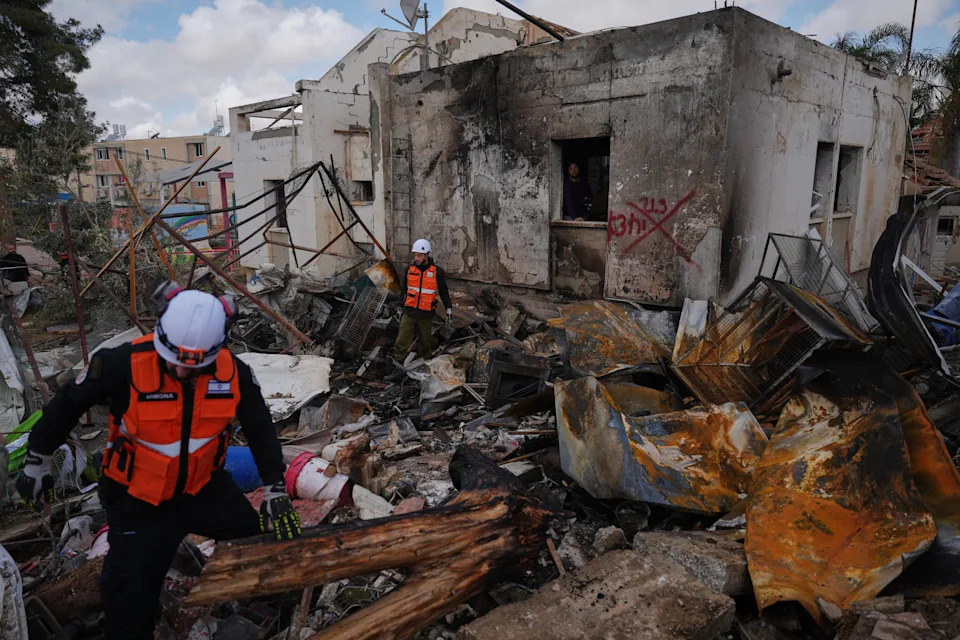
Israeli security forces survey the site that was struck by an Iranian missile in Dimona, southern Israel, Sunday, March 22, 2026. (AP Photo/Ariel Schalit)(ASSOCIATED PRESS)
What Adm. Cooper Said
Cooper described recent Iranian strikes on civilian sites as evidence of desperation. "They're operating in a sign of desperation," he told Iran International, adding that Iran has deliberately struck civilian targets "more than 300 times" in recent weeks.
"At the beginning of the conflict, you saw large volumes in the dozens of drones and missiles. You no longer see that. It's all one or two at a time," Cooper said, noting a slowdown in the volume of incoming Iranian attacks across the Middle East.
The admiral stressed that U.S. and Israeli operations aim not only to blunt immediate threats but also to degrade Iran's future capabilities. "We're also going after the manufacturing," he said. "So it's not just about the threat today. We're eliminating the threat of the future, both in terms of the drones, the missiles, as well as the navy."

A cargo ship carrying vehicles sails through the Arabian Gulf toward the Strait of Hormuz in the United Arab Emirates, Sunday, March 22, 2026. (AP Photo)(ASSOCIATED PRESS)
Cooper cautioned Iranians against taking to the streets for now, saying many launches have originated from populated areas and advising civilians to remain indoors until authorities give a clear signal it is safe to protest.
Regional Risks
Officials continue to warn of broader spillover risks to energy infrastructure, shipping lanes and civilian populations across the Gulf and the wider Middle East. Diplomats and analysts say the trajectory of the campaign and its humanitarian consequences will be closely watched by governments worldwide.
Help us improve.





















