
Iranian missile strikes on Arad and Dimona injured at least 180 people and prompted evacuations, in what Tehran says was retaliation for an attack on Natanz. Analysts warn Iran's broad missile arsenal — including ballistic, cruise and cluster-equipped warheads — extends regional reach and complicates interception. Israeli air defences reportedly failed to stop some incoming missiles and an investigation is ongoing. The strikes raise the risk of further escalation, including attacks on energy infrastructure and key shipping lanes.
Has Israel Miscalculated Iran’s Missile Capabilities? Cluster Munitions Amplify the Threat
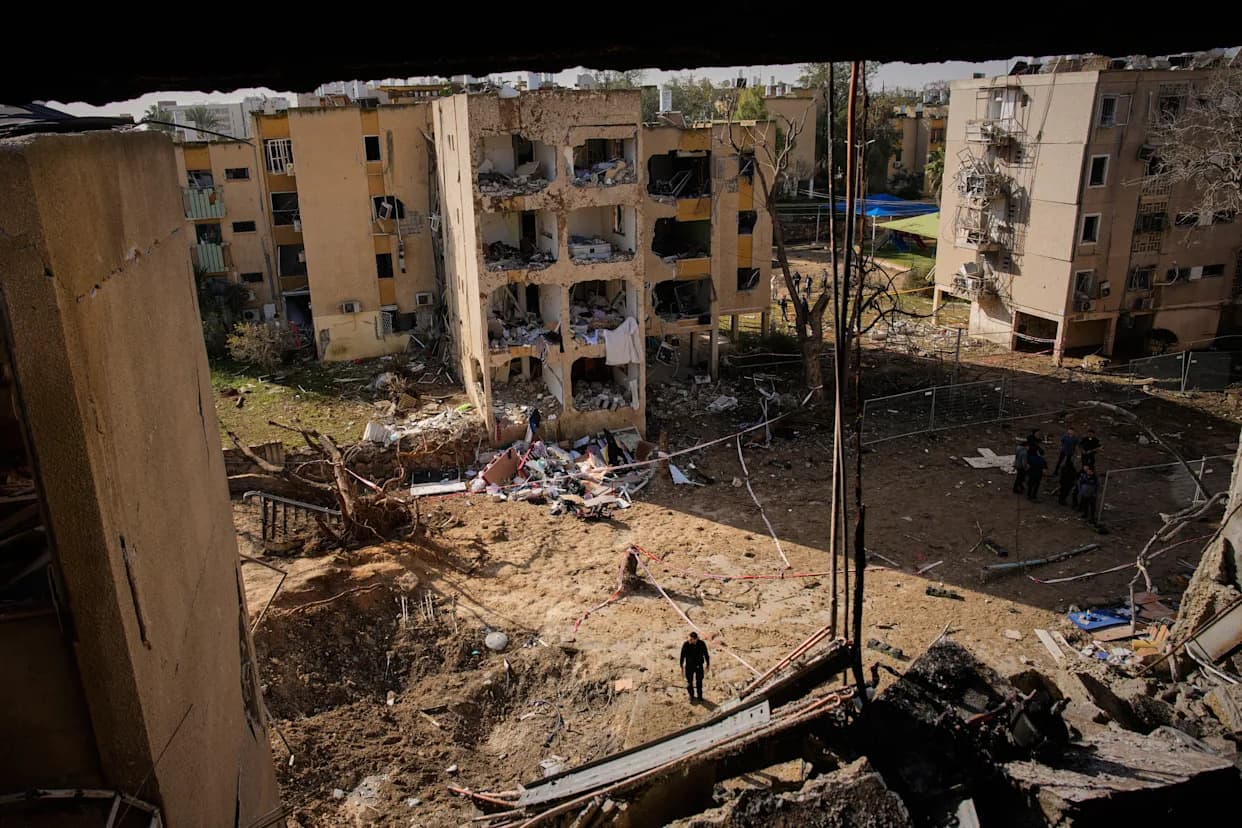
People look at residential buildings damaged by an Iranian missile strike in Arad, southern Israel, Sunday, March 22, 2026. [Ohad Zwigenberg/AP]
Iranian missiles struck the Israeli towns of Arad and Dimona, near a major nuclear research complex, in what Tehran says was retaliation for an Israeli attack on the Natanz uranium-enrichment site in Isfahan province. Israeli officials reported at least 180 wounded and hundreds evacuated after Saturday's strikes, while the Israeli Ministry of Health says some 4,564 people have been wounded in Israel since 28 February.
What Happened
Iran described the strikes as a direct response to an attack on Natanz. Israel said its air-defence systems were activated but failed to intercept some incoming missiles; an internal investigation is under way. Prime Minister Benjamin Netanyahu called it a 'very difficult evening in the battle for our future' as officials assess damage and casualties.
Iran's Missile Arsenal
Defence analysts call Iran's missile programme the region's largest and most varied, developed over decades to provide long-range strike options in the absence of a modern air force. It includes short- and medium-range ballistic missiles, plus longer-range land-attack and anti-ship cruise missiles.
Short-range ballistic systems (roughly 150–800 km) include Fateh-family variants, Zolfaghar, Qiam-1 and earlier Shahab models. Medium-range types include Shahab-3, Emad, Ghadr-1, Khorramshahr variants and Sejjil, with newer systems reportedly including Kheibar Shekan and Haj Qassem. Some long-range systems such as the Soumar have been reported with ranges of about 2,000–2,500 km, though a reported attempt to reach Diego Garcia (about 4,000 km away) was denied by Iran and said to have failed by UK officials.
Why Cluster Munitions Matter
One factor that complicates interception is the use of cluster warheads. Unlike a single large explosive, a cluster warhead releases many smaller bomblets over a wide area. Uzi Rubin, founding director of Israel's missile defence programme, told media that Iranian cluster warheads can carry roughly 20–30 bomblets in some configurations, and up to 70–80 in others. Because interceptors must destroy the missile before the payload disperses, a single incoming round can become many targets once the submunitions separate.
Defence, Doctrine and Legal Questions
Amnesty International has described Iran's past use of cluster munitions as a violation of international humanitarian law. The 2008 Convention on Cluster Munitions bans these weapons, but neither Iran nor Israel is a signatory. Israeli officials have noted the incoming weapons were not 'special or unfamiliar' even as they investigate why some intercepts failed.
Escalation Risks
The strikes have occurred amid a widening campaign that has already targeted nuclear facilities, fuel storage sites and energy infrastructure. Iran has at times disrupted traffic through the Strait of Hormuz, a vital global shipping route. US statements have warned of further action if the strait is not reopened; President Donald Trump posted a public threat to strike Iranian power plants if disruptions continue. Analysts warn that attacks on critical energy and military infrastructure raise the danger of a broader, more destructive phase of conflict.
What Comes Next
Military analysts expect both sides to recalibrate tactics: Israel may alter interceptor usage or defenses, while Iran may continue to rely on long-range and submunition-equipped systems to complicate missile defence. The contested reporting around longer-range launches, and the already-declared strikes on strategic facilities, mean the coming days could determine whether the confrontation remains limited or expands further.
Note: Reports about strikes toward Diego Garcia remain contested: the UK said an attempt failed, and an Iranian official denied launching such missiles.
Help us improve.





















