
Iranian missiles struck the southern Israeli towns of Arad and Dimona on Saturday, wounding more than 100 people after air-defence systems failed to intercept some projectiles. Arad reported 84 injured (10 seriously) and Dimona reported 33 injured, including a boy with shrapnel wounds. Footage showed large craters, torn building facades and extensive rubble as emergency teams carried out rescue operations. Israel has launched an investigation into the interception failure while Prime Minister Benjamin Netanyahu vowed continued action against Iran and its allies.
Iranian Missiles Strike Arad and Dimona — Over 100 Wounded After Air-Defence Failure
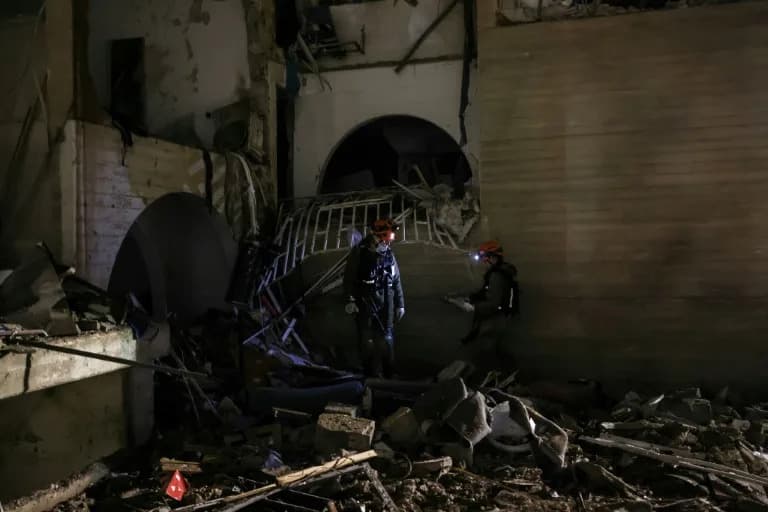
AFP footage from Arad showed rescue workers sifting through rubble (Ilia YEFIMOVICH)(Ilia YEFIMOVICH/AFP/AFP)
Iranian missile strikes on the southern Israeli towns of Arad and Dimona on Saturday wounded more than 100 people, medics and emergency services said, after Israel's air-defence systems failed to intercept at least some of the incoming projectiles.
The attacks produced direct hits that tore open the fronts of residential buildings and left large craters in the ground. Footage from both towns showed rubble, twisted metal and heavily damaged facades as rescue teams searched for survivors.
Casualties and Damage
Magen David Adom first responders reported that 84 people were injured in Arad, including 10 in serious condition, while medics treated 33 people in Dimona. Among the Dimona casualties was a boy with shrapnel wounds who was reported to be in serious but conscious condition.
Local emergency services described "extensive damage" in Arad, where three buildings were affected and a blaze was ignited in one. AFPTV footage from Dimona showed a large crater beside piles of rubble and twisted metal; nearby buildings had windows blown out and facades badly damaged.
Official Responses
Iranian state television said the strike on Dimona, home to a facility long believed to be linked to Israel's nuclear programme, was a "response" to an earlier attack on Iran's Natanz nuclear site.
"The air defence systems operated but did not intercept the missile, we will investigate the incident and learn from it," military spokesman Brigadier General Effie Defrin wrote on X.
Israel said it would investigate the interception failure. The Education Ministry ordered all classes to move online, cancelling remaining in-person lessons in affected areas as emergency operations continued.
Prime Minister Benjamin Netanyahu vowed to continue striking Iran and its allied forces after what he described as a "very difficult evening." Iranian authorities have launched repeated missile barrages at Israel in the days following US‑Israeli attacks that began on February 28, according to reporting.
Rescue workers and emergency services remained on site in both towns, conducting searches through rubble and treating the wounded as investigations into the air-defence lapse began.
Help us improve.





















