Public debate over Pluto’s planetary status resurfaced after private astronaut Jared Isaacman told the Daily Mail he supports reinstating Pluto as a planet. The IAU reclassified Pluto as a dwarf planet in 2006 because it did not meet the orbital-clearing criterion, but critics and some high-profile figures disagree. Supporters point to Pluto’s geology, moons and historical significance; the scientific community still looks to the IAU for formal classification.
Private Astronaut Jared Isaacman Backs Restoring Pluto’s Planet Status as Debate Reignites
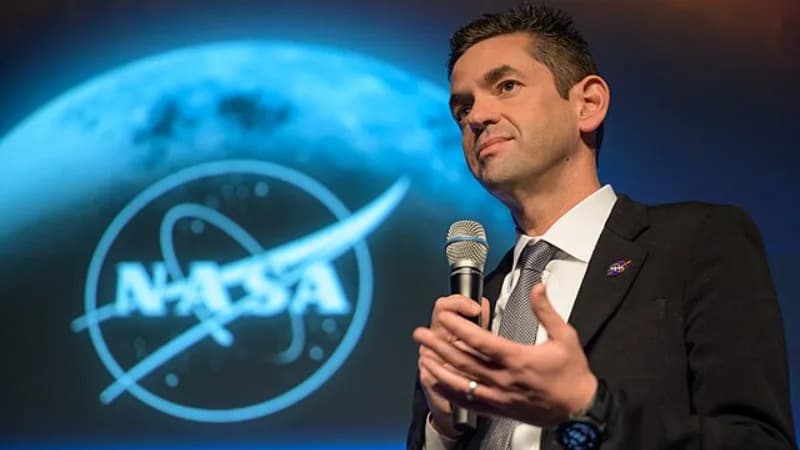
Pluto debate reaches White House | ©Image Credit: NASA
Summary: The long-running debate over Pluto’s classification has flared up again after private astronaut Jared Isaacman told the Daily Mail he supports restoring Pluto to full planet status. The discussion touches on scientific definitions, historical legacy and public interest — and has drawn several high-profile voices.
Pluto was reclassified as a dwarf planet by the International Astronomical Union (IAU) in 2006 because it does not meet the IAU’s orbital-clearing criterion. That ruling remains the standard among most professional astronomers, but it has continued to provoke debate among scientists, politicians and space enthusiasts.
Who Said What?
Jared Isaacman — an entrepreneur and private astronaut, not the NASA administrator — told the Daily Mail he "100% support[s] President Trump making Pluto great again" while speaking at the Kennedy Space Center ahead of a planned Artemis II-related event. Isaacman also appealed to history, noting that Pluto was discovered in 1930 by American astronomer Clyde Tombaugh.
“I think we owe it to everyone from Kansas and all their great contributions to astronomy and aerospace to rightfully restore that discovery to a planet,” Isaacman said, as reported.
Other high-profile public figures have weighed in. Actor William Shatner criticized the IAU and urged a political fix, Elon Musk expressed support for restoring Pluto’s status, and Senator Mike Lee publicly asked President Trump to “Make Pluto Planetary Again.” During the Trump administration, then-NASA administrator Jim Bridenstine also questioned the IAU definition in 2019, citing Pluto’s subsurface ocean, organic compounds and moon system as reasons to reconsider its status.
What Would It Take To Change Pluto’s Status?
Officially, decisions about planetary classification are made by the scientific community and organizations such as the IAU. A presidential executive order would not by itself change the IAU’s scientific definition, though it could influence public discussion or policy. The central scientific disagreement hinges on how strictly the orbital-clearing rule should be interpreted and whether alternative definitions better reflect planetary science.
Context: The debate over Pluto is as much cultural and historical as it is scientific. While many scientists continue to support the IAU definition, public nostalgia and evolving scientific perspectives keep the conversation active.
Source: Daily Mail (as reported). This article corrects a prior misattribution: Jared Isaacman is a private astronaut and entrepreneur, not the NASA Administrator.
Help us improve.