
Iranian strikes on Qatar's Ras Laffan LNG complex and attacks on refineries in Saudi Arabia and Kuwait rattled energy markets, with Brent crude briefly jumping about 10% and European gas surging roughly 35%. Tehran warned it would show "ZERO restraint" if its infrastructure is hit again, while the US and other world powers debated responses and efforts to secure passage through the Strait of Hormuz. Officials said there is no set timetable to end the conflict, and analysts warned the campaign risks becoming a protracted war of attrition.
Iran Vows 'Zero Restraint' After Strikes on Gulf Energy Facilities as Markets Spike
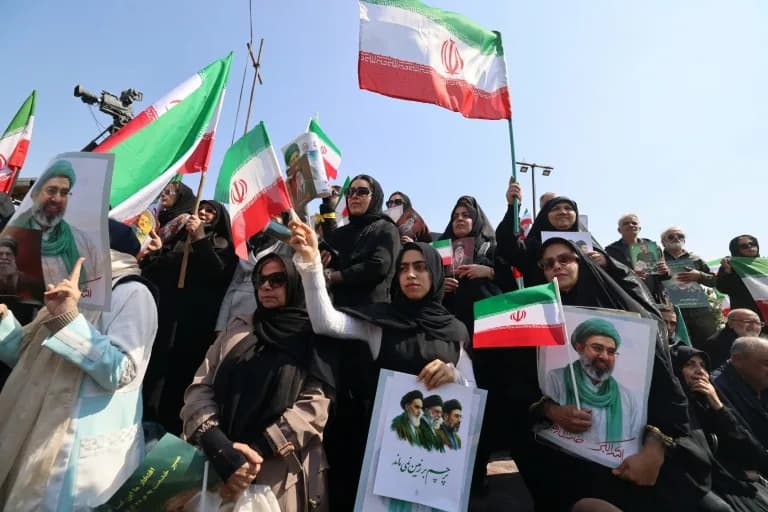
A string of strikes have decimated Iran's leadership since the war began nearly three weeks ago (ATTA KENARE)(ATTA KENARE/AFP/AFP)
Attacks across the Gulf escalated after Iranian strikes hit Qatar's Ras Laffan liquefied natural gas complex and energy facilities in Saudi Arabia and Kuwait, sending shock waves through global energy markets and raising fears of a wider regional confrontation.
Markets Jolt and Energy Infrastructure Hit
The international benchmark Brent crude briefly surged about 10% to $119 a barrel before easing to roughly $112, while European gas prices spiked nearly 35% as traders reacted to the damage at Qatar's Ras Laffan LNG complex. QatarEnergy described the nighttime strike as causing "extensive damage." Reports also said a drone struck the Samref refinery in Yanbu, Saudi Arabia, and drone attacks ignited fires at Kuwait's Mina Abdullah and Mina Al-Ahmadi refineries, which together have an approximate processing capacity of 800,000 barrels per day. Israeli media reported damage at a Haifa refinery following warnings of missiles launched by Iran.
Escalating Rhetoric and Military Threats
Washington warned of a strong response if Iran continued strikes on Qatar. US political leaders said there was no current plan to deploy US ground troops to Iran, but stressed readiness to protect key interests. Iran replied defiantly: the Khatam Al-Anbiya operational command threatened the "complete destruction" of Gulf energy infrastructure if attacks on its facilities were repeated, and Foreign Minister Abbas Araghchi wrote that Tehran would show "ZERO restraint" if its infrastructure were struck again.
"ZERO restraint" — Iran's Foreign Minister Abbas Araghchi
International Reactions and Diplomatic Moves
Major economies expressed alarm over the potential wider fallout. Britain, France, Germany, Italy, Japan and the Netherlands said they would "contribute to appropriate efforts to ensure safe passage through the Strait of Hormuz," although few operational details were provided. French President Emmanuel Macron condemned the "reckless escalation" and urged direct talks between the United States and Iran. Officials in India and China also voiced concern for energy supplies transiting the strait.
Military Logistics and Political Outlook
US Defense Secretary Pete Hegseth said there is no set timetable for ending the conflict, adding that President Trump would decide when to end operations. US media reported the administration could seek more than $200 billion in additional war funding from Congress. Analysts warned the attacks underscored fractures over strategy between allies and suggested the campaign risked becoming a protracted war of attrition with no clear end state.
Civilian Life And Human Cost
A US-based rights group has estimated more than 3,000 deaths inside Iran from US and Israeli strikes; that figure has not been independently verified. Despite heightened security in Tehran ahead of Nowruz, life in the city center appeared relatively normal, with traffic jams and bustling markets, although security measures were noticeably tighter.
Outlook: The strikes have highlighted how vulnerable regional energy infrastructure is to military escalation. Markets and governments are closely watching for further attacks and diplomatic efforts to prevent a broader conflict that would further damage global energy supplies.
Help us improve.





















