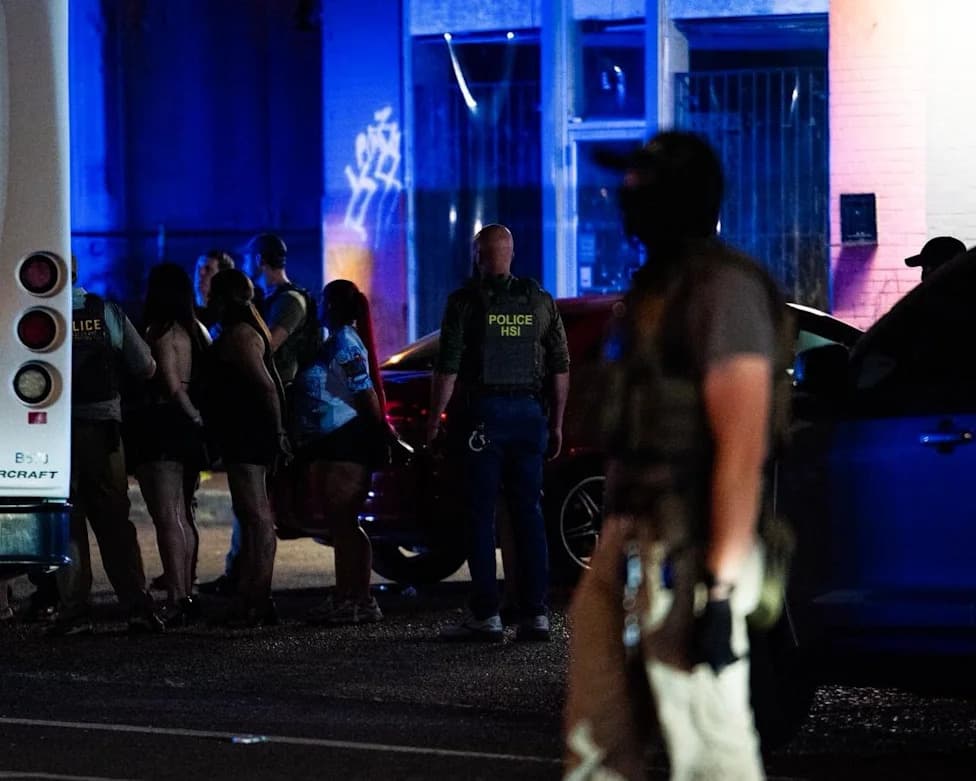
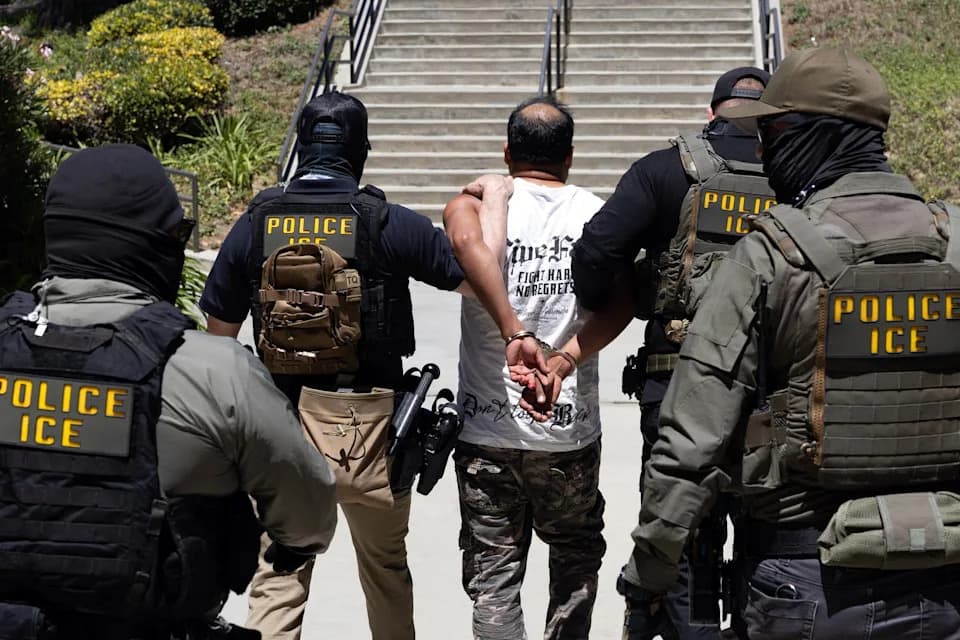
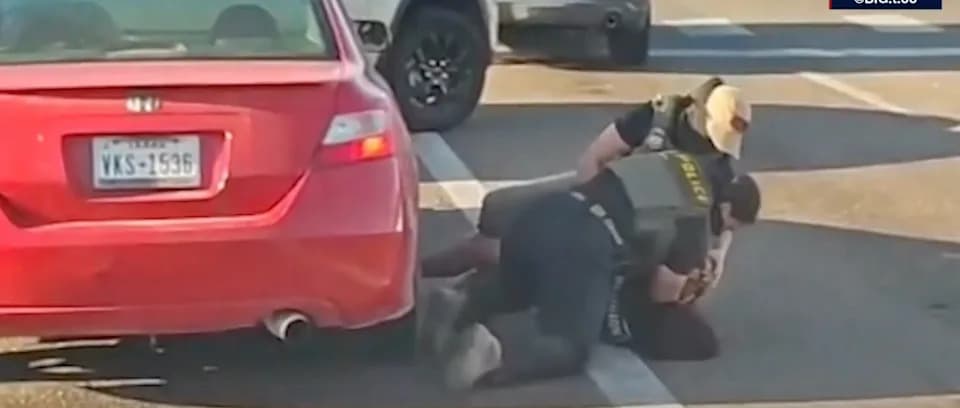
ICE launched a yearlong, $100 million "wartime recruitment" campaign using military-style imagery, $50,000 signing bonuses, and relaxed age limits. The push has helped add roughly 12,000 staff—bringing ICE to nearly 22,000 employees—with about one-third of staff and 40% of deportation officers drawn from the military. Critics warn that recruiting veterans, expanding Special Response Teams trained at places like Ft. Benning, and deploying battlefield-style gear are accelerating the militarization of immigration enforcement and contributing to investigations and lawsuits alleging excessive force.
ICE's "Wartime" Recruitment: How Military Imagery and Veteran Hiring Are Militarizing U.S. Immigration Enforcement
ICE Is Bringing Military Occupation and Recruitment Tactics to America
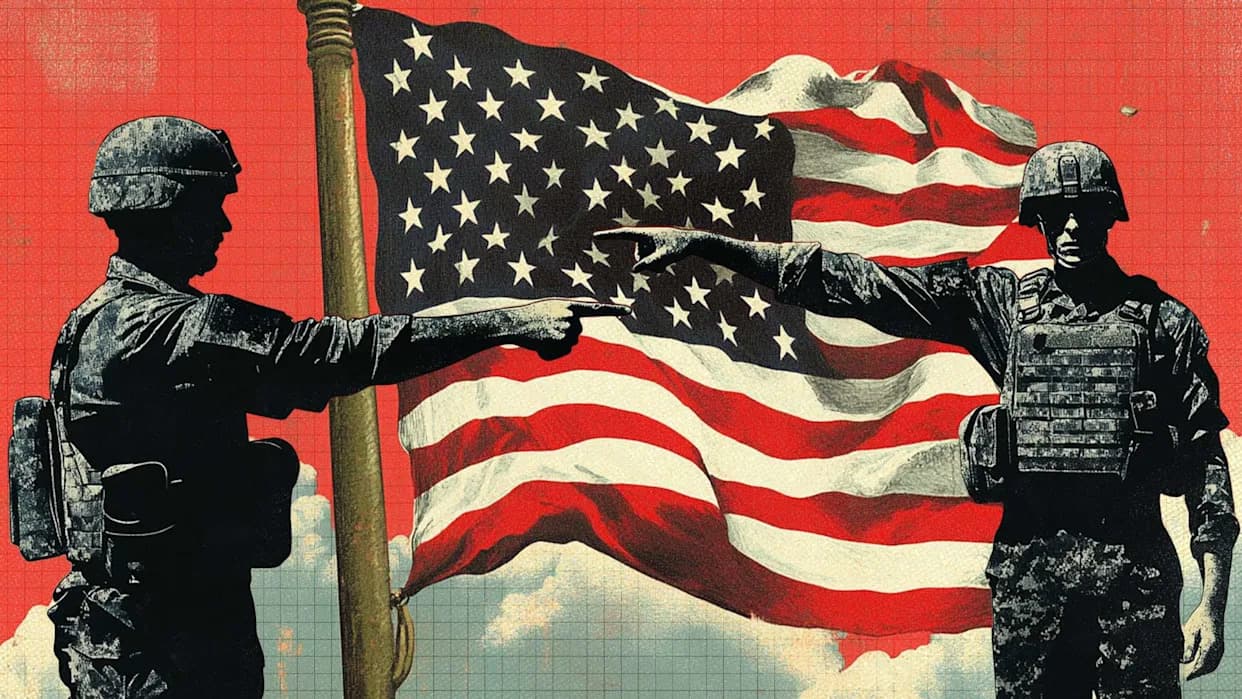
U.S. Immigration and Customs Enforcement (ICE) launched a yearlong, $100 million recruitment campaign late last year that officials have called a "wartime recruitment" drive. The effort removed prior age limits, offered signing bonuses as high as $50,000, and used highly militarized imagery and language that many critics say resembles wartime propaganda.
Militarized Messaging and Extremist Resonance
Several social-media ads used iconic, martial visuals: a clenched-fist Uncle Sam urging people to "Join ICE Now," George Washington shown in battle gear with the caption "Defend the Homeland," and a heavily armored Lady Liberty demanding citizens "Protect Your Nation." Critics have raised alarms that some slogans and visuals echo language used by far-right and white-supremacist groups. One late-year ad prominently displayed the phrase "America for Americans," long associated with the Ku Klux Klan, while posts have been reshared and endorsed by extremist accounts.
Targeting Veterans
Framed as an opportunity to "continue serving," ICE has actively targeted veterans—offering expedited hiring pathways, veteran internship programs, and special hiring authority for disabled veterans. The campaign appears to have been effective: ICE reports adding roughly 12,000 personnel over the past year, growing to nearly 22,000 employees. About one-third of ICE employees have prior military experience, and roughly 40% of deportation officers are veterans.
Why Veterans Are Sought—and Why That Matters
Veterans bring skills valued by enforcement agencies: discipline, familiarity with chains of command, tactical training, reconnaissance experience, and sometimes security clearances. At the same time, critics warn that military training and combat mindsets do not automatically translate to civilian policing roles. The transfer of military norms, tactics, and attitudes into domestic enforcement is a core concern in discussions of militarization.
Paramilitary Units, Training, and Equipment
ICE operates Special Response Teams (SRTs), paramilitary units described as "ready to deploy." SRTs train at locations such as Fort Benning, deploy in armored personnel carriers, and use military-style equipment including assault rifles and so-called "less lethal" options like pepper-ball launchers and flash-bang devices. A recent $30,000 DHS contract disclosed sniper training for SRT members. Observers note these units resemble U.S. Special Forces in structure and doctrine more than traditional community police units.
Incidents, Investigations, and Legal Consequences
The consequences of militarized enforcement have been significant. Between 2015 and 2021, ICE agents were involved in at least 59 shootings, 24 of which were fatal. In 2025 the agency opened 37 investigations into alleged excessive use of force. Civil litigation has also followed: in 2023 a federal judge approved a $1.17 million settlement stemming from a 2018 paramilitary DHS raid that found unlawful detentions and excessive force, and numerous other suits allege similar patterns.
Training, Oversight, and Operational Concerns
The rapid expansion of ICE has prompted questions about training quality and oversight. Some recruits reportedly receive as little as six weeks of training before field deployment. Journalists and whistleblowers have described expedited hiring and uneven vetting processes. Critics argue that without robust retraining focused on civil policing principles, veterans and other recruits may default to combat-oriented tactics ill-suited to civilian contexts.
Historical Context
The U.S. founders and subsequent legal frameworks drew a deliberate line between military force and civilian law enforcement. The Posse Comitatus Act and other norms were designed to prevent federal troops from acting as domestic police. The broader trend of militarization—seen in the spread of SWAT teams, surplus-military equipment transferred to police through programs like 1033, and new paramilitary federal units—has reshaped many aspects of U.S. policing and immigration enforcement.
Conclusion
ICE's recruitment campaign, its focused hiring of veterans, the growth of paramilitary SRTs, and the adoption of military gear and rhetoric all point to an increasing militarization of immigration enforcement. Observers warn that using wartime framing and war-trained personnel against civilians risks normalizing force, blurring the line between military and police roles, and producing preventable harm. The debate now centers on how to balance operational needs with legal safeguards, training standards, and accountability to protect civil liberties and public safety.
Help us improve.