The Fort Worth case produced convictions of eight demonstrators and a related guilty verdict that has sparked First Amendment concerns. Daniel Rolando Sanchez-Estrada—who was not at the July 4 protest—was convicted of concealing a box of materials labeled "Antifa" and faces up to 40 years. Civil liberties advocates warn the prosecutions illustrate how broad domestic-terrorism charges could chill lawful political dissent and threaten protected speech.
Fort Worth Verdict Stirs First Amendment Fears After Convictions Over ‘Antifa’ Materials
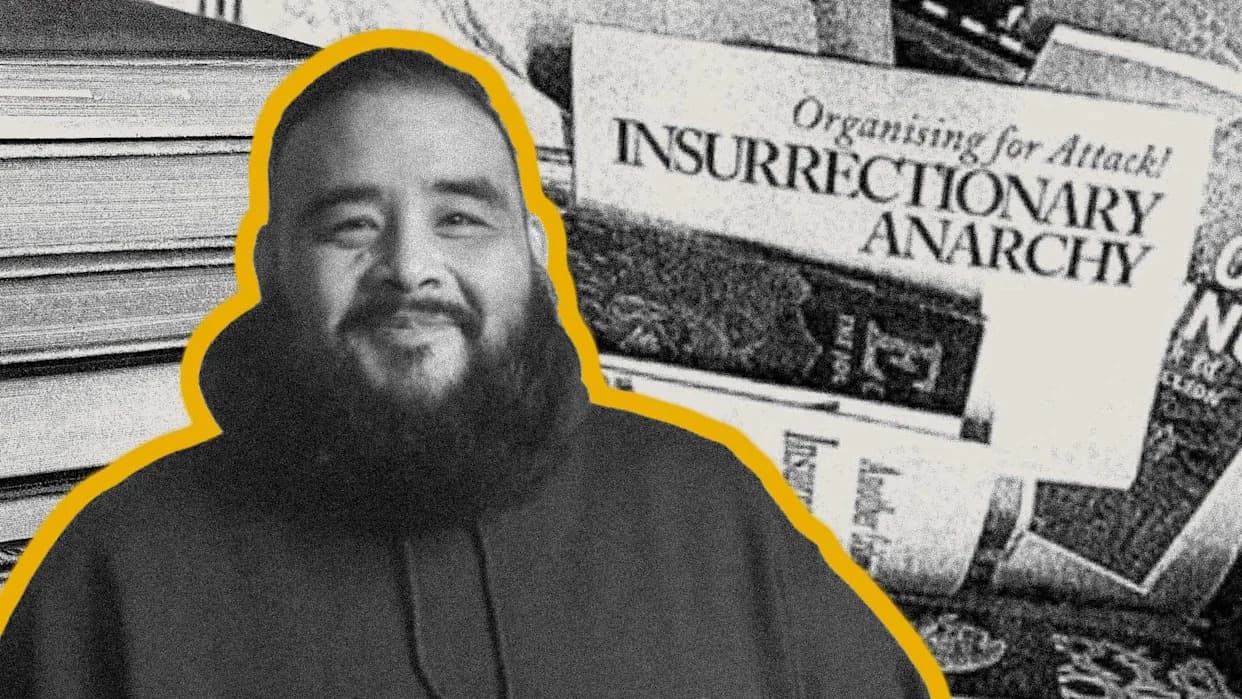
Prairieland Verdict: Texas Man Found Guilty of Transporting Constitutionally Protected Pamphlets
A federal jury in Fort Worth, Texas, last year convicted eight demonstrators on charges ranging from rioting to attempted murder after a noisy protest outside the Immigration and Customs Enforcement (ICE) Prairieland Detention Center turned violent. Federal prosecutors described the group as an "Antifa cell" and accused members of providing "material support to terrorists," a characterization that has alarmed First Amendment scholars concerned about chilling effects on lawful dissent.
One related conviction has drawn particular scrutiny. According to court filings, Daniel Rolando Sanchez-Estrada was not present at the July 4 demonstration. Prosecutors say that after his wife, Maricela Rueda, called him from the Johnston County Jail and urged him to "do whatever you need to do" and "move whatever you need to move at the house," officers began to watch him.
Authorities allege Sanchez-Estrada carried a box from his home to another residence, and he was later stopped on state traffic violations. Investigators obtained a search warrant and found what they described in a November indictment as "numerous Antifa materials, such as insurrection planning, anti-law enforcement, anti-government, and anti-immigration enforcement documents." Federal charges against him included corruptly concealing a document and conspiracy to conceal documents; he was convicted on both counts on March 13 and faces up to 40 years in prison.
"I feel like the U.S. lost here with this verdict and what it means for future defendants," said Christopher Weinbel, Sanchez-Estrada's federal public defender and a U.S. Army veteran, in remarks to The Washington Post. "I feel like it turned its back on justice with this."
The other eight defendants were convicted on a range of serious federal counts after fireworks and other actions escalated outside the Prairieland facility. Convictions included rioting, providing material support to terrorists, conspiracy to use and carry an explosive, and using explosives. Rueda was convicted alongside Sanchez-Estrada on a conspiracy-to-conceal-documents charge. Another defendant, Benjamin Song, was convicted of attempted murder of a U.S. officer and discharging a firearm in furtherance of a crime of violence after prosecutors say he shot and wounded a police officer during the demonstration.
ICE posted on X that the box contained "literal insurrectionist propaganda," but many legal scholars note that a range of anti-government materials—including zines and radical pamphlets—are ordinarily protected political speech under the First Amendment. That legal tension—between prosecuting violence and preserving core speech protections—is at the heart of critics' concerns.
Political and Legal Reactions
Attorney General Pam Bondi praised the convictions and framed them as part of efforts to halt violent activity, saying the verdicts "will not be the last as the Trump administration systematically dismantles Antifa and finally halts their violence on America's streets." Civil liberties groups and First Amendment lawyers, however, warn against equating controversial or extreme political expression with terrorism, especially after an executive order labeling the loosely defined "antifa" as a "domestic terrorist organization."
U.S. District Judge Mark Pittman, a Trump appointee who presided over parts of the case, raised questions about the relevance of labeling defendants as Antifa in jury instructions, asking why the specific label mattered to the jury's deliberations.
Free speech advocates acknowledge that criminal acts—property destruction, trespass, or violence—are not protected by the First Amendment. Their deeper worry is that broad terrorism or material-support theories could treat possession of controversial political materials as evidence of criminality, pressuring people to hide, destroy, or avoid politically sensitive content and thereby creating a widespread chilling effect.
While the government can and should pursue violent wrongdoing committed during protests, critics argue that expanding domestic-terrorism definitions to encompass constitutionally protected speech risks eroding civil liberties more broadly, potentially chilling lawful dissent across the country.
Help us improve.