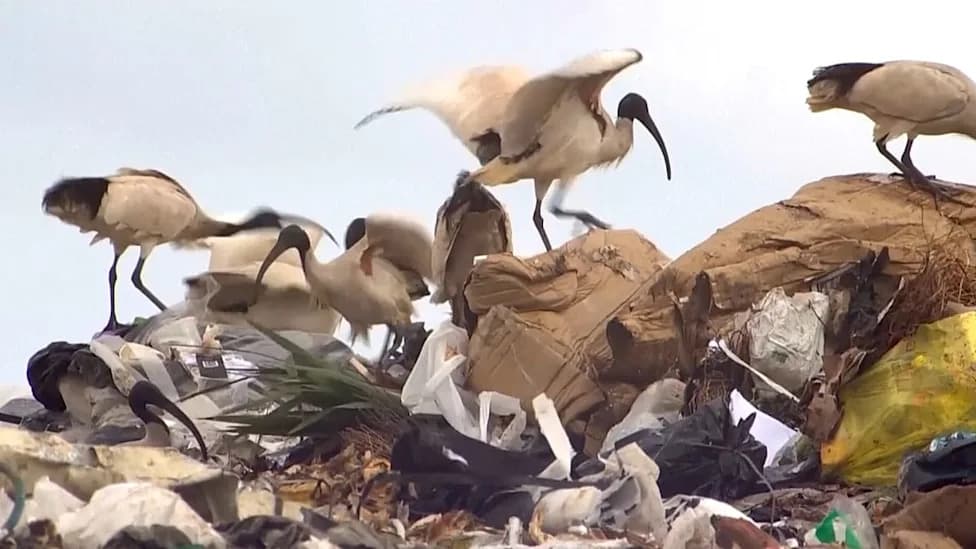
Researchers at UNSW have converted peanut‑shell waste into graphene‑like carbon using a two‑stage, low‑energy process that avoids chemical reagents. A 500 °C pretreatment turns shells into conductive char, which is then flash‑joule heated above 3,000 °C for milliseconds to produce few‑layer turbostratic graphene. The material shows high graphitic quality, and researchers estimate 3–4 years to scale the method and are testing other biomass feedstocks.
From Peanut Shells to Graphene: UNSW Turns Agricultural Waste Into High‑Value Carbon
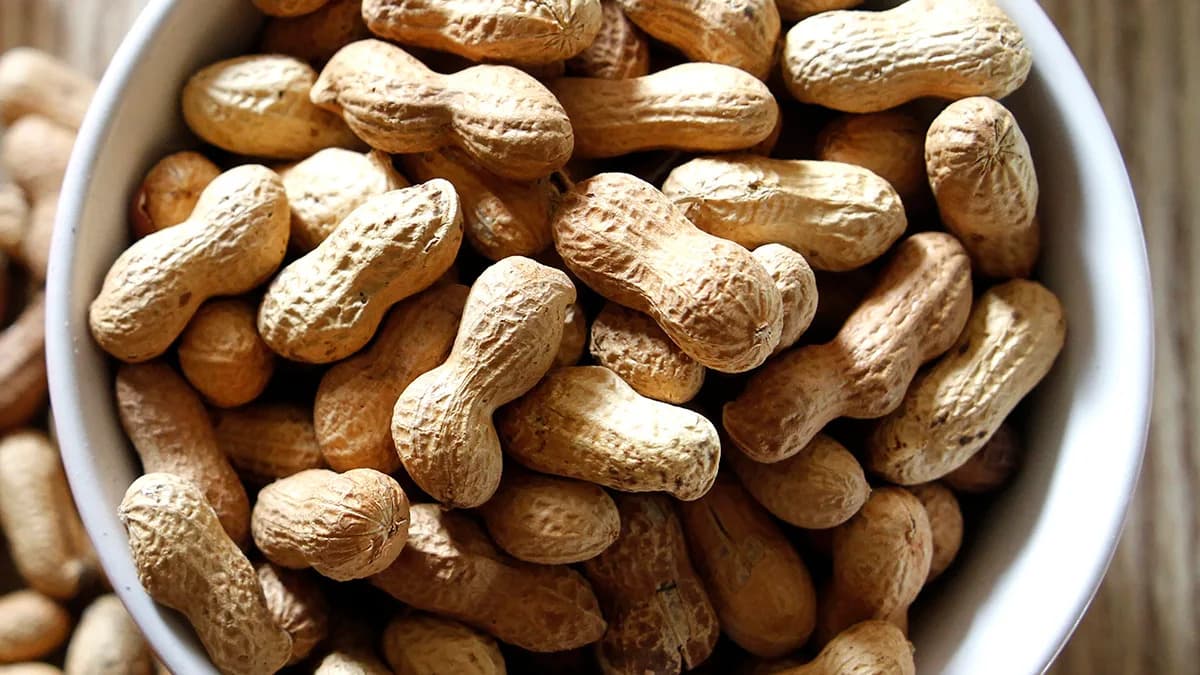
(Isabel Pavia/Moment/Getty Images)
Global peanut farming produces more than 10 million tonnes of shells each year. A research team at the University of New South Wales (UNSW) has developed a low‑energy, chemical‑free process that converts this abundant agricultural waste into high‑quality, graphene‑like carbon.
How the Process Works
The key feedstock is lignin, a natural, carbon‑rich polymer found in plant cell walls and abundant in peanut shells. The researchers found that carefully preparing the shells before applying an intense electrical pulse dramatically improves the quality of the final material.
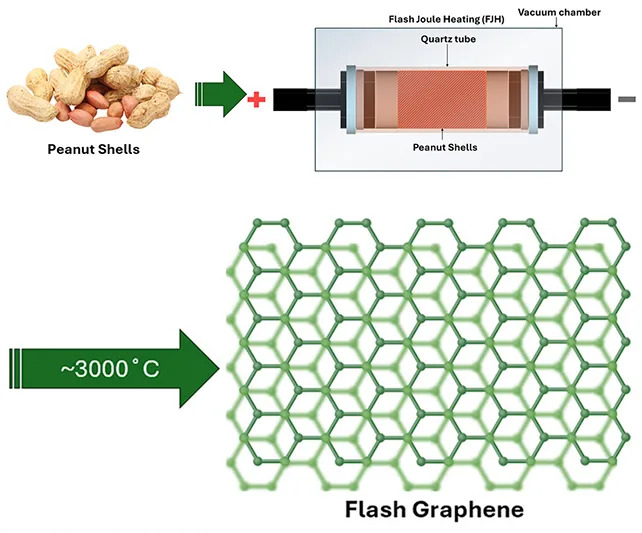
A summary of the production process. (De Cachinho Cordeiro et al.,Chem. Eng. J. Adv., 2026)
The method uses a two‑stage heating sequence. First, an indirect Joule heating pretreatment at roughly 500 °C for about five minutes removes impurities and converts the shells into char — a conductive, carbon‑rich intermediate. Second, flash joule heating (FJH) delivers an electrical flash that heats the char to temperatures above 3,000 °C for only milliseconds, rapidly rearranging carbon atoms into graphitic structures including few‑layer turbostratic graphene.
"Most of the waste from the shell is either discarded or recycled into low‑value applications that don't maximize their full potential," says UNSW mechanical engineer Guan Yeoh. "What we have shown is that basic peanut shells can be turned into high‑quality graphene using much lower energy than is currently required, and without chemicals — an environmental benefit."
Quality, Limits, and Prospects
Laboratory tests show the resulting carbon scores highly for graphitic quality, but typically forms a few graphene layers stacked in a turbostratic arrangement rather than isolated single‑atom sheets. The team notes it may take three to four years to scale this lab proof‑of‑concept to commercial production, and further process refinement is underway.

Subscribe to ScienceAlert's free fact-checked newsletter
Researchers are also testing whether the same pretreatment plus FJH approach works with other types of biomass — for example, coffee grounds or banana peels — to widen feedstock options and improve economic viability.
The full study is published in Chemical Engineering Journal Advances.
Help us improve.