The U.S. campaign against Iran has followed predictable escalation patterns, but public explanations have repeatedly emphasized President Trump’s instincts. Major outlets noted decisions portrayed as "gut" moves and officials offered shifting timetables and mixed messaging. With no clearly articulated strategy or measurable goals, critics warn the conflict risks being driven by personal judgment rather than defined objectives.
No Strategy, Just Instinct: Trump Says Iran Conflict Will End 'When I Feel It In My Bones'

A plume of smoke rises after a strike in Tehran, Iran, on March 2, 2026.(Mohsen Ganji / AP Photo)
Much of what has unfolded since the United States opened hostilities with Iran followed predictable paths: strategic missteps, an escalation in the Strait of Hormuz, efforts by Tehran to widen the confrontation, and the economic fallout many analysts expected.
Focus on Feelings Over Planning
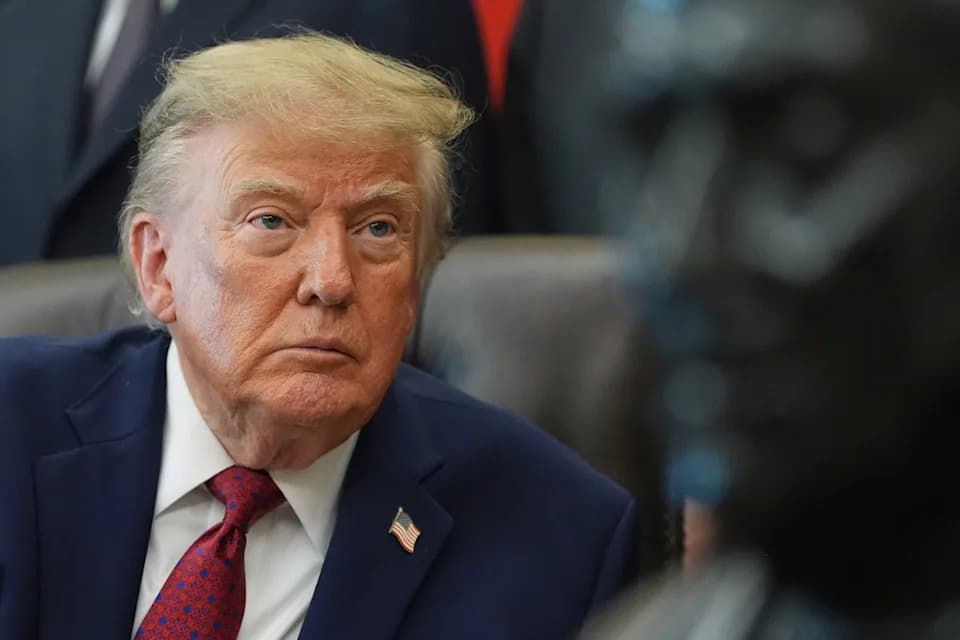
What has drawn particular attention, however, is the prominence of the president's personal instincts in public explanations of policy. Three days after the military operation began, an analysis in The New York Times said Mr. Trump’s decision "to order the attack on Iran ... was mostly a matter of gut instinct." White House press secretary Karoline Leavitt later characterized the president's timeline warnings as "a feeling the president had based on facts." And, in a widely quoted line, the president told Fox News' Brian Kilmeade he will know the war is over "when I feel it, when I feel it in my bones."
"When I feel it, when I feel it in my bones." — President Donald Trump on how he will know the conflict is finished.
Mixed Messaging and Shifting Timetables
The public record shows inconsistent and sometimes contradictory statements from the administration about the campaign's objectives and duration. A New York magazine timeline compiled numerous, often conflicting timetables for how long the operation might last. An NBC News report likewise described the administration's talking points as a "moving target," with officials offering different descriptions of goals and changing language in real time.
At moments the president has offered contradictory assessments of progress—at once declaring the U.S. had already won, saying the conflict would be won soon, and suggesting it remained both unfinished and just beginning. Such statements have fueled concern among policymakers and observers that there is no clear set of metrics or an articulated strategy guiding the effort.
Why Clear Goals Matter
Military and diplomatic campaigns typically rely on defined objectives and measurable benchmarks to guide decision-making and reduce the risk of unintended escalation. Critics say that when public messaging centers on a leader's instincts rather than on concrete goals, it raises uncertainty for allies, adversaries, and markets alike.
Absent a publicly stated strategy or metrics for success, the conflict risks being governed by shifting moods and ad hoc decisions. For many observers, that prospect is alarming: major policy decisions carried out without clear, accountable criteria for victory can prolong conflict and increase instability.
Originally published on MS NOW.
Help us improve.