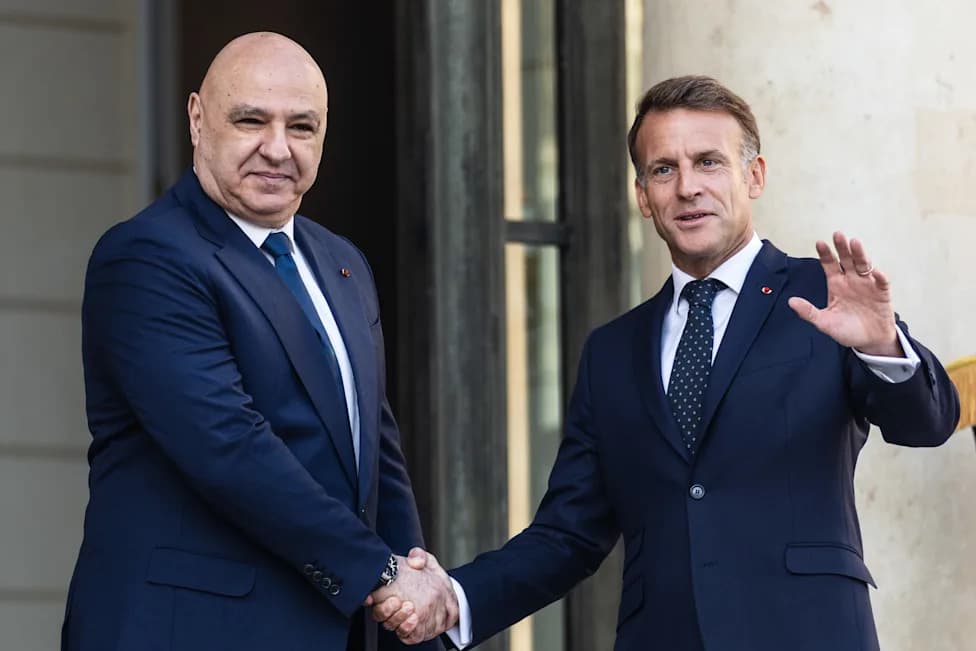
French President Emmanuel Macron said Paris is ready to host direct talks between Lebanon and Israel after Lebanese leaders indicated willingness to negotiate. France later clarified it was open to facilitating discussions but denied a final plan was in place, while media reports — not independently verified — say a draft could link Lebanese recognition of Israel to an end to the fighting. On the ground, heavy Israeli strikes and Hezbollah rocket fire have produced large-scale displacement and a worsening humanitarian crisis, and neither side appears in a position to dictate terms.
Macron Says France Can Host Lebanon–Israel Talks as Calls Grow For A Ceasefire
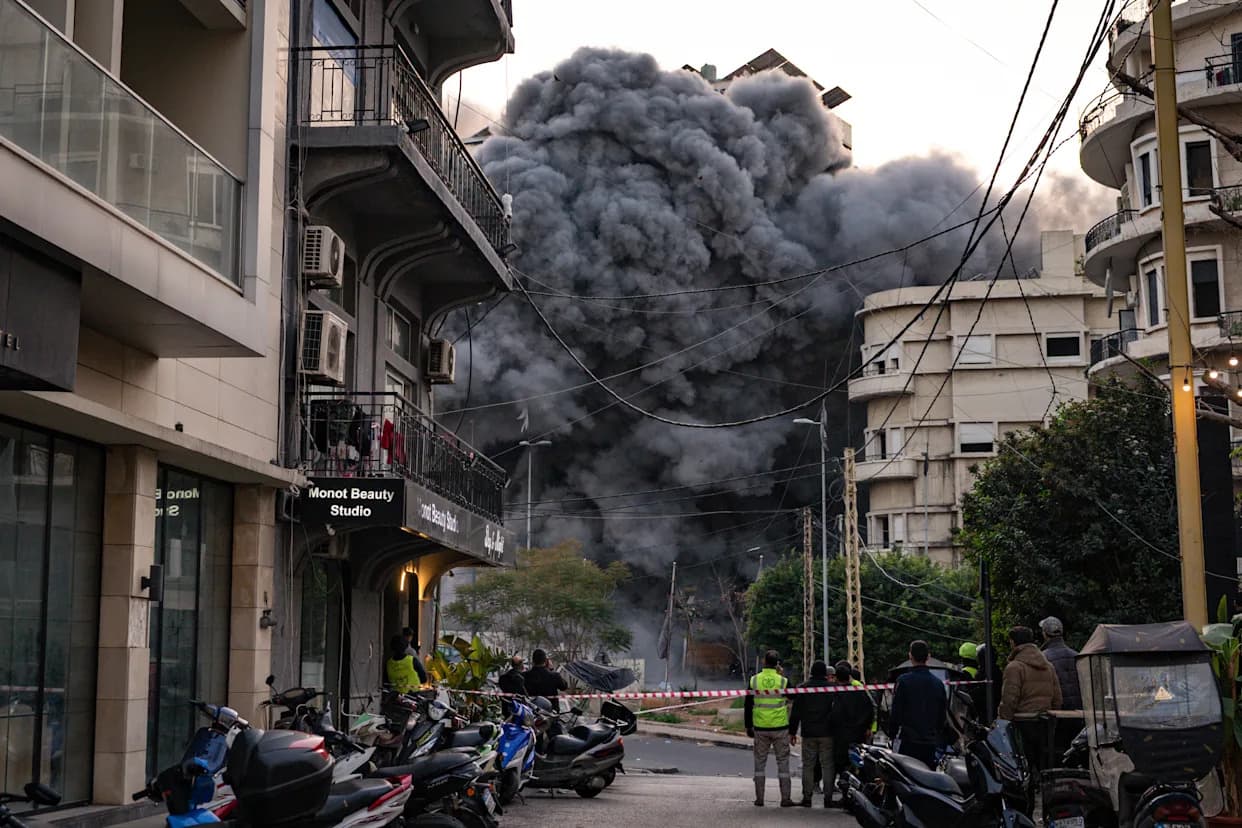
Smoke from a building in Beirut, Lebanon, hit by Israeli forces after a forced evacuation order on March 12, 2026 [Adri Salido/Getty Images]
French President Emmanuel Macron said Paris is prepared to facilitate direct talks between Lebanon and Israel after Lebanese leaders indicated a willingness to engage — a notable shift in Beirut’s stance toward its long-time adversary amid intense fighting.
What Macron Announced
Macron said he had spoken with Lebanon’s President Michel Aoun, Prime Minister Nawaf Salam and Parliament Speaker Nabih Berri, and posted on X in Hebrew, Arabic and French that “the Lebanese government has indicated its willingness to engage in direct talks with Israel.” He urged that talks include all segments of Lebanese society, called on Israel to pursue a ceasefire and an end to large-scale offensives and airstrikes, and urged Hezbollah to stop its escalation. “France is ready to facilitate these discussions by hosting them in Paris,” he added.
French Government Response And Other Reports
Later on the same day, France’s Ministry for Europe and Foreign Affairs sought to qualify Macron’s remarks, saying Paris was open to supporting and facilitating direct talks but denying that a fully formed plan had been finalised. Independent media reported that French officials have drafted proposals — including claims from Axios that one draft would link Lebanese recognition of Israel to an end to hostilities — but these reports remain unconfirmed and Al Jazeera said it could not independently verify them.
What The Draft Proposal Would Include (Unconfirmed)
According to media reports, the draft plan being circulated would use the Lebanese army to redeploy south of the Litani River while Israeli forces would withdraw from territory taken during the current fighting. Some reports suggested negotiations could begin in the coming days in Paris or Cyprus, though those timelines and venues have not been conclusively verified.
Ground Reality And Political Constraints
The battlefield picture complicates diplomacy. Israel has continued sustained airstrikes across Lebanon, including around Beirut and in the south, and has ordered evacuations south of the Litani River. Hezbollah has fired rockets into Israel and says it is resisting Israeli operations. Observers and correspondents note that neither side currently appears able to impose its preferred terms, and front-line conditions are shifting.
Domestically in Lebanon, the government has moved to curb Hezbollah’s military role: on March 2, the prime minister announced a ban on the group’s military activities and sought to limit its role to civilian and political functions. Speaker Nabih Berri, a key Shia figure often seen as close to Hezbollah, has said he supports negotiations only after Israeli attacks cease and displaced people are allowed to return — a position aligned with Hezbollah’s demands. Hezbollah representatives have told reporters they have not received a formal negotiating offer.
Humanitarian Toll
Humanitarian agencies warn of a growing catastrophe as bombings have killed more than 800 people in Lebanon and forced roughly 800,000–830,000 people from their homes — roughly 14% of the population, according to public estimates. Medical facilities, shelters and residential areas have sustained heavy damage and many displaced people are struggling to find adequate shelter and basic services.
Why It Matters
If Paris does host talks and they produce a framework for a ceasefire, the diplomatic outcome could shift regional dynamics: a Lebanese government that opts for direct engagement with Israel would represent a major policy change, and any agreement would need to address the role of Hezbollah, the redeployment of forces in southern Lebanon, and long-standing security and territorial disputes. But for now, key elements remain unverified, the battlefield continues to shape possibilities for diplomacy, and humanitarian needs are acute.
Sources: Statements from President Emmanuel Macron and the French Foreign Ministry; reporting from Al Jazeera, Axios and Haaretz; publicly available estimates of casualties and displacement.
Help us improve.