
Baghdad residents are trying to maintain daily routines even as warplanes and missiles fill Iraq's skies following a reported US-Israeli strike on Tehran on 28 February. Iraq closed its airspace and soon saw strikes on Iranian-backed militias, attacks on US targets and retaliatory strikes. Civilians express a mix of defiance, fear and economic strain: some refuse to flee, while others avoid going out alone or have already lost work as the conflict disrupts life and commerce.
Baghdad Keeps Going as Warplanes Roar: Civilians Juggle Daily Life and Fear
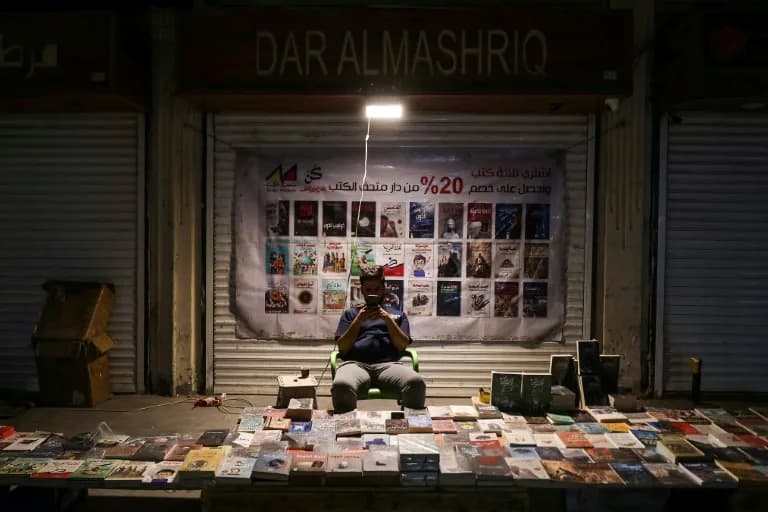
While Iraqis have grown accustomed to war over the decades this has not diminished anxiety about a wider conflict (AHMAD AL-RUBAYE)(AHMAD AL-RUBAYE/AFP/AFP)
Hours before strikes reached Baghdad, people gathered in the city centre to the sound of clinking coffee cups, children laughing and women filming TikToks — not the thunder of missiles. Yet beneath the familiar scenes, anxiety and uncertainty run deep as warplanes and missiles have filled Iraq's skies.
Airspace Closed After Reported Strike
After a reported US-Israeli strike on Tehran on 28 February, Iraq closed its airspace. Within hours, aircraft and missiles approached from multiple directions, and large parts of the country became a chaotic danger zone, with strikes on Iranian-backed militias, attacks on US interests and Iranian reprisals against exiled Kurdish opposition groups.
Daily Life Under Strain
For many Baghdad residents, routine persists alongside fear. Karim Al-Aqabi, 65, a father of three who walked Al-Mutanabi Street — famous for booksellers and street performers — summed up the mood:
“Life looks normal here, but in reality it isn't. Instead of music, we keep the news on constantly.”
Others are more cautious. Twenty-two-year-old Mariam Ahmed said she no longer leaves home without her brother. “I feel extremely worried and sad about what is happening,” she told AFP from a new shopping centre that stands as a fragile marker of Baghdad’s recovery.
Strikes, Casualties and Targets
Early Saturday strikes in central Baghdad — the first since the wider escalation — killed three members of an Iranian-backed militia, and a drone later struck near the US embassy. Tehran-backed Iraqi factions have reported being hit, though neither the United States nor Israel has officially claimed responsibility for all such strikes. Baghdad’s airport, US bases and oil fields have also been targeted amid the exchanges.
Economic and Emotional Impact
Not all Baghdad residents feel the disruption in the same way. Muhammad Ali, 22, said the constant roar of warplanes has not changed his behaviour; he vents online and points to “resistance” actions against US bases. By contrast, street photographer Walid Khaled, 26, says he has already lost work as people cut non-essential spending. Living near Baghdad International Airport — itself a frequent target — his family has stocked up on staples in case conditions worsen.
Decades of conflict and sanctions — including the 1980s Iran‑Iraq war, the 2003 US‑led invasion and the rise of jihadist groups — have shaped Iraqi resilience. Still, many residents express fatigue at once more being drawn into a wider proxy confrontation between Tehran and Washington.
Key voices: Some vow never to leave their homes even if ordered to evacuate; others have curtailed daily life or lost income. As explosions and aerial operations continue, Baghdad’s streets reveal both defiance and mounting anxiety.
Help us improve.





















