
Israel has said its conflict with Iran has entered a "decisive phase" as strikes and explosions hit sites across the Middle East, including a reported drone strike on the US embassy in Baghdad and a major fire at Fujairah's oil terminal. Iran's health ministry reports over 1,200 dead and the UN says up to 3.2 million people are displaced internally, while oil prices have surged amid threats to the Strait of Hormuz. The US and Israel say they have struck thousands of targets; independent verification of some claims — including reports about Iran's leadership — remains limited.
Israel Says Conflict With Iran Has Entered a "Decisive Phase" as Strikes Rock the Region
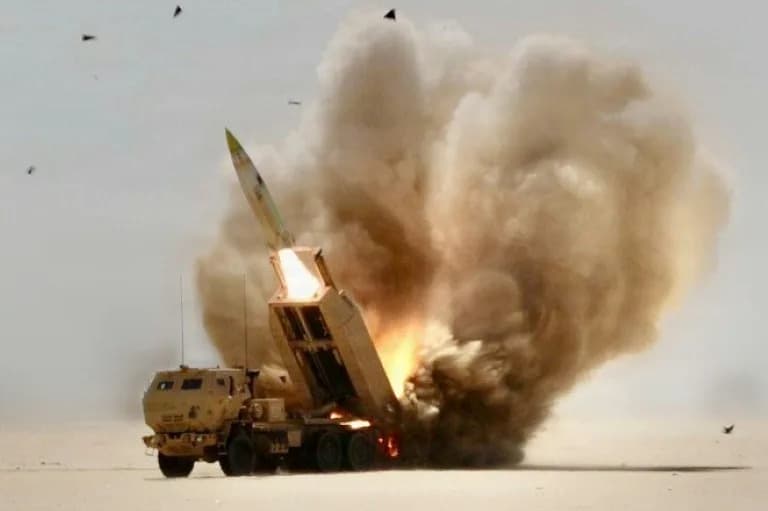
US Army handout photos showed HIMARS multiple rocket launchers firing from te desert during strikes on Iran (-)(-/US ARMY/AFP)
Israel declared on Saturday that its conflict with Iran had entered a "decisive phase", as explosions and strikes reverberated across the Middle East — including an apparent drone attack on the US embassy in Baghdad and a major blaze at an Emirati energy terminal.
Regional Escalation
Security sources told AFP that the US embassy compound in Baghdad was struck by a drone, the second reported attack on the mission since February 28 after a wave of US and Israeli strikes on Iran. Thick black smoke was also seen over Fujairah, where a major UAE oil storage and export terminal was reported ablaze shortly after Iran's military warned civilians to avoid port areas.
US officials, quoted in briefings, say American forces struck Kharg Island — Iran's largest oil export hub — and targeted military facilities there while reportedly sparing energy infrastructure. Iranian state media and other local reports indicated the island's oil facilities remained intact; several claims about the scale and effects of the strike remain inconsistent between sources.
Analyst view: Vali Nasr of Johns Hopkins University suggested the Kharg strike could be a "turning point," warning that escalation by both sides may inflame tensions across the Gulf rather than force a quick capitulation.
Military Actions and Claims
Israeli Defence Minister Israel Katz described recent strikes as putting the war into a "decisive phase" and said operations would continue "as long as necessary." Israeli authorities reported explosions over Jerusalem after intercepting missiles believed launched from Iran. Tehran, for its part, has launched missile and drone attacks against at least 10 neighbouring countries, according to regional reports.
Qatar said it intercepted two missiles over Doha's downtown and evacuated key areas after blasts were heard by AFP journalists. Turkey said NATO forces intercepted a ballistic missile launched from Iran — described as the third such interception in the campaign.
Human Cost and Displacement
Iran's health ministry reported more than 1,200 people killed in the course of the strikes, a figure AFP and other independent outlets could not verify. The UN refugee agency estimates up to 3.2 million people have been displaced inside Iran. Local health authorities in Lebanon say at least 773 people have been killed there amid cross-border strikes and evacuations.
Lebanon-based Hezbollah — an Iran-backed group — has fired into northern Israel, which has responded with air and ground strikes in Lebanon, including an attack that killed a number of health workers at a clinic, according to Lebanese health officials.
Costs, Troop Movements and Political Fallout
The Pentagon says US and Israeli forces have struck more than 15,000 targets in Iran in two weeks. A separate report put the US financial cost for the first six days at about $11.3 billion, and US forces have reportedly lost 13 service members so far. US outlets have also reported the Japan-based amphibious assault ship USS Tripoli, with roughly 2,500 Marines, has been dispatched toward the region, raising speculation about possible further ground operations.
Some reports have claimed that Iran's Supreme Leader, Ali Khamenei, was killed early in the conflict and that his son Mojtaba Khamenei has been named his successor. These claims remain unverified and are disputed in various accounts — independent confirmation of leadership changes in Tehran has not been established.
On social media and in public statements, figures on all sides have used stark rhetoric: leaders and analysts warn of a widening conflict, while local and international agencies appeal for protection of civilians and humanitarian access.
What Remains Unclear
Many battlefield claims and casualty figures differ by source. Journalists and international agencies continue to attempt verification, but access and information remain limited amid communications disruptions and active hostilities.
Note: This article summarizes multiple, rapidly changing reports. Where possible, figures and quotes are attributed to the original reporting agencies or officials; several assertions (including leadership casualties and some tactical details) have not been independently verified.
Help us improve.





















