
Local officials reported that at least 112 people were killed and 969 injured in strikes on Iran’s Kurdistan province, with the attribution to US and Israeli forces reported by state media. Medical sources say 27 wounded are in regular wards and five are in intensive care. The incident has revived scrutiny of reported contacts between former President Donald Trump and Kurdish groups, while Iraqi Kurdish authorities deny involvement in operations inside Iran.
At Least 112 Killed, 969 Injured in Reported Strikes on Iran’s Kurdistan, Officials Say
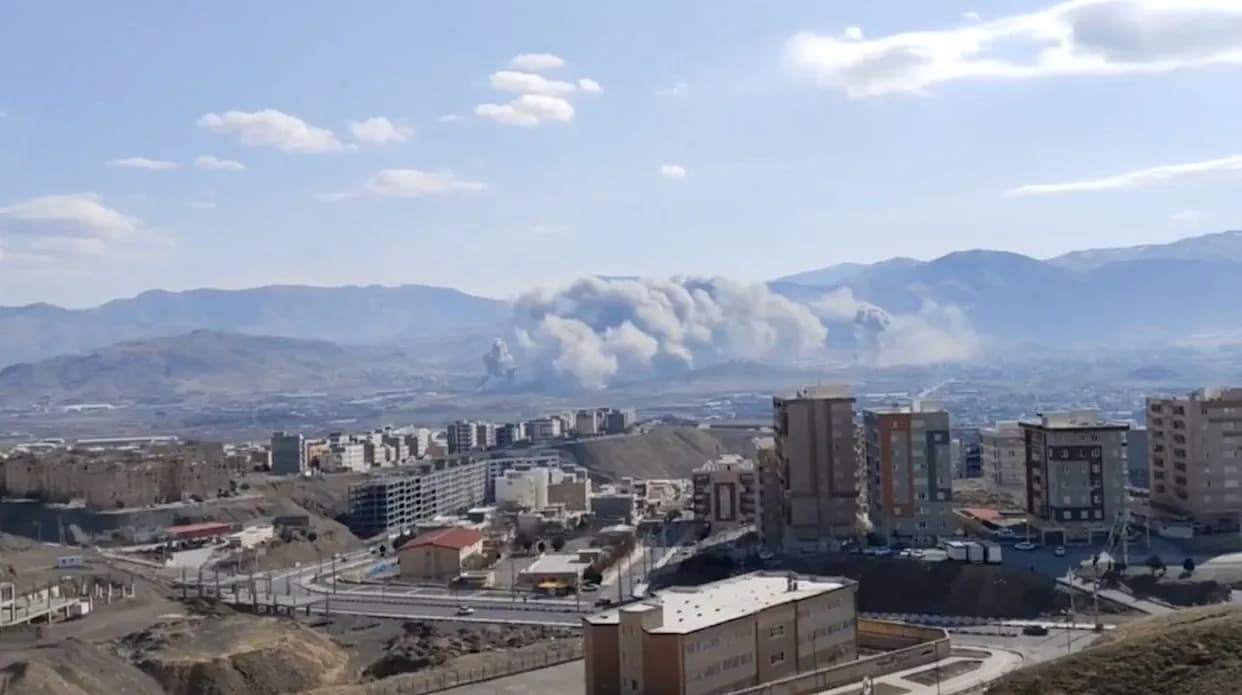
Smoke plumes rise from Sanandaj, Kurdistan province, Iran, amid the US-Israeli conflict with Iran [File: Social media/via Reuters]
Local officials say at least 112 people have been killed and 969 injured in strikes on Iran’s Kurdistan province that state media attributed to United States and Israeli forces. The head of the Kurdistan Provincial Emergency Department, quoted on Friday and not named in reports, said 27 of the wounded are being treated in regular hospital wards and five remain in intensive care.
Independent verification of the strikes and casualty figures was not immediately available; the attribution to US and Israeli forces comes from local officials cited by state media.
Who Are the Kurds?
Kurds are an indigenous ethnic group of the Mesopotamian region, concentrated across southeastern Turkey, northeastern Syria, the semi‑autonomous Kurdish region of northern Iraq, northwestern Iran and southwestern Armenia. They share a distinct language and culture but do not have an independent state. Kurds are estimated to comprise close to 10 percent of Iran’s population, although Tehran publishes no official ethnic breakdown.
Wider Political Context
The reported strikes come amid media reports that former President Donald Trump has held talks with Iranian and Iraqi Kurdish groups, and amid speculation that elements in Washington might seek to use Kurdish forces based in Iraq to apply pressure inside Iran. Last week, Trump said he did not want the Kurds to mount an offensive into Iran, arguing the United States did not want “to make the war any more complex than it already is.”
Iranian Kurdish opposition movements—many of which maintain close ties with Iraqi Kurdish factions—have long opposed Tehran while operating from bases in northern Iraq and areas along the Iran‑Iraq frontier. Analysts and officials estimate these groups collectively field several thousand fighters.
Separately, Iranian forces last week conducted an operation against Kurdish groups inside the semi‑autonomous Kurdish region of neighbouring Iraq. The Iraqi Kurdish regional government has denied any role in arming or sending fighters into Iran.
Reporting on the events remains fluid. State media and local officials are the primary sources for the casualty counts and the attribution of the strikes; independent confirmation and additional details may emerge as international and local agencies verify the situation.
Help us improve.





















