The U.S. air campaign launched Feb. 28 to unseat Iran’s ruling elite revives tactics developed over the past 40 years, tracing a line from Reagan’s 1986 Libya strikes through Desert Storm and the 2003 Iraq opening strikes. Historical examples show that targeted air attacks can eliminate leadership targets and degrade command networks, but they often fall short of producing durable regime change without ground forces or sustained political strategy. The authors caution that air power alone is unlikely to guarantee long-term stability or political transformation in Iran.
Back to the Future of War: How the U.S. Reused a 40-Year 'Rogue State' Playbook in the Iran Campaign
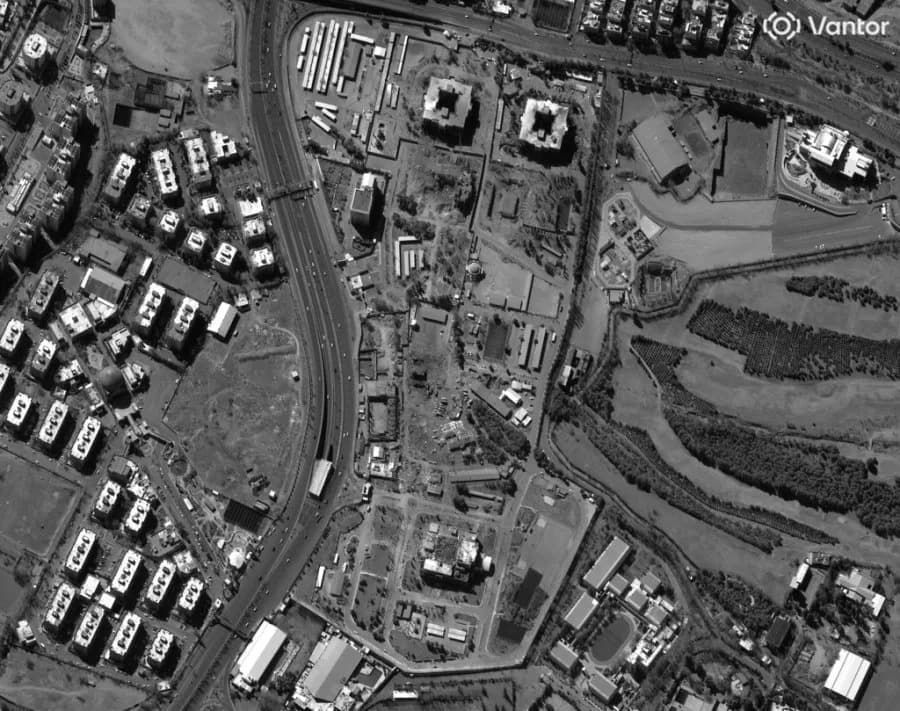
The U.S. military offensive launched on Feb. 28 to remove Iran’s ruling elite draws on a strategic playbook more than four decades old. As the administration seeks to shape the Middle East’s uncertain future, its approach to Iran revives tactics developed from the Reagan era through both Bush administrations — a set of practices aimed at confronting states labeled as "rogue."
Historical Precedents
The strategy recalls President Ronald Reagan’s 1980s confrontation with Libyan leader Moammar Gadhafi. U.S. policymakers cast Gadhafi as the personification of the terrorist threat: his eccentric appearance, erratic behavior and virulent rhetoric made him a convenient villain. By early 1986, persuaded by advisers such as Secretary of State George Shultz, Reagan decided to use military force to diminish Libya’s sponsorship of terrorism.
In April 1986, the United States launched Operation El Dorado Canyon in response to a terrorist attack in West Germany that killed two and wounded 79 American service members. The strikes targeted facilities that, in the words of National Security Adviser Vice Adm. John Poindexter, "play a key role both in maintaining Gadhafi in power and in directing terrorist operations abroad." Although Gadhafi himself was not explicitly named as a target, bombing his command-and-control center signaled that decapitating the regime would have been a desirable outcome.
Not long after, Saddam Hussein emerged as the defining "rogue" of the post–Cold War era. Reagan had derided Saddam as a "no-good nut" as early as 1981, but the Iraqi invasion of Kuwait in August 1990 transformed U.S. policy toward his regime. The longest and most sustained phase of Operation Desert Storm (January–February 1991) was the prolonged air campaign against Iraqi command, military and party targets — a pattern that parallels the current aerial campaign over Iran.
The opening phase of the recent offensive — identified by the authors as Operation Epic Fury — struck the compound where Iran’s Supreme Leader Ayatollah Ali Khamenei was staying. That episode most closely resembles the opening of the 2003 Iraq War, when the U.S. attempted to "decapitate the regime" by targeting Saddam Hussein’s known compound on the eve of Operation Iraqi Freedom. In 2003 the intended target was absent; in 2026 the Iranian leader was reportedly present at the targeted compound.
What Air Power Can—and Cannot—Do
History shows that precision airstrikes can destroy leadership compounds and degrade command-and-control networks. But air power alone has limits. The 2003 Iraq campaign initially succeeded militarily but was followed by a prolonged and costly ground occupation and an extended period of instability. The authors caution that real regime change or a durable shift in behavior often requires more than targeted aerial warfare.
Key takeaway: The current U.S. campaign against Iran deliberately echoes decades of precedent — a mix of punitive strikes, leadership targeting and pressure designed to unseat or coerce regimes branded as threats. Whether that approach will produce lasting political change in Iran without an extended ground presence remains uncertain.
About the authors: Matthew A. Frakes is the author of the forthcoming book "Rogue States: The Making of America’s Global War on Terror" and an assistant professor at the Salmon P. Chase Center for Civics, Culture, and Society at The Ohio State University. Benjamin V. Allison is a Ph.D. candidate in history at the University of Texas at Austin and a graduate fellow at the Clements Center for National Security.
Copyright 2026 Nexstar Media, Inc. All rights reserved. This material may not be published, broadcast, rewritten, or redistributed. For the latest news, weather, sports, and streaming video, head to The Hill.
Help us improve.