
Hezbollah deputy leader Naim Qassem said his group is prepared for a prolonged, "existential" confrontation with Israel. Israel struck a bridge over the Litani River and warned Lebanon it would pay an "increasing price" through damage to infrastructure used by Hezbollah. UN chief Antonio Guterres called for an immediate ceasefire during a Beirut visit and launched a $325 million humanitarian appeal to aid hundreds of thousands displaced by the fighting. Continued strikes have caused civilian deaths and blocked key roads, while evacuation orders and leaflet campaigns add pressure on Lebanese communities.
Hezbollah Says It Is Ready For Prolonged Fight As Israel Targets Lebanese Infrastructure
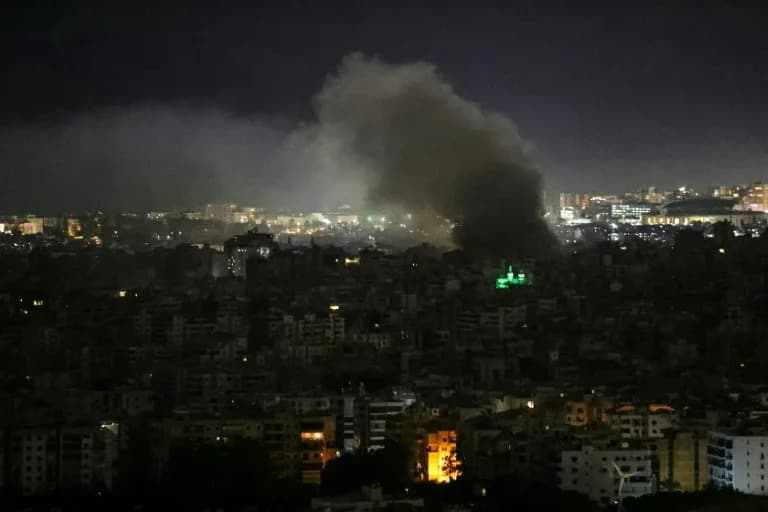
Israel launched further air strikes on Beirut on Friday in its war with Hezbollah (-)(-/AFP/AFP)
Hezbollah deputy leader Naim Qassem said on Friday the group is prepared for a prolonged confrontation with Israel, calling the current clash "existential" and warning that Israeli forces will be surprised on the battlefield.
Lebanon was drawn deeper into the wider Middle East fighting last week after Hezbollah launched attacks on Israel. Hezbollah framed those strikes as retaliation for earlier strikes it said were linked to Iran. (Note: some early reports that named Iran's supreme leader in this context were inaccurate.)
Bridge Strike and Infrastructure Warnings
Lebanon's state-run National News Agency reported that Israeli forces destroyed a bridge over the Litani River between Zrariyeh and Tayr Falsay. The Litani bisects southern Lebanon from east to west. The Israeli military described the bridge as a "key crossing" used by Hezbollah "from northern to southern Lebanon, to build up its power and prepare for combat."
This was the first Israeli-acknowledged strike on Lebanese public infrastructure since the recent escalation. Israeli Defence Minister Israel Katz warned: "This is just the beginning and the Lebanese government and the state of Lebanon will pay an increasing price in damage to Lebanese national infrastructure used by Hezbollah terrorists." He also said Lebanon could face a "loss of territory -- until it fulfils its central commitment of disarming Hezbollah."
Movement and Logistics Targeted
The Israeli military also struck several roads in southern Lebanon, the NNA reported, blocking access from north of the Litani River and from the Bekaa Valley — a route Hezbollah is reported to use to move weapons. The NNA added that Israeli shells struck the UN Interim Force in Lebanon (UNIFIL) Nepalese battalion in the border town of Mays al-Jabal.
Civilian Toll and Humanitarian Appeal
Israeli strikes continued, including an attack that killed eight people in the south Lebanese village of Miyeh w Miyeh near Sidon, according to the health ministry. In nearby Irkey, Mohammad Taqi buried four daughters, aged six to 13, who were among several relatives killed in a strike. At the funeral Taqi, wounded himself, questioned claims that the military was targeting only infrastructure.
UN Secretary-General Antonio Guterres, on a visit to Beirut, urged both Hezbollah and Israel to "stop the war" and called for an immediate ceasefire. He launched a $325 million humanitarian appeal to assist hundreds of thousands of people displaced by the fighting.
Hezbollah Operations and Civilian Precautions
Hezbollah said it conducted operations against Israeli forces on Friday as part of what it described as a Quds Day action — an annual Iran-organised day of support for the Palestinian cause observed on the last Friday of Ramadan. Israel renewed evacuation warnings for southern Lebanon, including parts of Beirut's southern suburbs, and expanded evacuation zones to more than 40 kilometres from the border in some areas. Israeli aircraft also dropped leaflets over Beirut urging civilians to pressure authorities to disarm Hezbollah.
"You must disarm Hezbollah, Iran's shield," one leaflet read. "Lebanon is your decision, not someone else's."
As the conflict continues, both sides have exchanged accusations while civilians and UN personnel have suffered casualties. The situation remains volatile, with humanitarian needs rising quickly across affected areas.
Help us improve.





















