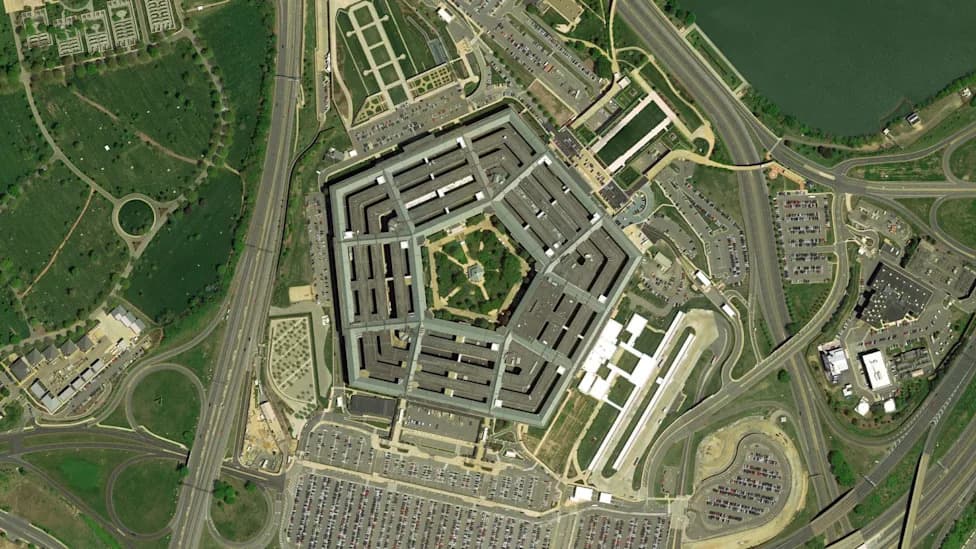
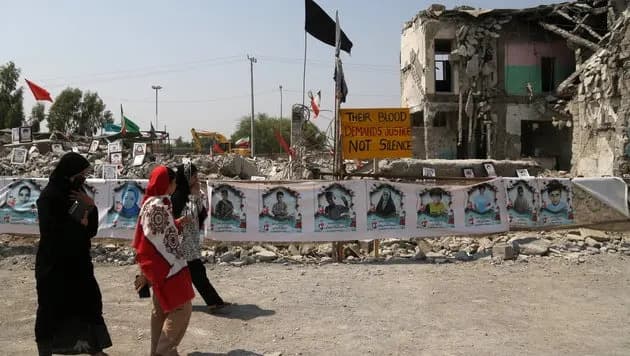
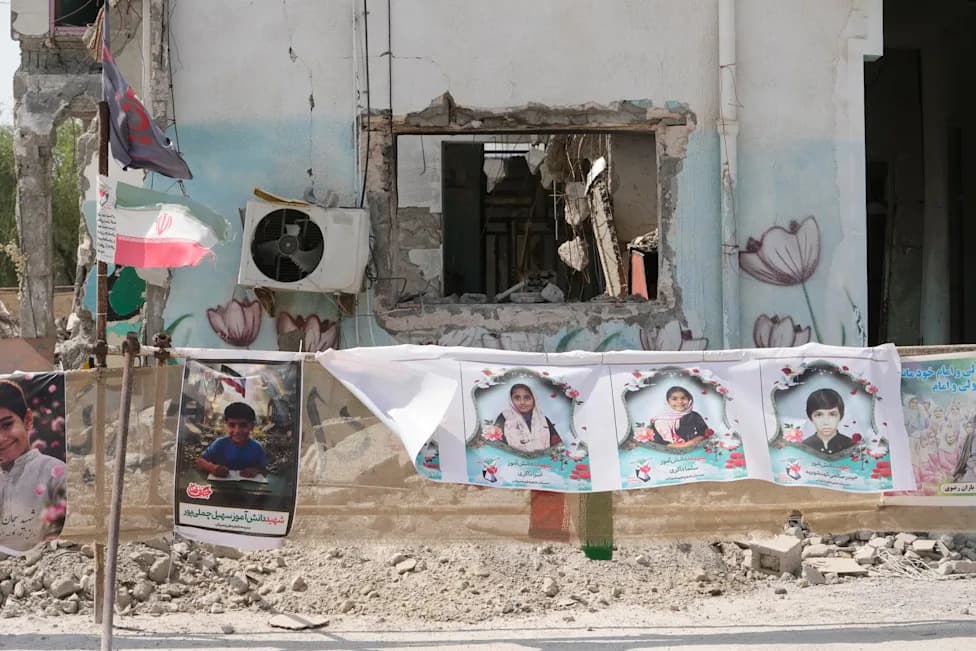
More than 120 House Democrats have asked the Pentagon for detailed answers after a Feb. 28 strike on the Shajareh Tayyebeh school in Minab killed over 170 people, mostly children. Preliminary U.S. findings suggest a U.S. munition may have been responsible and that outdated intelligence could have been a factor. Lawmakers demanded to know whether AI tools, including the Maven Smart System, were used in targeting and whether humans reviewed AI recommendations; they asked for a response by March 20. CENTCOM has confirmed the use of advanced AI to speed analysis, while officials say final targeting decisions remain human.
Democrats Demand Pentagon Answers After Deadly Iran School Strike; Question Use Of AI In Targeting
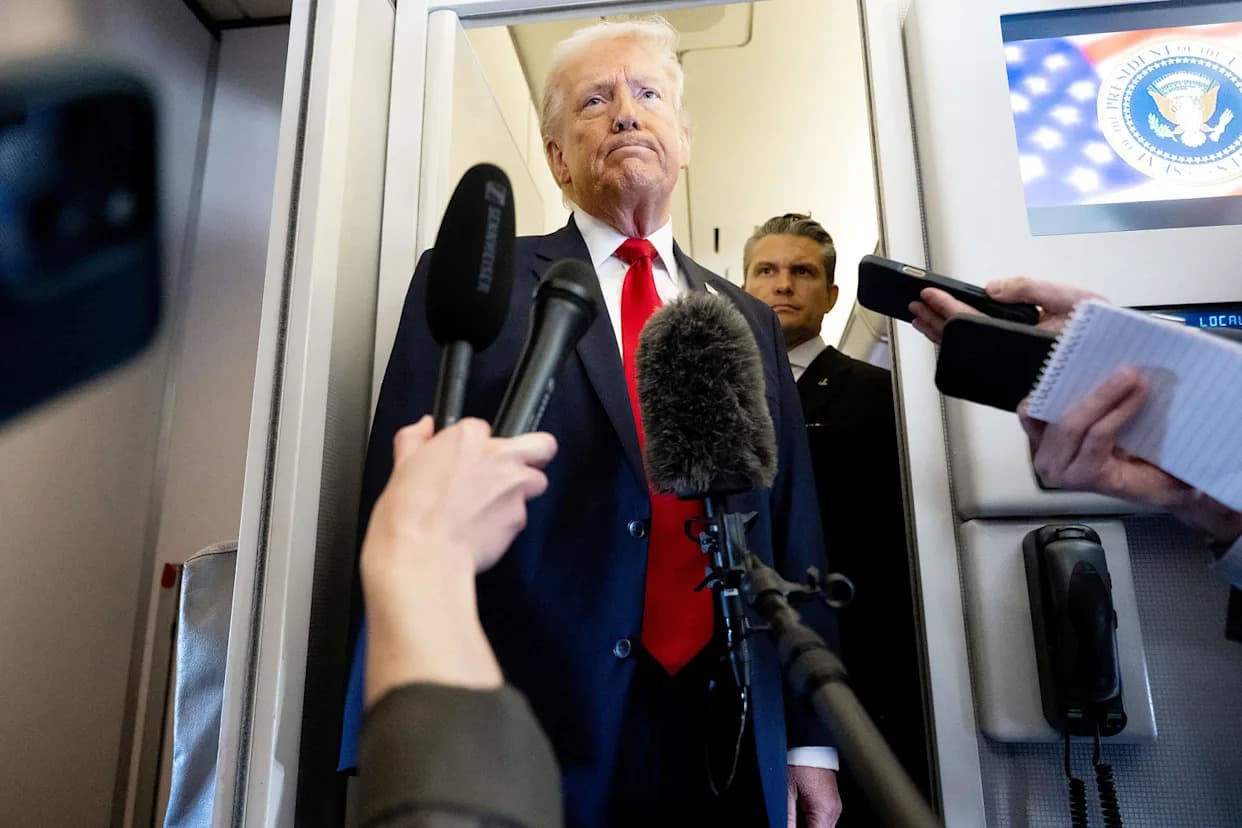
President Donald Trump speaks to the media alongside Defense Secretary Pete Hegseth on Air Force One on March 7. (Saul Loeb / AFP - Getty Images)(Saul Loeb)
More than 120 House Democrats have pressed the Pentagon for detailed answers about civilian protections in the U.S. campaign in Iran and whether artificial intelligence was used to identify targets—following a Feb. 28 strike on the Shajareh Tayyebeh school in Minab that killed more than 170 people, most of them children.
Congressional Letter and Key Questions
In a letter to Defense Secretary Pete Hegseth sent Thursday and reviewed by NBC News, lawmakers singled out the Minab school strike and demanded explanations about why the site was targeted. They asked whether the Pentagon will treat the incident as a potential war crime and requested a formal response by March 20.
Preliminary Findings and Intelligence Concerns
The U.S. military says its investigation is ongoing. Preliminary reporting indicates a U.S. munition was likely responsible for the attack and that outdated or faulty intelligence may have contributed to selecting the target, according to sources familiar with early findings.
Questions About AI And Human Oversight
The lawmakers pressed the Pentagon on whether AI tools—explicitly naming the Maven Smart System—were used to identify or assess targets, whether AI played a role in legal assessments, and at what point human reviewers evaluated any AI-generated recommendations. The letter asks: if AI was used, who verified the accuracy of its outputs and when did human review occur?
Rep. Sara Jacobs (D-Calif.): “We should all feel deeply ashamed by the killing of 175 civilians, mostly little children. If the United States is indeed responsible for this attack, this Administration needs to immediately take responsibility, be held accountable, and make amends to the survivors and loved ones of the victims.”
Administration Statements And Military Messaging
President Trump has publicly denied U.S. responsibility for the strike, saying, “No, in my opinion, and based on what I’ve seen, that was done by Iran,” though he offered no public evidence. Standing with the president, Hegseth said officials were investigating but also accused Iran of targeting civilians, asserting that “the only side that targets civilians is Iran.”
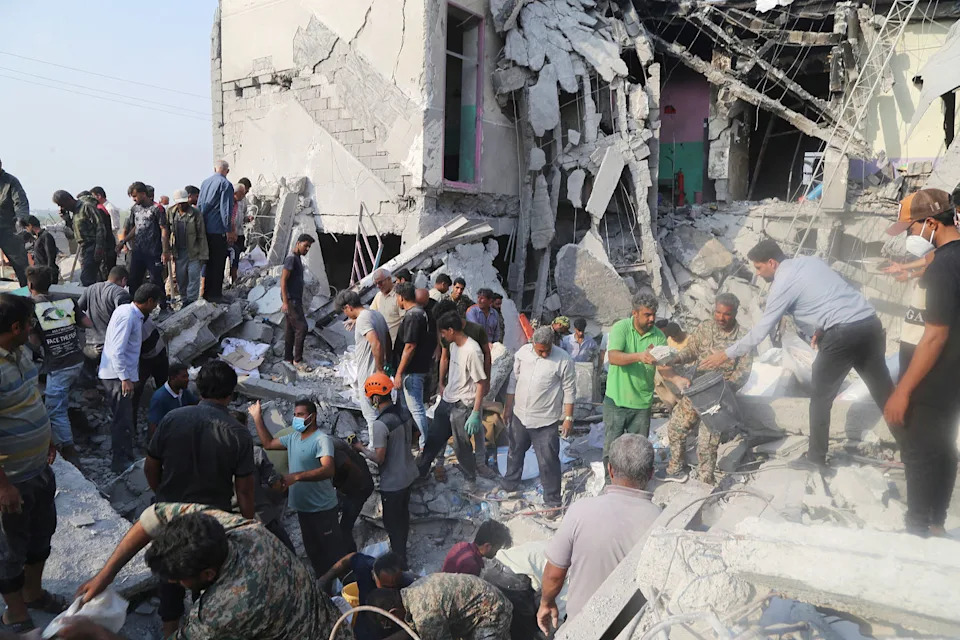
The aftermath of a strike on a school in Minab, Iran, on Feb. 28. (Abbas Zakeri / Mehr News via Reuters)(Abbas Zakeri)
At the same time, Adm. Brad Cooper, commander of U.S. Central Command, acknowledged in a CENTCOM-produced video that U.S. forces are using advanced AI tools to accelerate analysis. He said these systems help sift large amounts of data quickly and that “humans will always make final decisions on what to shoot and what not to shoot and when to shoot.”
Rules Of Engagement And Civilian Warnings
Law of armed conflict requires distinguishing between civilians and combatants and taking feasible precautions to protect noncombatants. Yet, early in the operation—named Operation Epic Fury—Hegseth said there would be “no stupid rules of engagement,” a comment that raised concerns about how constraints will be applied in practice.
CENTCOM has also issued safety warnings to Iranian civilians, asserting that the Iranian regime has placed military equipment and launch systems in densely populated areas. CENTCOM warned that when military assets are placed among civilians, they can become lawful military targets under international law, and urged civilians to seek shelter. A U.S. official stressed that civilians are not intended targets but acknowledged that mitigating all civilian harm cannot be guaranteed.
Next Steps
Lawmakers requested a written response by March 20. The Pentagon had not immediately replied to requests for comment on the congressional outreach at the time of reporting. The outcome of the U.S. investigation and any subsequent accountability measures will be closely watched by Congress, human rights groups, and international observers.
This article was originally published on NBCNews.com and has been edited for clarity and structure.
Help us improve.