
Senegal's parliament has approved a law doubling maximum prison terms for same-sex sexual activity and criminalising promotion of homosexuality. The bill passed 135-0-3 and raises maximum sentences to 10 years with fines up to 10 million CFA francs, while preventing judges from suspending or reducing sentences. Human rights groups have reported a spike in arrests and warned the law could increase stigma and vulnerability for LGBTI people. Observers say the move forms part of a regional wave of tougher anti-LGBTQ legislation.
Senegal Parliament Approves Harsher Law Doubling Prison Terms for Same‑Sex Acts and Banning Promotion
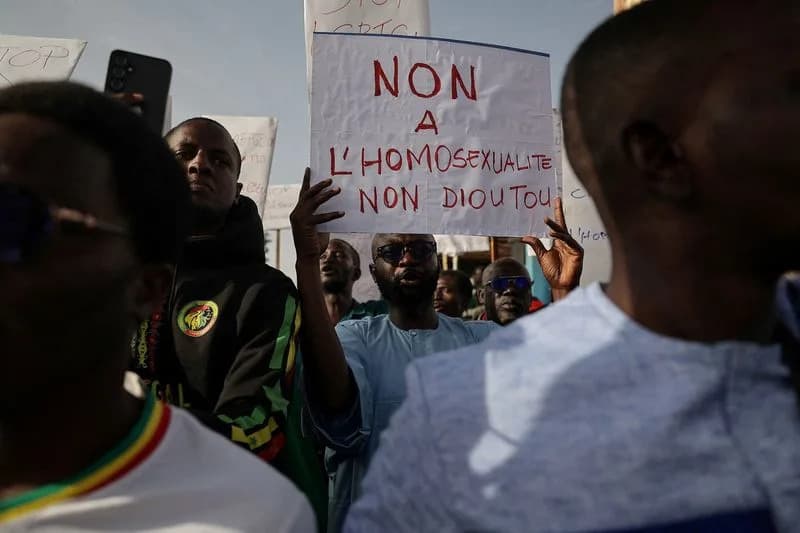
FILE PHOTO: Anti‑LGBT supporters march through the streets during a protest calling for tougher action after authorities detained people for what police said were crimes including same‑sex intercourse and intentional HIV transmission, and about a dozen others in what police said was a child‑abuse network, in Dakar, Senegal, February 14, 2026. REUTERS/Zohra Bensemra/File Photo
Dakar, March 11 — Senegal's National Assembly on Wednesday approved a new law that doubles the maximum prison sentence for same-sex sexual activity and criminalises efforts to promote or finance homosexuality.
The final vote on the bill was 135 in favour, none against and three abstentions. The measure fulfils a campaign pledge of the government that took office in 2024 under President Bassirou Diomaye Faye and Prime Minister Ousmane Sonko.
Under the penal code as last amended in 1966, an article prosecuted "acts against nature" with sentences of up to five years and fines up to 1,500,000 CFA francs (about $2,676). Supporters of the new legislation argued the existing provision was too vague and not sufficiently punitive.
The revised law increases penalties: "acts against nature" can now carry up to 10 years in prison and fines of up to 10 million CFA francs (roughly $17,700). The text bars judges from imposing suspended sentences or reducing a sentence below the statutory minimum.
The legislation explicitly lists homosexuality, bisexuality, "transsexuality", zoophilia and necrophilia within its definition of "acts against nature." It also makes the promotion or financing of such acts a criminal offence punishable by imprisonment.
In the weeks leading up to the vote, backers of the law, including members of the ruling Pastef party, staged demonstrations in Dakar, chanting "no to homosexuality" and displaying crossed-out rainbow symbols. Human rights organisations reported a noticeable rise in arrests of men suspected of "acts against nature" and, in some cases, alleged "voluntary transmission" of HIV — an offence that can carry up to 10 years in prison.
The International Federation for Human Rights reported that some 27 men were detained between Feb. 9 and Feb. 24. Human rights groups have expressed concern about the arrests and warned the law could intensify stigma and legal vulnerability for LGBTI people in Senegal.
Observers say Senegal's move is part of a broader regional trend. Last year Burkina Faso adopted a law criminalising same-sex relations for the first time, and lawmakers in Ghana have been considering a bill to increase penalties for same-sex acts and penalise the "wilful promotion, sponsorship, or support of LGBTQ+ activities."
($1 = 560.5000 CFA francs)
Help us improve.





















