
Israeli officials privately told Reuters they do not see the collapse of Iran’s clerical regime as certain despite a U.S.-Israel air campaign that killed Supreme Leader Ayatollah Ali Khamenei and other commanders. Missile strikes, threats of lethal force and heavy damage to infrastructure have so far deterred mass protests. Israeli leaders say they hope to create conditions for change but acknowledge any uprising is not imminent and that weakening Iran’s military is a clearer short-term objective.
Israel Says Iran’s Regime Collapse Is Not Assured Despite Devastating U.S.-Israel Air Campaign
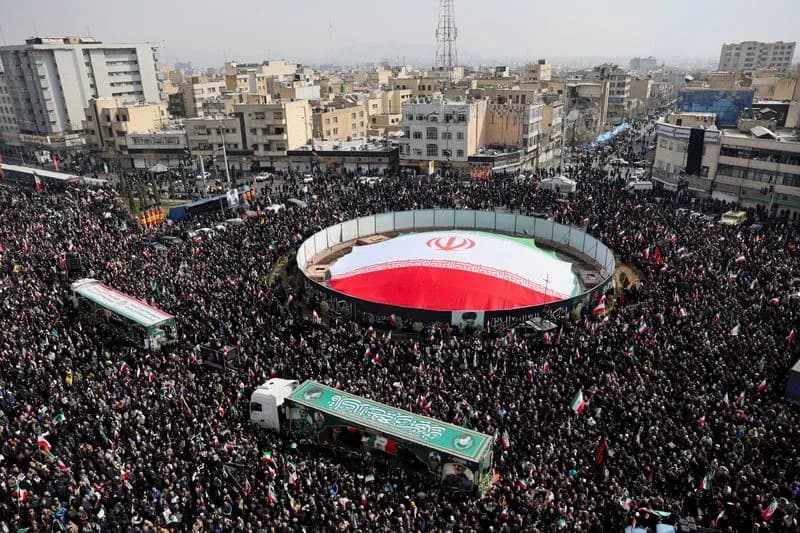
People attend a funeral ceremony for the Iranian military commanders who were killed in strikes, amid the U.S.-Israeli conflict with Iran, in Tehran, Iran, March 11, 2026. Majid Asgaripour/WANA (West Asia News Agency) via REUTERS ATTENTION EDITORS - THIS PICTURE WAS PROVIDED BY A THIRD PARTY
Israeli officials, speaking privately to Reuters, have acknowledged there is no certainty that the joint U.S.-Israel bombing campaign will topple Iran's clerical leadership, despite the strikes that killed Supreme Leader Ayatollah Ali Khamenei and several senior commanders. There is, the officials said, no clear sign of a mass uprising inside Iran even as cities are hit and civilians suffer.
Israeli and U.S. Objectives Remain Unclear
Israeli leaders say their aim is to weaken Iran’s military capabilities and create conditions that might enable popular change, but they have not set a public, unified endgame with Washington. President Donald Trump gave mixed signals — calling the campaign \"very complete, pretty much\" while the White House later said operations would continue until objectives were met and Iran surrendered unconditionally.
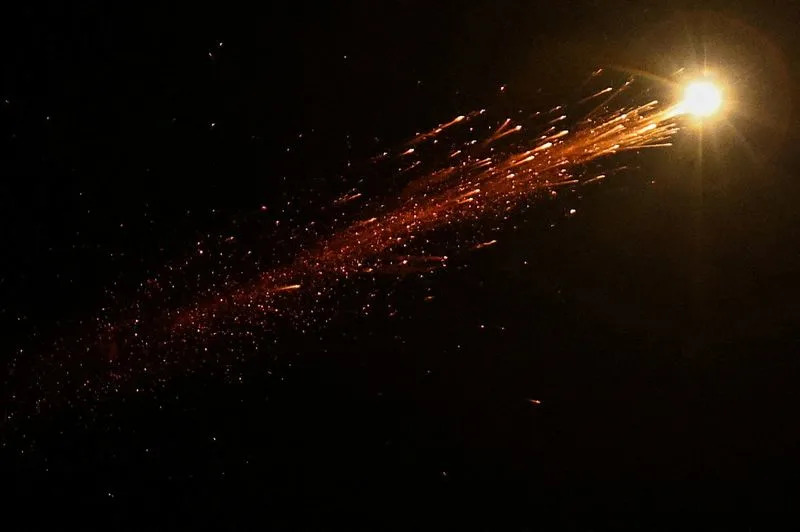
An Iranian missile flies toward Israel, amid the U.S.-Israel conflict with Iran, as seen from Jerusalem, March 11, 2026. REUTERS/Jamal Awad
Prime Minister Benjamin Netanyahu has framed the operation as opening space for Iranians to "take their destiny into their own hands," and has referenced Iran’s ethnic minorities — Kurds, Baluchis and Arabs — as potential agents of change. Yet Netanyahu and other officials, including Foreign Minister Gideon Saar, have also acknowledged privately that regime collapse is not guaranteed and that any popular uprising could take months or years.
Human Cost, Hunger And Damage To Infrastructure
The intense bombing campaign has killed senior Iranian leaders and reportedly inflicted civilian casualties while destroying homes, airports, ports and other critical infrastructure. Those effects, along with tightening international sanctions, have deepened the economic pressures facing ordinary Iranians and the government’s ability to recover.
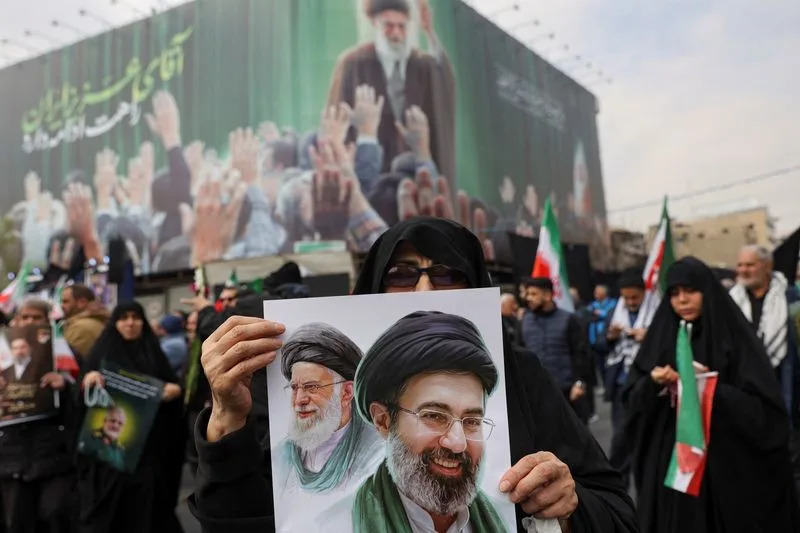
A woman holds an image of Iran's new supreme leader, Mojtaba Khamenei, alongside late Iranian Supreme Leader Ayatollah Ali Khamenei, during a funeral ceremony for the Iranian military commanders who were killed in strikes, amid the U.S.-Israeli conflict with Iran, in Tehran, Iran, March 11, 2026. Majid Asgaripour/WANA (West Asia News Agency) via REUTERS
Iranian authorities have warned they will treat protesters who act at an enemy’s request as enemies, not demonstrators, increasing the risk for anyone considering street protests while bombardment continues, officials said.
People On The Ground: Fear, Resilience And Mixed Sentiment
Residents in Tehran describe daily bombing, shaken windows and quieter streets. Many retain private anger at the regime — some even celebrated Khamenei’s death — but say they are too fearful to protest openly while strikes continue. Yet some residents report a rising sense of national pride and hostility toward outside figures who advocated intervention.
A Tehran university teacher quoted anonymously suggested the Iranian leadership might prefer the fighting to continue, arguing that a ceasefire could unleash renewed protests driven by economic hardship exacerbated by the war.
Analysts: Military Degradation Is A Clearer Goal Than Regime Change
Experts including Assaf Orion, a former Israeli military strategist, say degrading Iran’s military capabilities is a more concrete and measurable objective than engineering regime change. Creating the conditions for internal political upheaval is indirect and unpredictable, they add, and any uprising could unfold over months or years.
Reporting: Rami Ayyub in Jerusalem; Samia Nakhoul and Parisa Hafezi in Dubai; additional reporting by Alexander Cornwell in Tel Aviv. Writing by Angus McDowall; editing by William Maclean.
Help us improve.





















