
On March 2, renewed exchanges between Hezbollah and Israel triggered mass displacement, with many Lebanese fleeing southern regions and parts of Beirut. The fighting prompted rare public criticism of Hezbollah among some Shiite civilians who blame the group for renewed suffering after a war that left thousands dead and billions in damage. Lebanon's cabinet voted to declare Hezbollah’s military activities illegal, intensifying a standoff between state authorities and the armed group as humanitarian needs rise.
Rare Backlash in Lebanon as Hezbollah-Israel Fighting Forces Thousands to Flee
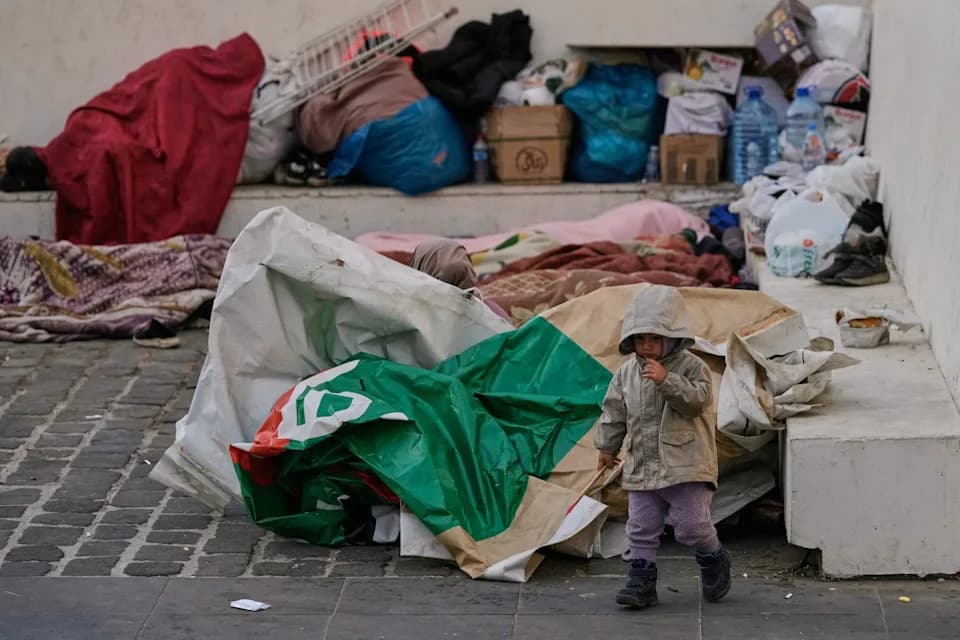
Displaced people fleeing Israeli airstrikes in Dahiyeh, Beirut's southern suburbs, sleep at Martyrs' Square in downtown Beirut, Lebanon, Saturday, March 7, 2026. (AP Photo/Bilal Hussein)(ASSOCIATED PRESS)
As a new round of fighting between Hezbollah and Israel erupted on March 2, tens of thousands of Lebanese — many from the south, the Bekaa Valley and Beirut's southern suburbs — fled their homes, seeking refuge in the capital and elsewhere. The sudden escalation reopened wounds from the previous conflict and produced unusually vocal criticism of Hezbollah among some members of its Shiite base.
What Happened
On March 2, two days after strikes on Iranian targets widened regional tensions, Hezbollah fired missiles and launched drones into Israel for the first time in more than a year. Israeli warplanes struck targets in southern Lebanon in response, and authorities issued warnings that towns and neighborhoods could be targeted, prompting mass evacuations.
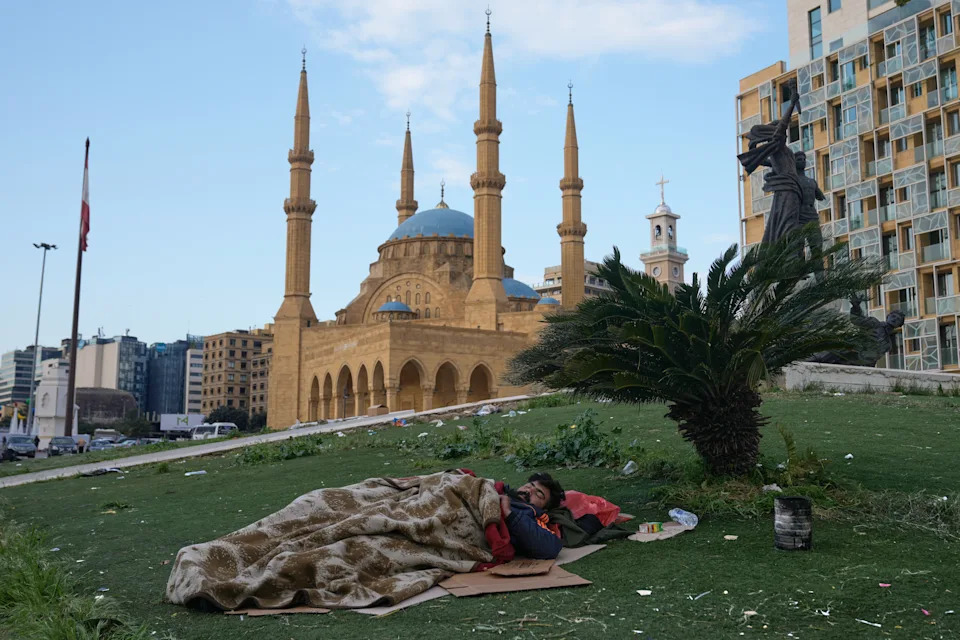
A displaced man who fled Israeli airstrikes in Dahiyeh, Beirut's southern suburbs, sleeps at Martyrs' Square in downtown Beirut, Lebanon, Saturday, March 7, 2026. (AP Photo/Bilal Hussein)(ASSOCIATED PRESS)
Civilian Impact And Reactions
Many families were forced to leave with little warning. One 45-year-old mother, who spoke on condition of anonymity, described a trip that normally takes one hour from Nabatiyeh to Beirut stretching to 15 hours as roads clogged with people fleeing the fighting. She said she opposed Hezbollah's decision to strike first and feared reprisals for speaking out.
“I am against giving pretexts to Israel,” the woman said. “I am totally against Hezbollah's decision to start with the first strike.”
Other displaced residents, including those who lost homes in the prior Israel-Hezbollah war, expressed anger and exhaustion. The previous conflict killed more than 4,000 people in Lebanon and caused roughly $11 billion in damage, according to the World Bank.
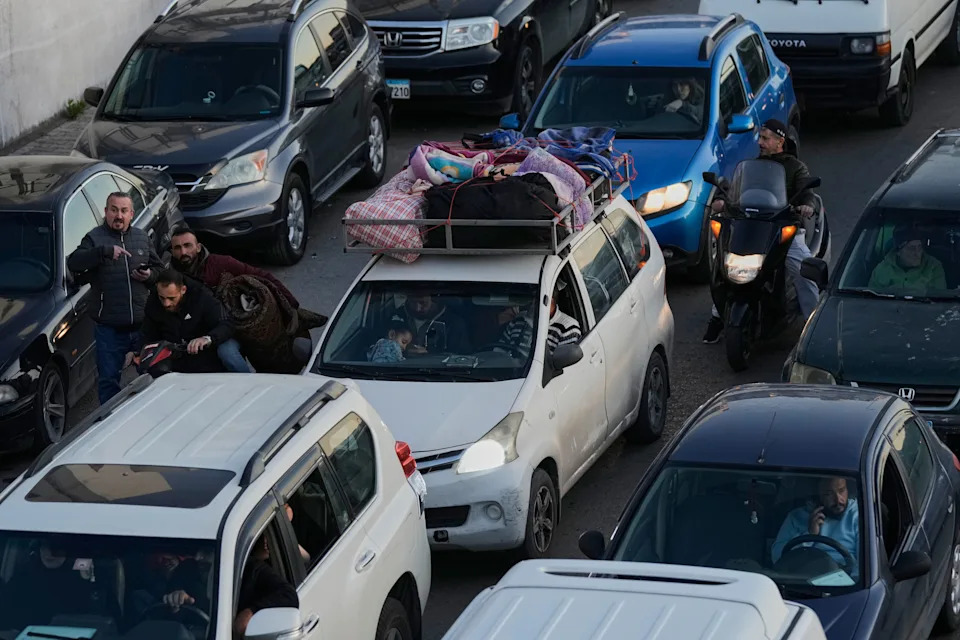
Displaced people fleeing Israeli airstrikes in Dahiyeh, Beirut's southern suburbs, sit in traffic on a highway in Beirut, Lebanon, Thursday, March 5, 2026. (AP Photo/Bilal Hussein)(ASSOCIATED PRESS)
Government Response
On March 2 the Lebanese cabinet voted to declare Hezbollah's military activities illegal, a move approved by 22 of 24 ministers; only Hezbollah's two ministers opposed the measure. Prime Minister Nawaf Salam said the state alone must decide on war and peace and ordered a ban on Hezbollah's independent military activities, urging the group to hand over weapons to state authorities.
The Lebanese army has increased enforcement and briefly detained three men identified as Hezbollah members who were transporting weapons; they were later released on bail.
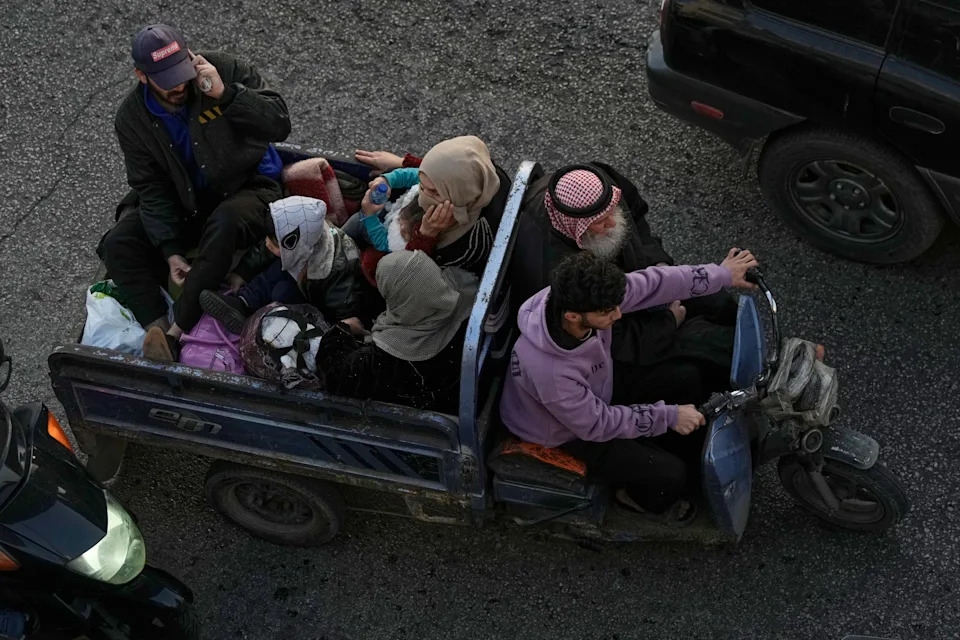
A family flees Israeli airstrikes in Dahiyeh, Beirut's southern suburbs, riding a three-wheeled motorized vehicle known as a "tok-tok," on a highway in Beirut, Lebanon, Thursday, March 5, 2026. (AP Photo/Bilal Hussein)(ASSOCIATED PRESS)
Hezbollah's Rationale And Political Context
Hezbollah says its actions were prompted by repeated Israeli strikes it says violated the November 2024 ceasefire and by a broader regional confrontation involving Iran. Reporting and statements have sometimes misstated or confused details in the heat of events; in this article we clarify that Hezbollah framed its strikes as retaliation for attacks on Iranian interests and alleged Israeli violations of the truce, not for any killing of Iran's supreme leader.
Supporters argue the group is defending Lebanese and regional interests, while critics — including some Shiite civilians — say they are again paying the price for military choices made by an armed movement that operates outside full state control.
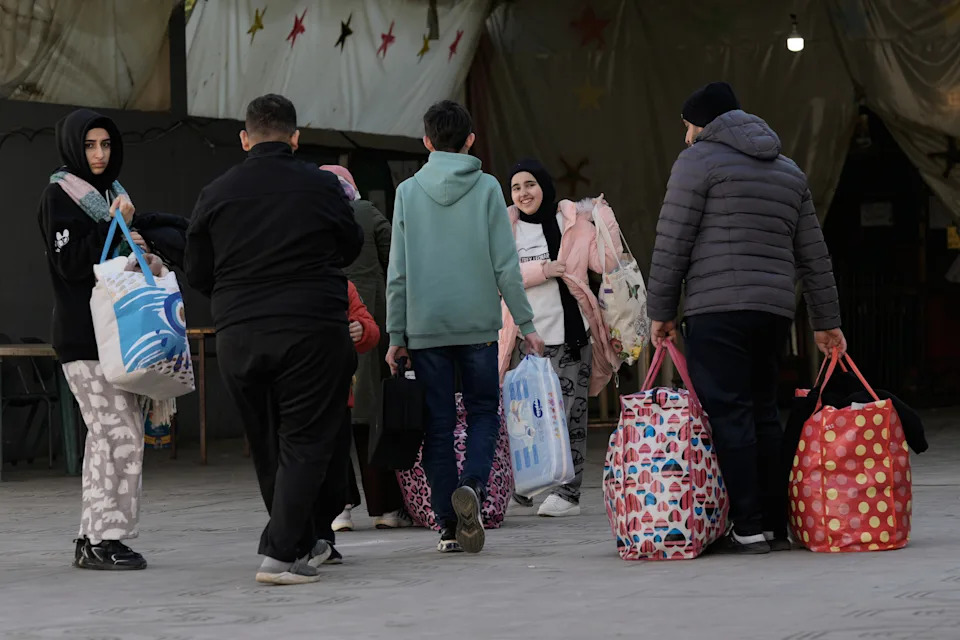
Displaced families fleeing Israeli airstrikes in southern Lebanon arrive at a school turned into a shelter, in Beirut, Lebanon, Monday, March 2, 2026. (AP Photo/Bilal Hussein)(ASSOCIATED PRESS)
Humanitarian Concerns
Humanitarian needs are rising as displaced people shelter in schools, public squares or with relatives, often during cold weather and the Muslim holy month of Ramadan. Aid distribution and reconstruction have been hampered by continued strikes since the ceasefire; independent estimates attribute roughly 400 deaths to post-ceasefire airstrikes linked to clashes between Israel and Hezbollah, including civilian casualties.
Outlook
Analysts offer mixed views: some see public criticism as a temporary outcry that does not signal an immediate split in Hezbollah's grassroots base, while others warn the combination of popular frustration and a government that has publicly challenged the group's armed status could raise tensions inside Lebanon for months to come.
Help us improve.





















