
As tensions between the U.S. and Iran continue, an American in Bahrain says an alleged Iranian drone struck the Fontana Infinity tower in Manama, where many U.S. sailors and tourists were staying. The witness, Yahir, describes daily missile and drone alerts, repeated shelter orders and heightened security across the city. He says embassy communication has been limited despite submitting the State Department's crisis intake form. The State Department reports more than 40,000 Americans have returned since Feb. 28 and urges stranded citizens to complete the Crisis Intake Form or call +1-202-501-4444 for help.
American In Bahrain Says He Survived Alleged Drone Strike On High-Rise, Pleads For Evacuation Help
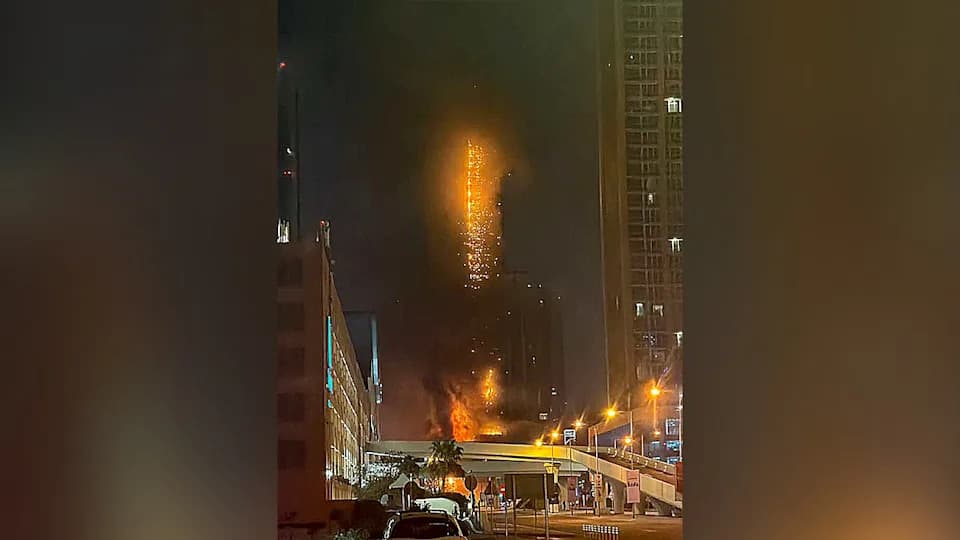
Fire erupts from a high-rise tower in Manama, Bahrain, after a reported strike.(Fox News)
An American citizen in Bahrain says he narrowly escaped harm after an alleged Iranian drone struck the lower floors of a luxury residential tower in Manama. The incident, described by the witness as terrifying and chaotic, has compounded travel disruptions across the Middle East that have left many U.S. citizens scrambling to return home.
Incident at Fontana Infinity
The resident, identified only as Yahir and from Los Angeles, told Fox News Digital he was inside the Fontana Infinity tower when the building shook from the impact. He said the lower floors were hit and that many of the building's occupants were American tourists and U.S. Navy personnel likely connected to the U.S. Navy's Fifth Fleet based nearby.
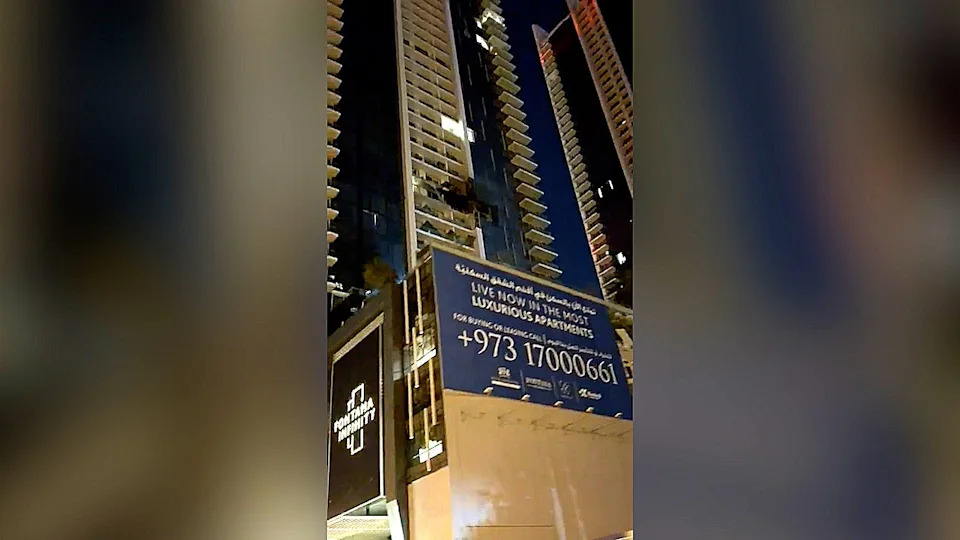
A massive hole is visible in the Bahrain high-rise where Yahir was staying after a strike in Manama.
"Two days ago, my building was hit. I was in the building at the time and, of course, the whole building shook. It felt like an earthquake," Yahir said. "Everyone around there was crying. They were evacuating all the buildings. People were crying. It felt really devastating."
Daily Life Under Threat
Yahir described repeated strikes across the city, frequent missile and drone alerts, and powerful explosions that sent plumes of smoke into the air. He said residents receive multiple emergency alerts daily and are often forced to shelter — once spending more than an hour in the basement of The Avenues mall during an alert.
"The interceptors were hitting the missile and the ground shaking. You'll feel that every day at this point," he said. "I feel like over ten times a day we get those alerts." The security presence in public areas has increased, with police posts and military vehicles more visible and many shops and offices closed or operating on reduced schedules.
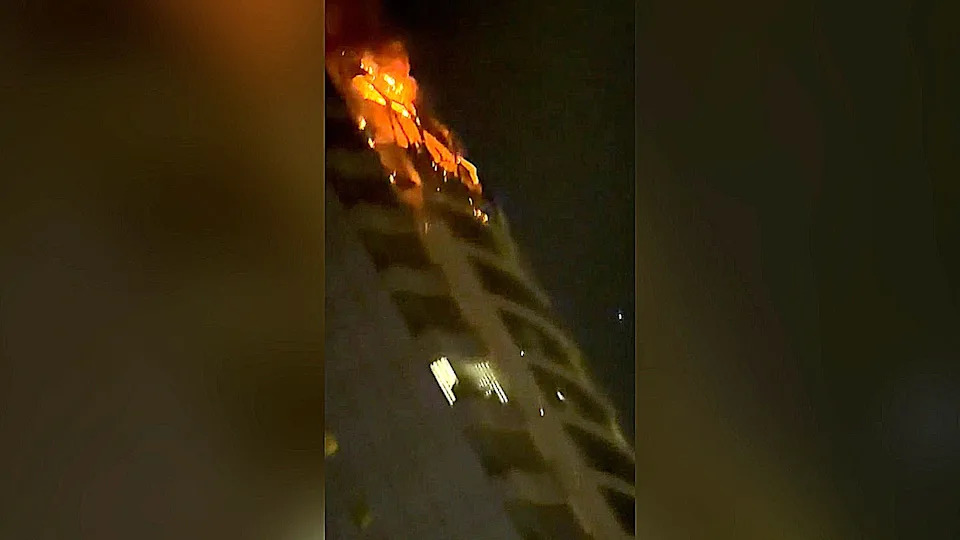
A Bahrain high-rise is seen ablaze in Manama after being struck amid the regional conflict.
Frustration With Embassy Response
Yahir expressed frustration with local U.S. Embassy services and State Department communications. He said calls to the embassy sometimes produced automated messages suggesting citizens should not expect direct assistance and that embassies could not help with certain needs. Despite submitting the State Department's crisis intake form, he says he has received few concrete updates about evacuation plans.
"I feel like they need to focus on the embassies around the world because I feel they're useless to Americans. They don't help us at all. I just want to go home," Yahir said.
State Department Statement And Guidance
The State Department told Fox News Digital that more than 40,000 American citizens have returned to the United States from the Middle East since Feb. 28, and that U.S. authorities directly assisted more than 27,000 of those people by providing travel help and security guidance. In a statement the department said it has completed charter flights and will continue to assist Americans who wish to depart the region.
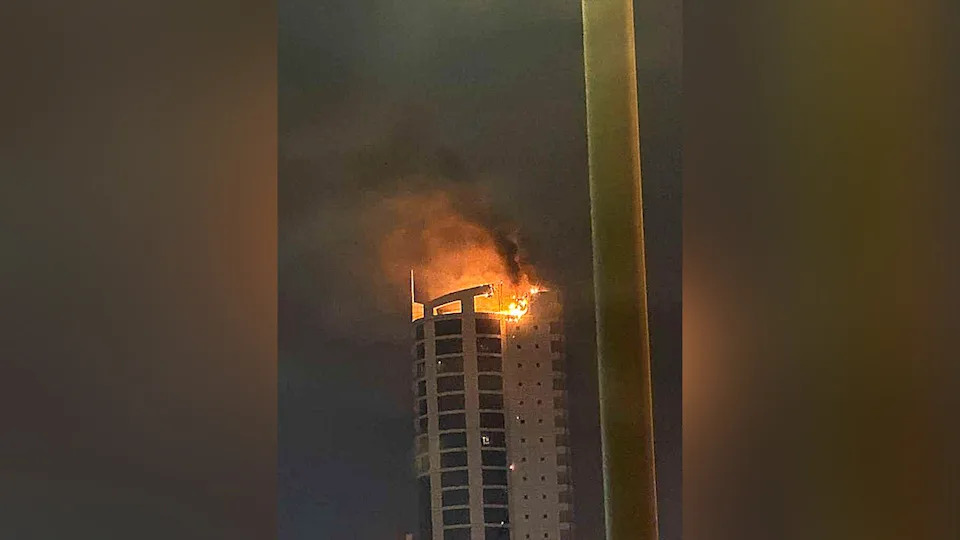
Flames and smoke billow from a high-rise building in Manama after an apparent drone strike.
American citizens remaining in Oman, Kuwait, Bahrain, the United Arab Emirates, Qatar, Saudi Arabia and Israel are urged to complete the State Department Crisis Intake Form or call +1-202-501-4444 for assistance and the latest guidance.
What Stranded Americans Should Do
- Complete the State Department Crisis Intake Form and monitor official communications from the U.S. Embassy in your country.
- Follow local shelter-in-place and safety instructions. Identify nearby shelters in advance when possible.
- Keep a charged phone, a list of emergency contacts, travel documents, and a small emergency kit ready.
This report reflects the account and concerns of an individual witness. Verification of the specific strike and official casualty or damage assessments remain the responsibility of local authorities and international monitoring agencies.
Help us improve.





















