
Iran’s leadership is sending mixed signals after a wave of strikes in the Gulf, with President Masoud Pezeshkian offering apologies to neighbouring states while the IRGC and other security officials threaten continued attacks on U.S. and Israeli targets in the region. Gulf countries have reported missile and drone incursions, material damage to a desalination plant in Bahrain and some casualties, while most projectiles have been intercepted. Analysts say the discord reflects Iran’s internal power divide — civilian politicians versus the IRGC and the supreme leader’s office — and increases the risk of miscalculation and wider escalation.
Apology, Threats and Power Struggles: Why Iran Is Sending Mixed Messages Over Gulf Attacks
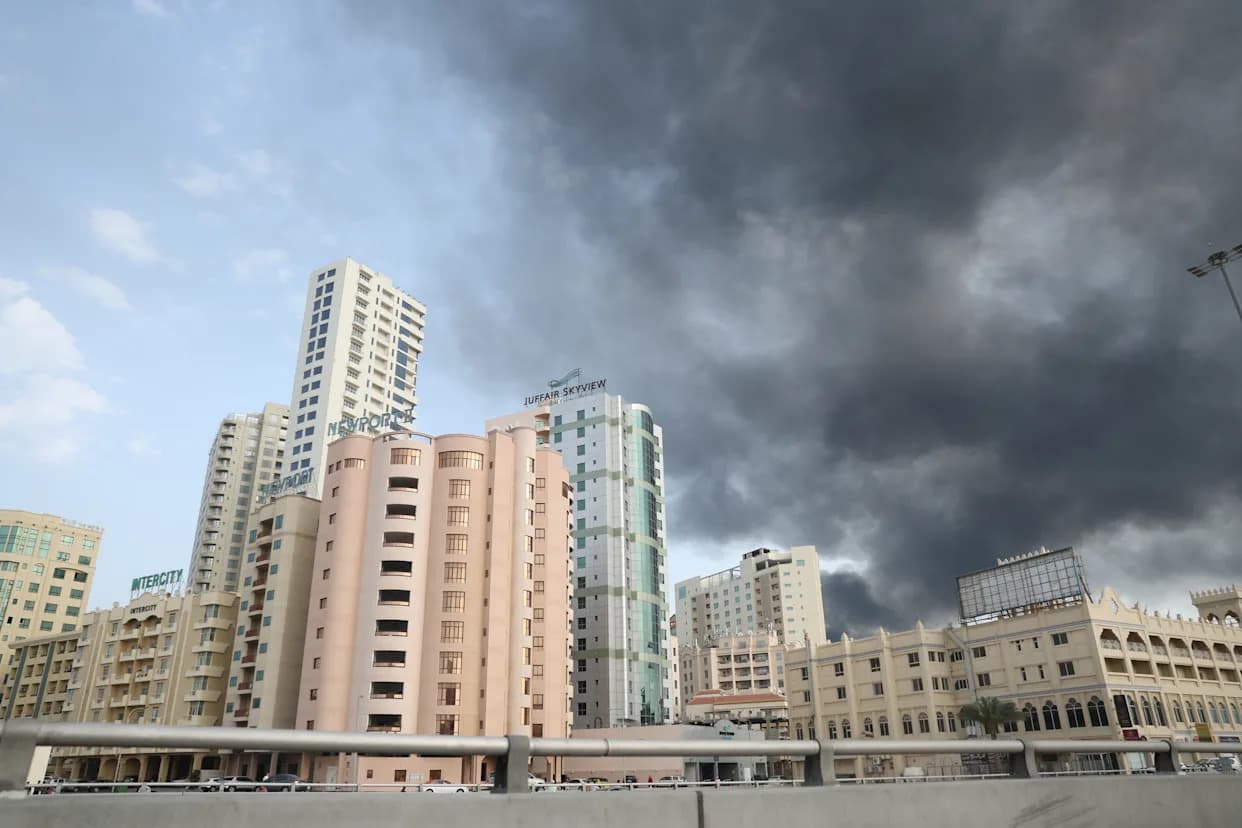
Smoke rises over Manama, Bahrain, after Iran launches a missile attack targeting the headquarters of the US Navy’s Fifth Fleet [File: Anadolu]
Iranian leaders have issued sharply different messages over recent strikes affecting Gulf states — an apology from President Masoud Pezeshkian followed by hardline warnings from the Islamic Revolutionary Guard Corps (IRGC) and other security officials. The contradictory statements have left regional capitals and outside observers uncertain how to interpret Tehran’s intentions amid an escalating confrontation that Tehran links to U.S. and Israeli operations in the region.
What Was Said — And By Whom
In a recorded address, President Pezeshkian apologised to neighbouring countries hit during Iran’s retaliatory operations and said Tehran would not strike its neighbours unless hostile attacks on Iran originated from their territory. He said, "I personally apologise to neighbouring countries that were attacked by Iran," adding that Iran did not intend to violate the sovereignty of its neighbours.
Within hours, the IRGC issued a contrasting statement. While it claimed respect for the sovereignty of neighbouring states, it warned that if "hostile actions continue," Iranian forces would view U.S. and Israeli military bases and interests in the region as legitimate targets for "powerful and crushing strikes." Secretary of the Supreme National Security Council Ali Larijani reinforced that position, saying regional states must prevent foreign forces from using their territory to attack Iran or face Iranian responses.
Other Officials And Reactions
Foreign Minister Abbas Araghchi said Tehran would not stop operations while threats persisted, and parliament speaker Mohammad-Bagher Ghalibaf emphasised Iran’s right to self-defence. State media later quoted Pezeshkian as saying his remarks had been misconstrued by "the enemy that seeks to sow division with neighbours," and Iran’s foreign ministry stressed that strikes on U.S. bases should not be read as hostility toward regional governments.
“When the enemy attacks us from bases in the region, we respond — and we will continue to respond.” — Ali Larijani
On-the-Ground Impact
Gulf states have reported multiple incoming missiles and drones. Bahrain said an Iranian drone caused material damage to a desalination plant; Kuwait reported deaths among ministry personnel and damage to an airport and a social security office; Qatar, Saudi Arabia and the UAE also reported intercepting missiles and drones, and Saudi officials said an attack on Riyadh’s diplomatic quarter was foiled. Most projectiles have reportedly been intercepted, and so far Gulf states have not launched counterstrikes on Iran.
Why The Messages Conflict
Analysts point to Iran’s internal power structure: civilian officials manage many state affairs, but strategic security and foreign policy are dominated by the IRGC and the office of the supreme leader. That institutional divide helps explain why Pezeshkian’s conciliatory language can be quickly undercut by harder-line forces who control military strategy and respond to perceived threats.
Experts warn that mixed public signals are risky: they create confusion for neighbours about how to respond and could increase the chance of miscalculation. Gulf governments face a dilemma — retaliating against Tehran risks further escalation, while standing aside may fuel domestic and regional political backlash.
Regional And International Responses
The Gulf Cooperation Council described the strikes on Bahrain and Kuwait as "dangerous acts of aggression" that threaten regional stability. Commentators also noted that openly aligning with Israel or the United States in strikes on Iran would carry significant political costs for Gulf states. External reactions have ranged from condemnations to cautious calls for de-escalation, while international observers monitor whether the IRGC’s posture will dictate the next phase of operations.
What To Watch Next: whether Gulf states restrict foreign militaries from using their territory, whether Iran continues to target U.S. and Israeli assets in the region, and whether the IRGC’s operational posture narrows room for diplomatic solutions.
Help us improve.





















