
Israeli Prime Minister Benjamin Netanyahu vowed to press on with military action against Iran and said Israel had a "systematic plan to eradicate the Iranian regime," as Tehran vowed not to surrender. Iran launched waves of missiles and drones across the Gulf while Israeli and US strikes reportedly hit targets in Iran, including Tehran's Mehrabad Airport. The confrontation has spread regionally, driven heavy civilian casualties, disrupted shipping through the Strait of Hormuz and rattled global markets.
Netanyahu Vows to Continue War — Israel Says It Has a "Systematic Plan" to Eradicate Iranian Regime as Strikes Escalate
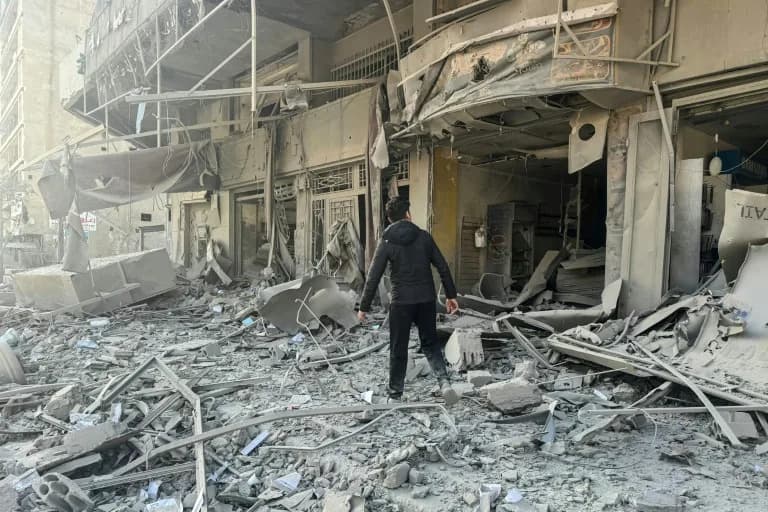
Debris at the site of overnight Israeli airstrikes in the southern suburbs of Beirut (-)(-/AFP/AFP)
Israeli Prime Minister Benjamin Netanyahu pledged on Saturday to press on with military operations against Iran, saying Israel has a "systematic plan to eradicate the Iranian regime," as Tehran vowed it would not surrender. The declarations came amid one of the sharpest rounds of regional strikes since the conflict began: Iran launched waves of missiles and drones across the Gulf, while Israel and the United States struck targets inside Iran.
Major Strikes
Israel and the US said their strikes included an attack that set fire to Tehran's Mehrabad International Airport and another that hit an oil depot. Israel claimed it had destroyed 16 aircraft and fighter jets at Mehrabad and said it had achieved near-total control of the skies over the Iranian capital. Iran's Islamic Revolutionary Guard Corps reported it had struck the US Juffair base in Bahrain, alleging the facility had been used in operations against an Iranian desalination plant.
Iran's Response
Tehran launched successive waves of missiles and drones targeting Gulf countries and regional infrastructure. Iranian leaders rejected demands for "unconditional surrender" and warned that heavy attacks would continue. Iran also reported strikes on maritime targets, including two oil tankers, and has aimed to disrupt shipping through the strategic Strait of Hormuz.
Regional Escalation
The fighting has expanded beyond Iran to Lebanon, Cyprus, Turkey, Azerbaijan and maritime zones as far away as the seas off Sri Lanka, where US forces say they sank an Iranian warship. Israel has intensified strikes in southern Lebanon and around Beirut, ordering evacuations and prompting humanitarian warnings.
Human Cost
Iran's health ministry reported 926 civilian deaths and about 6,000 injured as of Friday, figures AFP could not independently verify. Lebanon's health ministry said at least 294 people were killed by Israeli strikes over the past week. The conflict has also claimed the lives of six US service members. Residents in Tehran report growing fear, damaged infrastructure and a heavy security presence.
Economic And International Impact
Global stock markets slid and crude oil prices rose amid concerns the confrontation could continue for weeks. The UAE said its air defences intercepted multiple missiles and drones; video circulated showing a projectile crash near Dubai airport. Reports — not fully confirmed — suggest Russia may be sharing intelligence with Iran, while US officials say they are not alarmed. Former US President Donald Trump publicly threatened severe strikes and promised economic support if Tehran installed a leader "acceptable" to him; Iran rejected any foreign role in selecting its next leader.
"I don't think anyone who hasn't experienced war would understand it," a 26-year-old teacher in Tehran said. "When you hear the bombs, you have no idea where they will hit."
The situation remains highly volatile, with no clear diplomatic path to de-escalation in sight.
Help us improve.





















