
An air strike demolished Iran's supreme leader Ali Khamenei's compound in Tehran during a morning meeting, killing him, his wife and several senior officials. US officials say the attack was carried out by Israel with support from US and Israeli reconnaissance and intercepted communications; the CIA reportedly supplied Khamenei's location at dawn. Reporting alleges Israeli access to Tehran's road‑surveillance cameras provided a key surveillance angle. Analysts say the operation reshapes regional deterrence and raises serious legal and strategic questions.
One Week After Khamenei's Killing: How The Strike Happened And What It Means
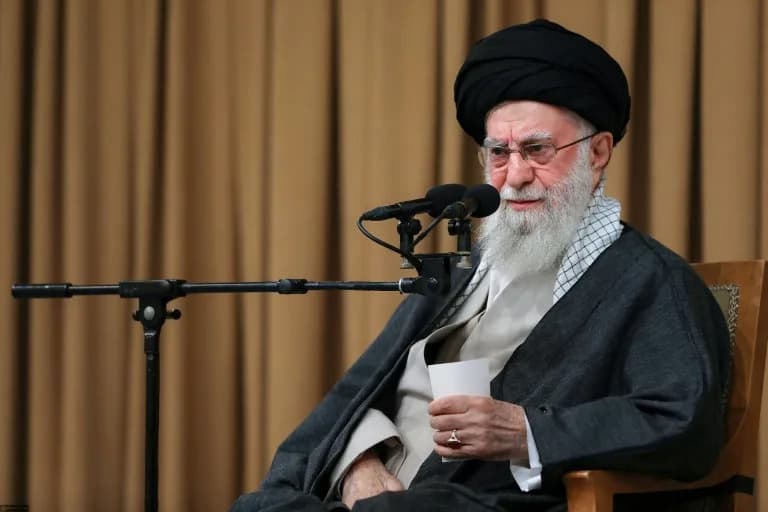
Iranian supreme leader Ali Khamenei was killed at his complex in Tehran last Saturday (-)(-/KHAMENEI.IR/AFP)
Last Saturday morning, while further talks with the US were reportedly being planned and with some expecting any attempt on his life to occur at night, Iran's supreme leader Ali Khamenei was at his Tehran compound on Pasteur Street. An air strike demolished the compound during a meeting of senior officials, killing Khamenei, his wife and multiple top security figures.
The Strike And Immediate Impact
US officials have said the attack was carried out by Israel and enabled by combined US and Israeli reconnaissance and intercepted communications. The New York Times reported that the CIA provided the Israelis with Khamenei's location at dawn on the day of the strike. In the week since, a sustained campaign of strikes inside Iran has followed.
Alleged Intelligence Methods
Reports in the Financial Times and other outlets say Israeli intelligence had long access to Tehran's road-surveillance network, routing encrypted camera feeds to external servers. One camera reportedly gave a particularly useful angle on the Pasteur Street compound, allowing identification of guards and routine movements. An Israeli official was quoted as saying, 'We knew Tehran like we know Jerusalem.' These details remain based on reporting by Western press and statements by officials.
Confirmed And Reported Casualties
Iranian state media have confirmed the deaths of several senior security figures, including army chief of staff Abdolrahim Mousavi, Revolutionary Guards commander Mohammad Pakpour, the defence minister and the head of police intelligence, among others. An unknown number of other senior officials were also reported killed. Some Israeli media outlets published unverified claims that a photograph of Khamenei's body was circulated from the scene.
Mossad, Reputation And Previous Operations
Analysts say the operation — if the reporting is accurate — will bolster the reputation of Mossad and other Israeli intelligence services, which have been credited with a series of high-profile covert actions in recent years. Commentators such as Yossi Yehoshua argued the strike alters deterrence dynamics in the Middle East. Other experts warned that the assassination of a widely recognised state leader sets a worrying international precedent.
Reactions And Uncertainties
'Covert operation details — unlike air campaigns — are by definition extremely hard to verify and are a major communications battleground,' a former French military officer told AFP. 'The intended message is that this was a "clean, precise, flawless" operation that decapitates a regime in one blow. But the other side is not playing poker. This isn't Las Vegas. They're playing chess — and losing a major piece does not end the game.'
The full strategic and political consequences remain uncertain. Observers caution that while the operation appears to have degraded Iran's senior leadership, it may also provoke broader escalation across the region and raises complex legal and ethical questions about targeting sovereign leaders.
Help us improve.





















