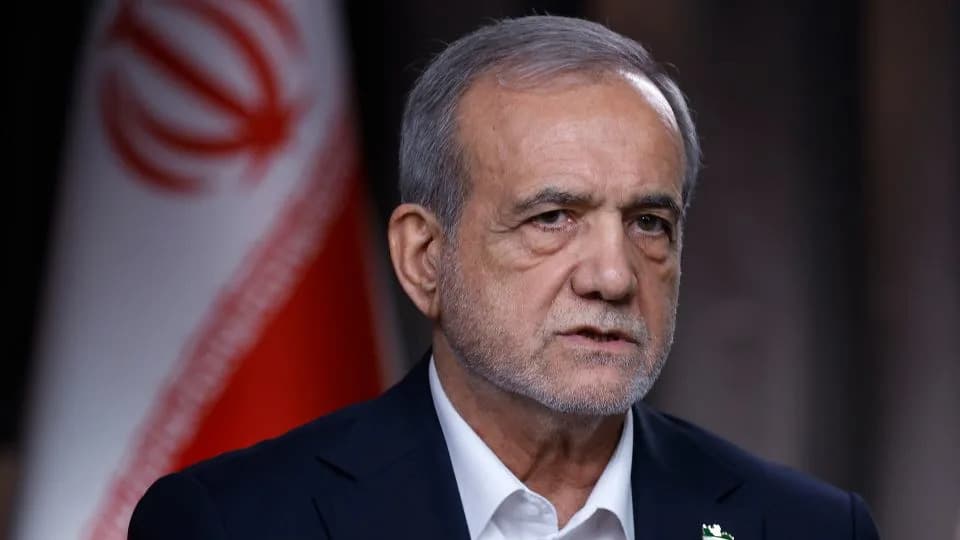
Iranian President Masoud Pezeshkian delivered what he described as a step toward de‑escalation, saying Tehran would pause attacks on its Gulf neighbors provided those countries' territories were not used to launch strikes against Iran. Minutes after what appeared to be a prerecorded statement, however, Iranian forces reportedly launched a large wave of projectiles, underscoring continued uncertainty over control of Iran’s military elements.
What Was Announced
Pezeshkian said the decision to halt attacks on Gulf Arab states would apply unless strikes against Iran originated from their territory. In a rare high‑level apology, he expressed regret for strikes that have alarmed civilians across the Gulf and said Iran’s armed forces had "acted on their own authority and did what was necessary to defend our homeland with dignity and strength."
Strikes Continued
Despite the announcement, reports said Iran launched dozens of weapons shortly afterward, including an attack that the UAE said involved 16 ballistic missiles and 121 drones. The launches were among the largest since fighting escalated and came on the one‑week anniversary of previous strikes that killed other senior figures.
Who Is Calling the Shots?
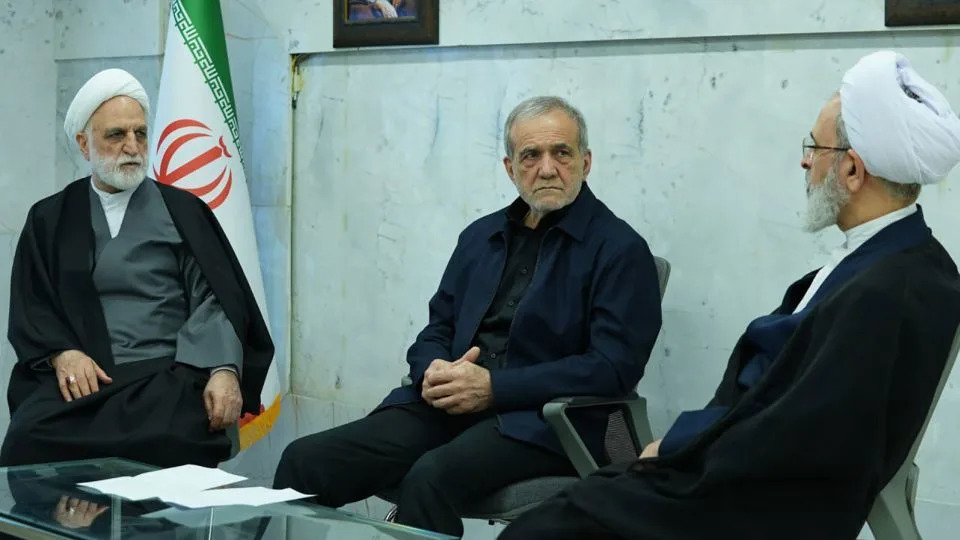
The episode highlighted unclear lines of command inside Iran. Pezeshkian is serving on an interim Leadership Council after recent strikes removed several senior figures; that council includes senior cleric Ayatollah Alireza Arefi and judiciary chief Gholamhossein Mohseni Ejei. It is not yet clear whether statements from the council fully reflect the positions of the regular armed forces or the powerful Islamic Revolutionary Guard Corps (IRGC), which has at times acted independently.
An image released by Iran's state-run Press TV last Sunday shows the Leadership Council meeting. - Press TV
Warnings and Reactions
After Pezeshkian’s remarks, former US President Donald Trump wrote on Truth Social that Iran had "surrendered to its Middle East neighbors" and warned Iran "will be hit very hard" — language that raised the specter of further escalation. Iran’s army replied that if offensive actions continue, "all military bases and interests of the criminal American regime and the fake Zionist regime on land, sea, and air in the region will be the main targets" of "crushing and severe strikes."
Regional Implications
Pezeshkian’s conditional pause explicitly tied de‑escalation to the nonuse of Gulf territories — many of which host large US military bases — for attacks on Iran. His office further warned of decisive responses to aggression originating from American bases. Diplomats and analysts say it remains unclear which activities by proxies or foreign forces Iran would deem acceptable or hostile, leaving the region in a fragile and unpredictable state.
Domestic Context
The interim council is managing wartime affairs for a nation of about 96 million experiencing intense strikes. Iran’s foreign minister, Abbas Araghchi, told Al Jazeera that some military units had grown "independent and somewhat isolated," and that Tehran had instructed forces to exercise caution in selecting targets. Clerical figures inside Iran have urged a swift selection of a permanent supreme leader; historically, when Ayatollah Ruhollah Khomeini died, clerics rapidly selected a successor, and the process is tightly controlled by the Assembly of Experts.
Outlook: Pezeshkian’s remarks are the highest‑level signaling of restraint to date, but the immediate continuation of large strikes and strongly worded warnings from both Tehran and voices in Washington mean the risk of renewed escalation remains high.